

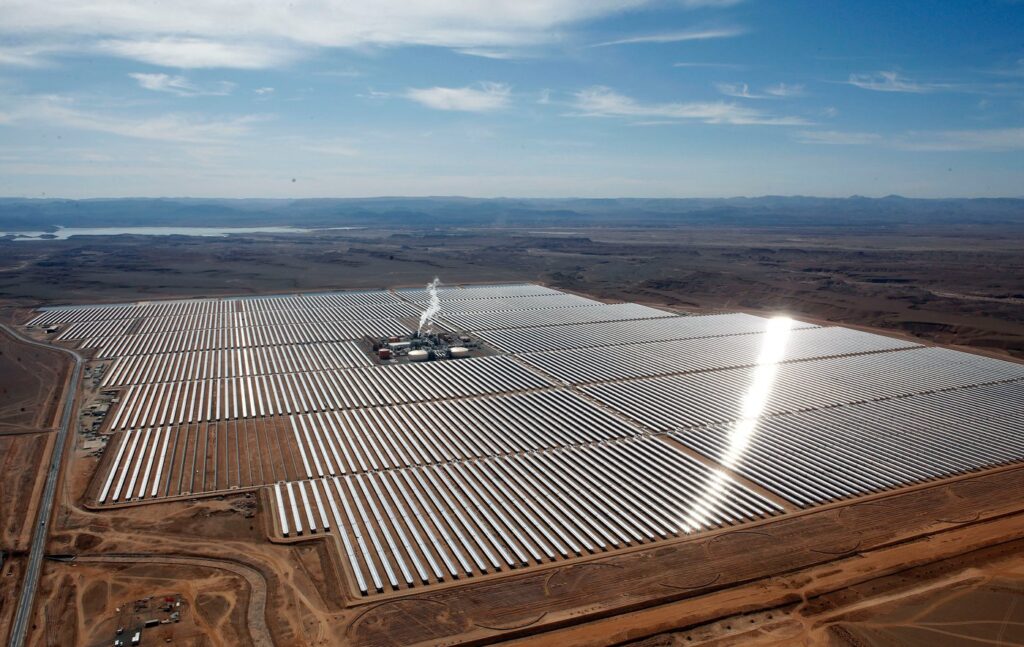
NAIROBI, Kenya (AP) - China's recent decision to eliminate value-added tax rebates on solar panel exports and to phase out incentives for manufacturing battery storage equipment is anticipated to increase solar installation costs across Africa, a region heavily reliant on imported Chinese technology. The changes are slated to take effect on April 1 for solar panels and gradually for batteries beginning in the following year.
Experts warn that these adjustments may complicate ongoing initiatives to expand renewable energy resources and bridge significant electricity gaps throughout the continent. However, they assert that the resulting impact is likely to be manageable. Wangari Muchiri, an energy analyst focusing on Africa's renewable energy sector, noted that the removal of the rebate will add to existing costs, especially given additional factors such as shipping, logistics, and other import fees.
Africa already incurs higher costs for solar equipment compared to other regions due to factors like transport expenses, lower import volumes, and tariffs. The new policy from China is part of broader structural changes following intense competition among domestic manufacturers, which had previously driven solar module prices down to as low as $0.07 per watt in 2025, a significant decrease from $0.25 per watt in 2022. Chinese firms had incorporated VAT rebates into their export pricing, allowing them to provide subsidies indirectly to overseas buyers, but the Chinese government has now curtailed these payments in an effort to manage overcapacity and pivot toward advanced technologies.
According to John van Zuylen, CEO of the Africa Solar Industry Association, while the changes are indeed significant, they are not devastating. He explained that the removal of structural rebates often leads exporters to absorb costs, adjust pricing, or reduce discounts, suggesting that African nations will experience a gradual increase in prices rather than a sudden spike. Moreover, even with anticipated price hikes, solar energy is expected to remain competitively priced since it is currently the cheapest energy source in Africa. Muchiri emphasized that despite higher panel costs, solar will still be far cheaper than alternatives such as diesel.
Sonia Dunlop, CEO of the Global Solar Council, noted that increases in project costs could slightly delay construction timelines due to potential supply chain shortages, contractual adjustments, and shipping challenges, particularly in nations heavily reliant on Chinese imports. Battery storage capacity, which is essential for supplying electricity during nighttime hours, may encounter greater difficulties as incentives dwindle through 2027. Van Zuylen remarked that the necessity of battery storage makes it more critical than solar panels for reliable off-grid and backup power solutions.
Basil Abia, co-founder of the Nigerian energy research firm Truva Intelligence, pointed out that batteries have historically been expensive and many African solar projects were designed without them. He remarked that although solar modules will become slightly costlier without rebates, they continue to provide a relatively affordable option. In the years leading up to 2025, solar module prices fell dramatically and are expected to facilitate growth in demand for solar energy, which currently accounts for 3% of power generation in Africa.
The increasing reliance on Chinese solar technology highlights the continent's limited local manufacturing capabilities. Abia suggested that while the VAT removal may slow Africa’s transition to clean energy, countries that take this opportunity to ramp up local manufacturing will be better positioned for future challenges, as those that do not may find themselves vulnerable to subsequent changes in Chinese industrial policy.








