

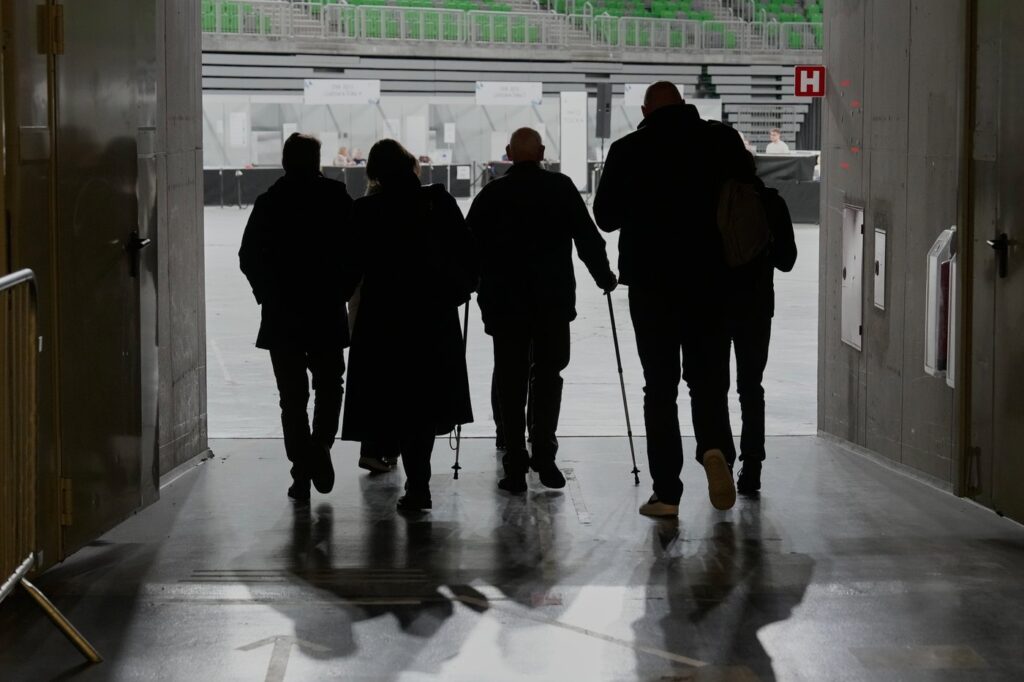
On Sunday, voters in Slovenia participated in a decisive parliamentary election, which is expected to shape the political landscape of the nation significantly. The election features a contest between the current governing liberals, represented by Prime Minister Robert Golob's Freedom Movement, and the right-wing Slovenian Democratic Party (SDS), led by three-time premier Janez Jansa. This election poses the critical question of whether Slovenia will maintain its liberal trajectory or shift towards a more right-wing populist approach.
The electoral race is anticipated to be closely contested, particularly in light of recent allegations of foreign interference in the electoral process, which has disrupted the typically moderate political atmosphere in this European Union member state. With Slovenia's political scene historically polarized, analysts predict that no party may secure a clear majority in the 90-member parliament, potentially leading to smaller parties playing a kingmaker role in the government formation.
The context of this election is marked by profound ideological differences between the two leading parties. Golob's administration has positioned itself as a strong advocate for liberal values within the EU, while a Jansa victory would likely bolster the influence of populist groups across Europe. Jansa's party has faced severe allegations of media suppression and erosion of the rule of law during his previous term from 2020 to 2022.
Compounding these tensions were claims from activists and journalists alleging the existence of secret video recordings that purportedly implicate government corruption. These recordings are believed to have been orchestrated by the SDS with the assistance of a private foreign intelligence agency known as Black Cube. Although Jansa has confirmed contact with Black Cube, he has refuted any accusations of electoral meddling. Reports indicate that representatives from Black Cube conducted multiple visits to Slovenia in recent months, including near the headquarters of Jansa's party in Ljubljana.
In the lead-up to the election, Golob has requested an EU investigation into the allegations of foreign interference, asserting the need for protective measures for all nations undergoing electoral processes. His administration has been characterized by a string of controversies, including a turbulent health care reform, a fluctuating tax policy, and a strong pro-Palestinian stance, highlighted by the recognition of a Palestinian state in 2024.
In contrast, Jansa maintains pro-Israel sentiments and has criticized Golob's government sharply. The political dynamics between these two parties have not only defined the electoral campaign but also reflect broader European trends regarding the rise of illiberal movements, with the potential repercussions reaching far beyond Slovenia's borders.
As Slovenia continues to oscillate between varying political ideologies since its independence from the former Yugoslavia in 1991, the results of this election could significantly influence the nation's future direction. Historical voting patterns show a recurring back-and-forth between liberal and conservative governance, and the upcoming results are being closely monitored for indications of the broader shifts within the EU.
This parliamentary election thus emerges not only as a pivotal moment for Slovenia but also as a wider litmus test for the state of democracy and liberal values in Europe amidst rising populist sentiments.








