

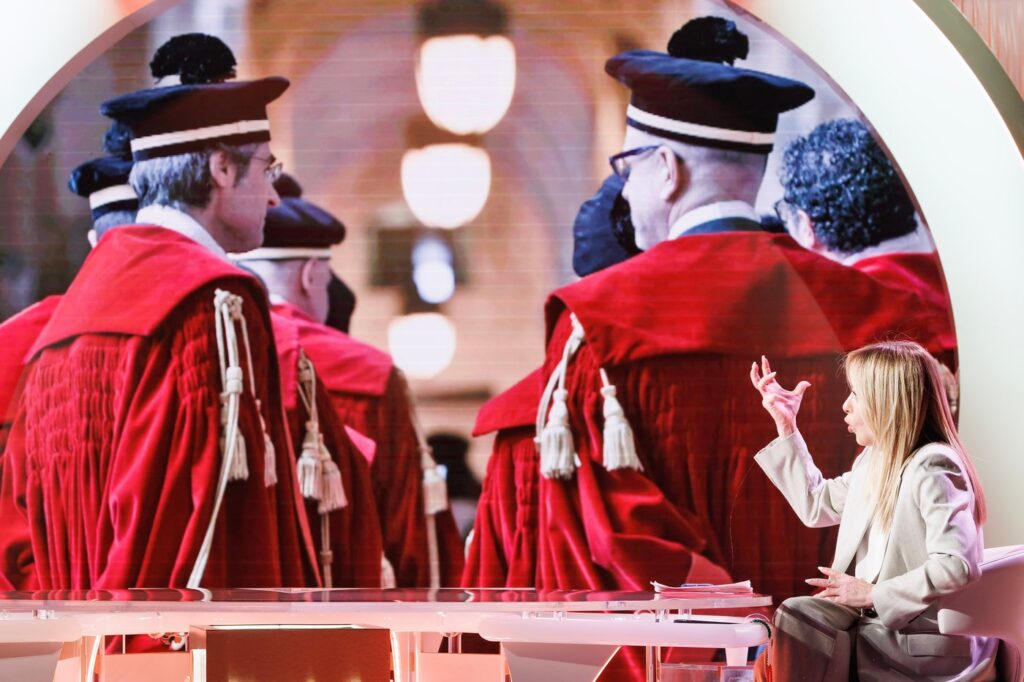
ROME (AP) – Italy's conservative Premier Giorgia Meloni is facing a crucial political test with a two-day referendum on judicial reform that begins on Sunday. Originally introduced as a technical adjustment to the justice system, the referendum has evolved into a significant evaluation of her leadership, both domestically and internationally, occurring just one year before national elections.
The reform has deepened political rifts and united the center-left opposition, transforming the referendum into a symbolic confrontation regarding Meloni's authority. Recent polls indicate that the results are too close to predict, with the "No" camp gaining late support in an increasingly polarized environment. Lorenzo Pregliasco, a political analyst from YouTrend, noted that a rejection of the reform would have profound implications on the political landscape, potentially diminishing Meloni's perceived invincibility and asserting the presence of an alternative within the opposition.
Initially, Meloni sidestepped closely associating her image with the referendum due to the risks a defeat could pose for her both at home and on the international stage. Currently leading Italy's most stable government in years, Meloni has garnered credibility among European allies as a compelling leader. A successful referendum outcome could further solidify her position both within Italy and abroad. As polling tightened, however, she shifted her strategy to fully embrace the "Yes" campaign, emphasizing the urgency of the reform.
Meloni's rhetoric has intensified, targeting parts of the judiciary she accuses of obstructing government initiatives related to migration and security. She has expressed dire warnings that failure to pass the reform might empower unaccountable judicial "factions" and threaten public safety, stating, "If the reform doesn’t pass this time, we will probably not have another chance." Her claims have drawn sharp criticism from judges and the center-left, who contend that the reforms would undermine judicial independence and constitutional rights.
Internationally, analysts suggest that this referendum also has broader implications. Meloni’s historical alignment with U.S. President Donald Trump has become increasingly risky, particularly amidst growing discontent among Italians regarding Trump's foreign policy, particularly relating to the U.S. and Israeli conflict with Iran. According to Pregliasco, her connection with Trump may alienate voters, as he remains notably unpopular in Italy and across Europe, which could further complicate her political standing.
While a defeat in the referendum would not compel Meloni to resign—given her mandate is secure until 2027—it could strain her credibility within the European Union, where she is often seen as a stabilizing figure amidst political volatility.
The referendum focuses on long-standing proposals aimed at reforming the judicial structure in Italy. Among the key changes is a measure to separate the career trajectories of judges and prosecutors, which is currently permitted but infrequently practiced. Another significant proposal is a restructuring of the High Judicial Council, which currently oversees magistrate appointments and disciplinary issues. The reform suggests dismantling it into three distinct chambers and modifying the selection process to a lottery system instead of internal elections.
This conflict between right-wing leaders and the judiciary has underscored Italian politics and has historical roots dating back to former Prime Minister Silvio Berlusconi, who was a fervent supporter of judicial reform. Proponents assert that these changes will modernize Italy's notoriously slow court system and increase accountability, while critics, including well-known magistrates, argue that the initiatives overlook pressing issues and threaten the independence of the judiciary.
Prominent voices, such as Nicola Gratteri, chief prosecutor of Naples and an anti-Mafia specialist, have voiced strong opposition. He emphasized, "I don’t think this government has implemented the reforms needed to make trials work more effectively," criticizing the administration for inhibiting efforts to combat crimes against public administration and corruption.
As Italians prepare to cast their votes, this referendum stands out as a defining moment for Meloni's premiership. The electorate's choice has the potential not only to reshape the judiciary but also to influence the future trajectory of her government, regardless of the outcome.








