

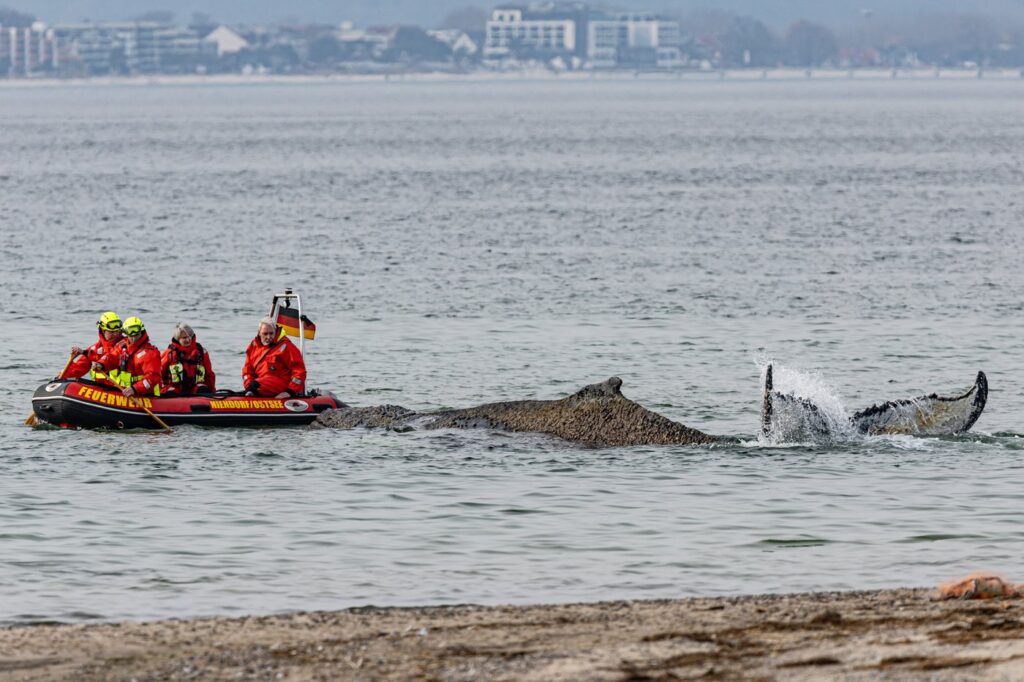
In northern Germany, rescue teams are diligently working to refloat a humpback whale that has become stranded in shallow waters of the Baltic Sea. The incident has drawn significant attention as experts and volunteers come together to save the 10-meter-long (30-feet-long) marine mammal.
The rescue operation commenced on Tuesday morning at Timmendorfer Strand beach, a location now in the spotlight due to the unfortunate circumstances involving the young whale. Despite the high tide occurring around midnight, the water level was insufficient for the whale to swim free independently, prompting experts to seek alternative methods to assist the stranded animal. The German news agency dpa has reported ongoing developments from the scene.
Previous rescue attempts on Monday afternoon involved various means of intervention, including police boats, inflatable boats, and even firefighter drones. Unfortunately, these initial efforts did not yield success, leading to increased urgency among the rescue teams. Observers on the scene, including Carsten Mannheimer from the marine conservation organization Sea Shepherd, confirmed that the whale remains alive, capable of breathing, and has shown signs of responsiveness, such as lifting its head and making sounds.
Experts believe the whale in question is a young male, which is significant as males of the species are known to migrate, while females tend to stay closer to feeding grounds. This particular whale has reportedly been sighted multiple times in the port of Wismar, located in eastern Germany, during the previous weeks, raising concerns about its welfare and the reasons behind its stranding.
The efforts to refloat the whale reflect the dedication of marine conservationists and local authorities, who are determined to ensure the creature's safe return to deeper waters. The ongoing situation highlights the complexities involved in marine rescue operations, particularly with large marine mammals, which require extensive coordination and specialized knowledge to effectively address such incidents.
As the day progresses, the rescue teams remain hopeful that they will successfully relocate the whale, permitting it a chance to continue its journey in the open sea. The collaboration between various organizations, including marine conservation groups and local emergency services, underscores a collective commitment to the preservation of marine life and the urgent need for prompt action in similar cases.








