

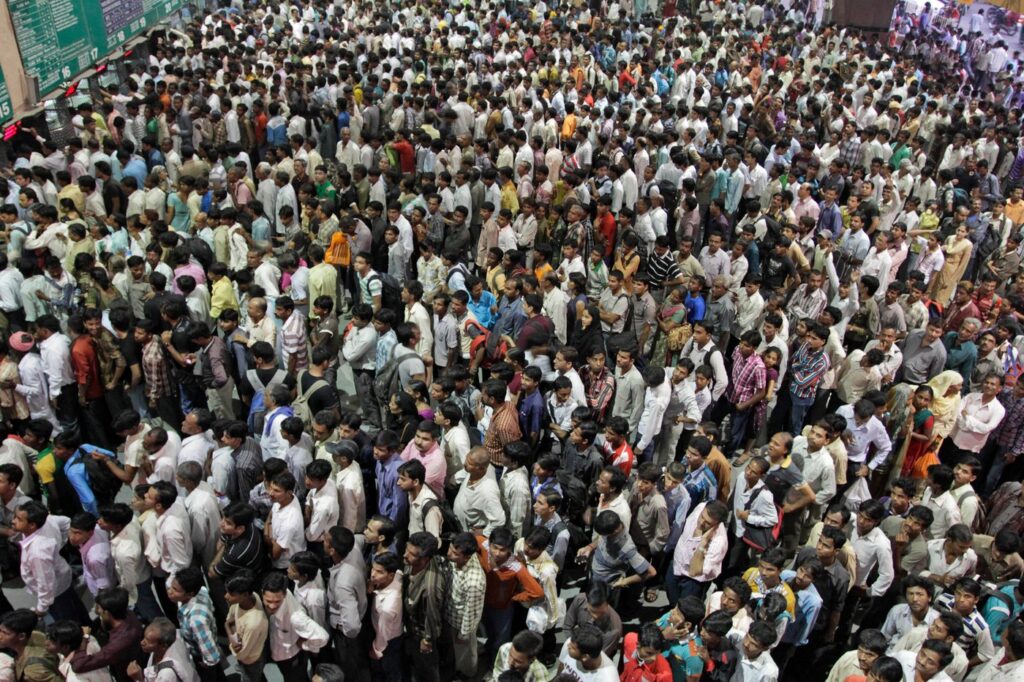
NEW DELHI (AP) - India has commenced the world's largest national population count, a significant exercise that could influence welfare programs and political representation throughout the country. The previous census, conducted in 2011, recorded a population of 1.21 billion, but current estimates suggest that India's population has surpassed 1.4 billion, making it the most populous nation globally.
The new census was originally scheduled for 2021 but faced delays due to the COVID-19 pandemic and various logistical challenges. The first phase of the count kicked off on Wednesday and will continue nationwide through September. Census workers will engage in data collection over approximately a month in each area, focusing on homes and available facilities while documenting housing conditions.
The counting process will combine traditional in-person surveys with a digital alternative, allowing residents to submit their information via a multilingual smartphone application that incorporates satellite-based mapping technology. The second phase, slated to run from September to April 1, will gather more detailed data regarding individuals' social and economic characteristics, including factors such as religion and caste.
Over 3 million government workers are expected to participate throughout the year, a marked increase compared to the nearly 2.7 million enumerators who surveyed more than 240 million households during the 2011 census.
A particularly sensitive aspect of the census is the collection of caste data in the second phase, which aims to provide a comprehensive accounting of caste beyond historically marginalized groups. Caste, an ancient and influential social hierarchy in India, plays a critical role in determining social status and access to resources, education, and economic opportunities. India is home to hundreds of caste groups, particularly among Hindus, but lacks up-to-date data on the demographics of these groups.
The last comprehensive attempt to gather detailed caste information through a census took place in 1931, during British colonial rule. Since India gained independence, census data has primarily focused on Dalits and Adivasis—members of marginalized groups classified as scheduled castes and tribes. However, successive governments have been hesitant to conduct a full caste count, citing concerns that such an initiative could escalate social tensions and incite unrest.
The population data collected during the census is critical for shaping India's political landscape. It influences the distribution of government welfare programs and informs various public policies. Additionally, the data may lead to a redrawing of India's political map as population growth could necessitate an increase in seats in the lower house of Parliament and state legislatures. A law passed in 2023 reserves one-third of legislative seats for women, meaning any expansion of seats would also boost representation for female lawmakers.








