

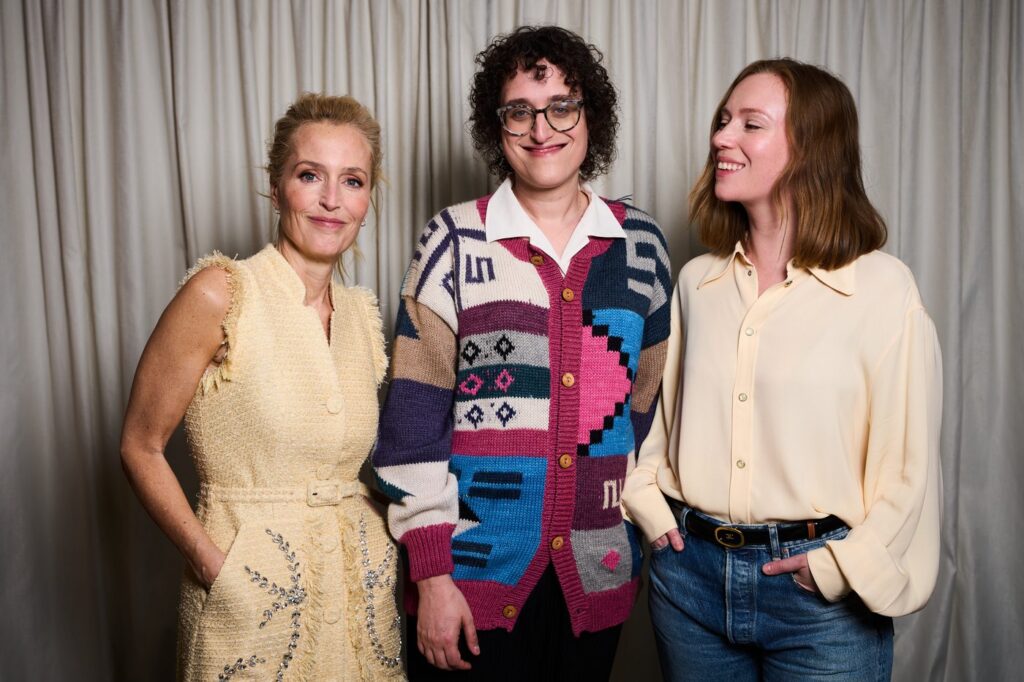
CANNES, France (AP) — Jane Schoenbrun eagerly shared their exhilarating experience at the Cannes Film Festival, describing their premiere as “a good electric chair.” After the showing of their film, “Teenage Sex and Death at Camp Miasma,” a lively queer slasher featuring Hannah Einbinder and Gillian Anderson, Schoenbrun and their co-stars were still basking in the overwhelming positive reactions. The film represents one of the standout American offerings at this year's Cannes, injecting an energetic vibe into the event.
Schoenbrun, recognized as one of the leading trans filmmakers of their generation, emphasizes that this film marks a significant evolution in their work. Their previous films, “I Saw the TV Glow” and “We’re All Going to the World’s Fair,” emerged from a deeply personal narrative surrounding their transition. However, “Teenage Sex and Death at Camp Miasma” reflects a more joyful and exploratory phase of their post-transition life. This film is a celebration of desire and sexuality wrapped in a clever satire of Hollywood's obsession with reboots, serving as both a fun and heartfelt homage to the slasher genre.
Schoenbrun expressed, “This is the first movie that feels like it represents the fullness of who I am.” The journey to this moment was not without its challenges. A decade prior, Schoenbrun was stuck in a job they loathed within the film industry. They recounted their initial visit to Cannes, where they felt excitement but returned the following year filled with depression, prompting a career reevaluation. “If I’m depressed at Cannes, there’s something that needs to change,” Schoenbrun noted, recognizing the need for a more meaningful reason to participate in the festival.
In “Teenage Sex and Death at Camp Miasma,” Einbinder stars as Kris, an indie filmmaker tasked with rebooting the long-standing “Camp Miasma” slasher series. For Kris, directing this reboot is a dream come true, fueled by childhood obsession with the franchise. During her stay at the iconic camp, she meets Billy Presley (played by Anderson), the original Final Girl, sparking a relationship that stirs both inspiration for her film and personal anxieties regarding her sexuality. Anderson remarked on the film's significance, believing it will address many critical issues in the industry.
The film is not only a tribute to slasher films but also serves as a commentary on the current state of the film industry, reflecting the reality that Schoenbrun faced when seeking distribution. Despite the success of “TV Glow” with A24, “Teenage Sex and Death at Camp Miasma” struggled to find backing and was repeatedly rejected, ultimately finding a home with Mubi. Schoenbrun articulated the frustration of being turned down, highlighting the invisible barriers that can deter diverse voices in Hollywood.
Schoenbrun pointed out how cultural assumptions about what is considered mainstream can thwart innovative storytelling. “Your movie is not commercial because they think it’s not commercial,” they explained, critiquing the dominance of homogenized narratives in the industry. This perspective aligns with Einbinder’s experience, who was captivated by Schoenbrun's deeply personal storytelling, emphasizing that their films often reflect their own experiences.
Determined to overcome the hurdles, Schoenbrun drew inspiration from the modest budget of the original “Friday the 13th.” Their tenacity, also seen in their forthcoming 600-page fantasy novel, is evident as they seek to carve out a space for diverse narratives in cinema. “My movies are obsessed with this idea of what it takes to make something real,” Schoenbrun affirmed, sharing their philosophy that encompasses self-reinvention and creativity.








