

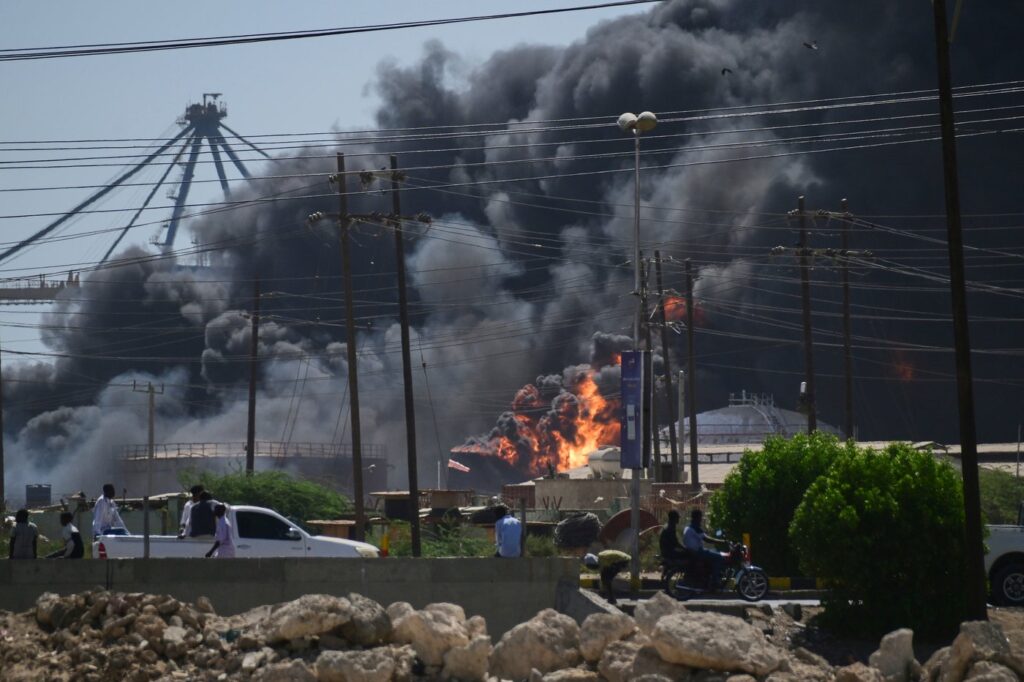
CAIRO – Drone warfare has emerged as the most lethal threat to civilians in Sudan's ongoing conflict, which began in April 2023. According to experts, both the military and the rival paramilitary Rapid Support Forces (RSF) are receiving support from several countries in the Middle East and beyond. The use of armed drones has led to a staggering rise in civilian casualties, accounting for over 80% of conflict-related deaths. United Nations human rights chief Volker Türk reported that drones killed at least 880 civilians between January and April.
Since the start of the war, at least 59,000 people have been killed, and approximately 13 million have been displaced, with parts of Sudan facing famine. In recent weeks, RSF has ramped up drone strikes on key locations, including Khartoum International Airport, which has remained under military control since last year. Analysts suggest that advanced drone technology, supplied by foreign entities, is exacerbating the situation, enabling both sides to strike densely populated areas and complicating efforts for peace.
Drones have become a significant force multiplier on the battlefield, as they are used to support ground offensives and destabilize enemy defenses. Jalale Getachew Birru, a senior analyst with the U.S.-based Armed Conflict Location & Event Data project, noted that both the army and RSF utilize drones to secure contested territories and disrupt rival mobilization efforts. ACLED reported that at least 2,670 individuals, including both fighters and civilians, were killed in 2025, indicating a 600% rise in drone-related deaths compared to the previous year.
Drone attacks have targeted critical civilian infrastructures, such as hospitals, schools, markets, and displacement camps. Most casualties from these attacks have occurred in the Kordofan region of central Sudan. For instance, on May 8, drone strikes in South Kordofan reportedly killed 26 civilians, with earlier strikes resulting in over 70 deaths in densely populated areas. A Sudanese rights group, the Emergency Lawyers, has also reported that nine drone attacks on civilian vehicles in the past week resulted in at least 36 fatalities across seven provinces, attributing responsibility to both the army and RSF.
Experts have raised concerns that some drones possess advanced visual monitoring technologies, making them capable of distinguishing targets, which could suggest that attacks may not be indiscriminate. Gabriella Tejeda, a research associate at The Soufan Center, indicated that the RSF has only recently begun to widely deploy drones. The RSF and military conduct a fierce competition to acquire newer drone models, with indications that the RSF is increasingly modifying drones and seeking sophisticated models, allegedly with support from the United Arab Emirates (UAE).
Nathaniel Raymond of the Humanitarian Research Lab at Yale School of Public Health noted that RSF drones have been used to disrupt communications in regions like el-Fasher city, where thousands have been killed. The army is also accused of striking civilian hospitals, including an incident at Al Daein Teaching Hospital in East Darfur, where at least 64 people lost their lives. Officially, the army denies targeting civilian infrastructure, although military insiders mentioned that the actual target was a nearby police station.
Reports indicate a concerning increase in drone strikes from the army on civilian sites, including schools and markets, over recent months. ACLED stated that military drone technology is sourced from countries like Turkey, Russia, Iran, and Egypt, while RSF drones are supplied through networks connected to the UAE, utilizing regional transit points in Ethiopia, Chad, and Libya. The Sudanese government has accused Ethiopia of being involved in recent drone attacks, including those on Khartoum airport, which both nations have denied.
The rising use of drones in armed conflict is creating a grim outlook for civilians in Sudan, as analysts warn that neither side appears interested in seeking a resolution. The tense dynamics of foreign involvement and drone warfare underscore the deepening crisis in the region.








