

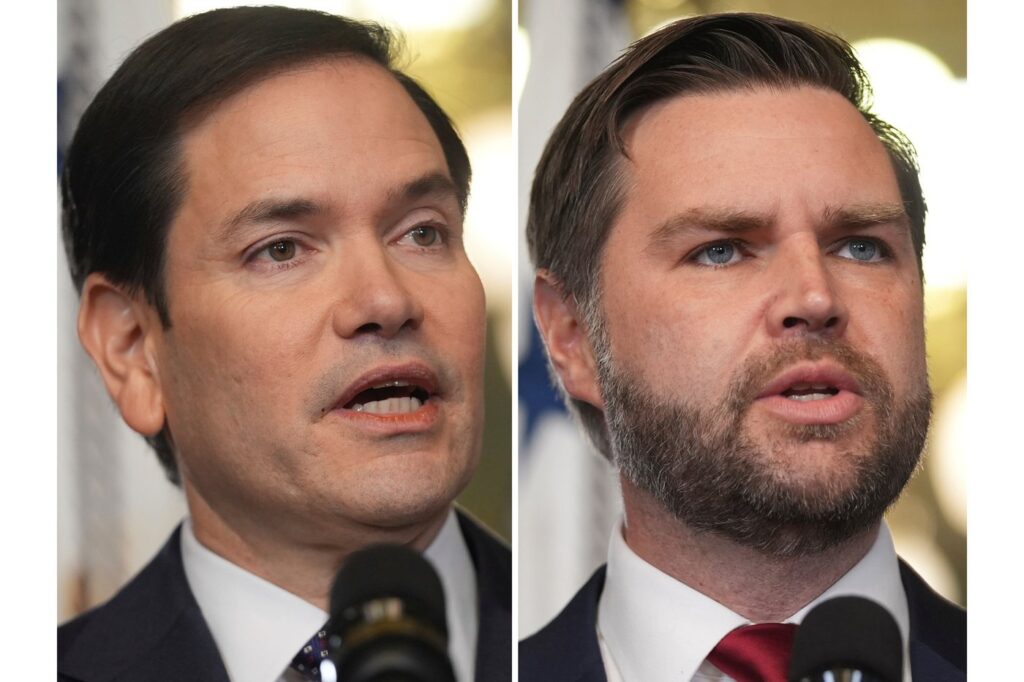
As President Donald Trump convened his Cabinet meeting last week, Secretary of State Marco Rubio and Vice President JD Vance were asked to provide updates on the ongoing conflict in Iran. Rubio, known for his hawkish stance, passionately defended the war, labeling it "a favor" to both the United States and the global community. In contrast, Vance, who has advocated for a more restrained U.S. military presence abroad, delivered a subdued response, emphasizing the importance of preventing Iran from acquiring nuclear weapons while also wishing the troops a happy Easter.
This exchange highlighted the contrasting perspectives of Rubio and Vance regarding the war, which has become a divisive issue as potential Republican presidential candidates gear up for the 2028 nomination battle. With both Rubio and Vance considered leading contenders for the GOP primary, they face the challenge of navigating their roles within the Trump administration while preparing for their political futures.
Curt Mills, the executive director of "The American Conservative" magazine, noted the apparent philosophical rift between Rubio and Vance, with the latter seemingly attempting to shift focus away from the war during the Cabinet meeting. Vance's office declined to comment, while the State Department highlighted Rubio's previous remarks expressing hope for Vance's presidential ambitions.
As the 2028 election approaches, it remains unclear how Republican voters will perceive the ongoing conflict. Rubio's strong endorsement of the war may backfire, while Vance risks charges of disloyalty if he strays too far from Trump’s position. Historically, Vance has expressed skepticism towards military interventions, despite acknowledging the necessity of preventing Iran from possessing nuclear capabilities.
Trump himself suggested that Vance may retain a more cautious viewpoint regarding military action in private discussions, indicating that Vance was "philosophically a little bit different" than him from the start of the conflict.
The increasing tensions within the Republican Party are evidenced by a recent survey from the Associated Press-NORC Center for Public Affairs Research, which revealed mixed feelings among Republicans about the military action in Iran. Approximately half of the respondents felt the U.S. actions were "about right," while one-quarter believed they had gone too far, and only a minority thought they hadn’t gone far enough. Some conservatives view the war as a betrayal, whereas many others rally behind the president's decisions.
At a recent campaign event in North Carolina, attendees expressed their preferences for Vance and Rubio as potential 2028 candidates, with some supporting Vance for his more subdued approach despite his past interventionist skepticism. Although both candidates remain popular, Joe Ropar, a retired military contractor, revealed that Rubio's unequivocal support for the war influenced his support for Rubio over Vance. Others, like Benjamin Williams, signaled that Vance and Trump’s ties to the war led them to explore alternative candidates.
As the Republican field for the 2028 presidential primary begins to take shape, strategists anticipate that the Iran conflict could become a significant issue, similar to the way the Iraq War affected Democrats in the 2004 and 2008 elections. Although Vance and Rubio currently dominate as frontrunners, it is expected that more high-profile Republicans will enter the race, complicating the political landscape.
Strategist Jim Merrill noted that the resolution of the conflict will likely determine how Vance and Rubio's positions are viewed by the electorate. If the situation deteriorates, the candidates may find themselves held accountable for their differing approaches, but Sununu argues that their association with Trump may diminish the potential for a significant rift on this issue within the Republican Party.








