

NEW YORK (AP) In response to the escalating costs of oil and gasoline due to the ongoing Iran war, global leaders are actively seeking solutions. The conflict has resulted in a significant reduction in oil availability, with tanker ships carrying crude oil stranded in the Persian Gulf and military strikes damaging essential infrastructure such as refineries, pipelines, and export terminals.
To alleviate the pressure on consumers, U.S. President Donald Trump alongside other world leaders has initiated measures to increase the oil supply. Notably, a coalition of 32 nations under the International Energy Agency (IEA) has begun the historic release of 400 million barrels from emergency oil reserves. Concurrently, Trump is utilizing oil from the Strategic Petroleum Reserve while suspending sanctions on both Russian and Iranian crude oil. Additionally, a temporary waiver of the Jones Act, which mandates that ships transporting goods between U.S. ports fly the American flag, has been enacted.
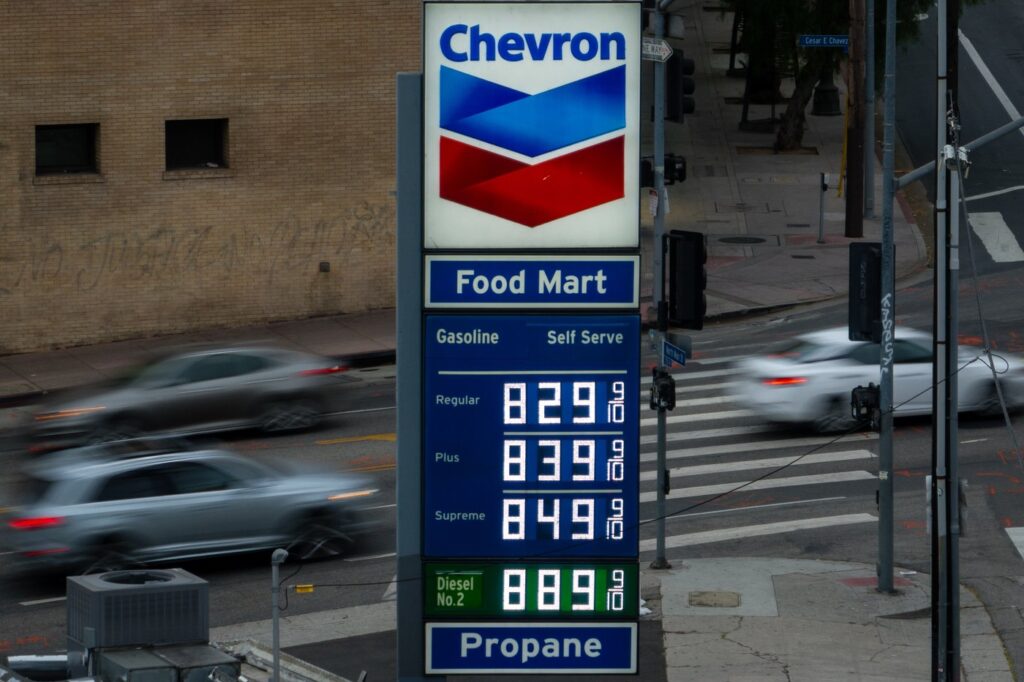
Despite these efforts, crude oil prices have surged past $100 per barrel, and the average gasoline price in the U.S. has reached $4.06 per gallon. Industry experts have expressed skepticism regarding the effectiveness of these short-term measures, suggesting that the quantities released do not adequately compensate for the vast amounts of oil that are currently stranded due to the conflict.
According to Mark Barteau, a professor of chemical engineering and chemistry at Texas A&M University, the incremental increases in oil supply fall far short of the required figure. “You’re talking about these different patches being at the level of maybe 1 to 2 million barrels a day each, and you’ve got to get to 20,” he explained. This substantial gap raises concerns about the sustainability of these temporary fixes.
Prior to the outbreak of the war, approximately 15 million barrels of crude oil and 5 million barrels of oil products traversed daily through the Strait of Hormuz, which accounts for about 20% of global oil consumption, as reported by the IEA. The conflict has also prompted some oil-producing nations in the Middle East to halt production altogether, adding an additional loss of around 10 million barrels per day. The IEA emphasizes that restoring transit through the Strait of Hormuz is paramount for stabilizing oil and gas flows.
While some workaround measures are being employed, such as Saudi Arabia utilizing its East-West pipeline to export oil, the capacity has limitations. The country is already utilizing the pipeline to move oil, allowing little room for additional shipments from stranded tankers. Furthermore, the recent lifting of sanctions on 140 million barrels of Iranian oil in transit does not increase the oil supply; it merely broadens the scope of potential buyers, potentially increasing prices rather than alleviating them.
Experts have pointed out that the impact of lifting sanctions on Russian oil could potentially be more significant since Russia has been storing a considerable amount of unpurchased oil in tankers. The temporary waiver of the Jones Act, while potentially aiding natural gas transport, is not expected to significantly influence the overall oil prices.
Despite being a major oil producer, the U.S. faces challenges in ramping up production quickly enough to fill the gap. Barteau highlighted that doubling U.S. production to make up for the global shortfall is not feasible. The U.S. produced approximately 13.7 million barrels per day as of the end of 2025, while refineries processed around 16.3 million barrels per day, relying on imports to compensate for the deficit. Notably, U.S. refineries predominantly process heavy crude oil, whereas the domestic production is largely light crude oil, complicating the situation further.
Overall, the current oil crisis, described by some as unprecedented, hinges on the duration of the conflict and its implications on global supply and pricing. As world leaders continue to grapple with the situation, the need for a sustainable long-term solution remains pressing, with the repercussions of the ongoing conflict resonating across global markets.








