

Legislators in Mississippi have advanced a bill that imposes severe penalties for the distribution of abortion-inducing medications, which could lead to criminal charges and up to ten years in prison for those convicted. The legislation has now been sent to Republican Governor Tate Reeves for approval, marking a significant shift in the state's stance on reproductive health.
This legislation features amendments to a drug trafficking bill, which recently passed in both legislative chambers, with Republicans controlling the House and Senate. The House vote concluded with a margin of 76-38, while the Senate voted 37-15 in favor of the bill. Advocates fear that the criminalization of abortion medications may deter healthcare providers from prescribing such drugs for legitimate medical purposes, such as treating miscarriages and preventing postpartum hemorrhaging.
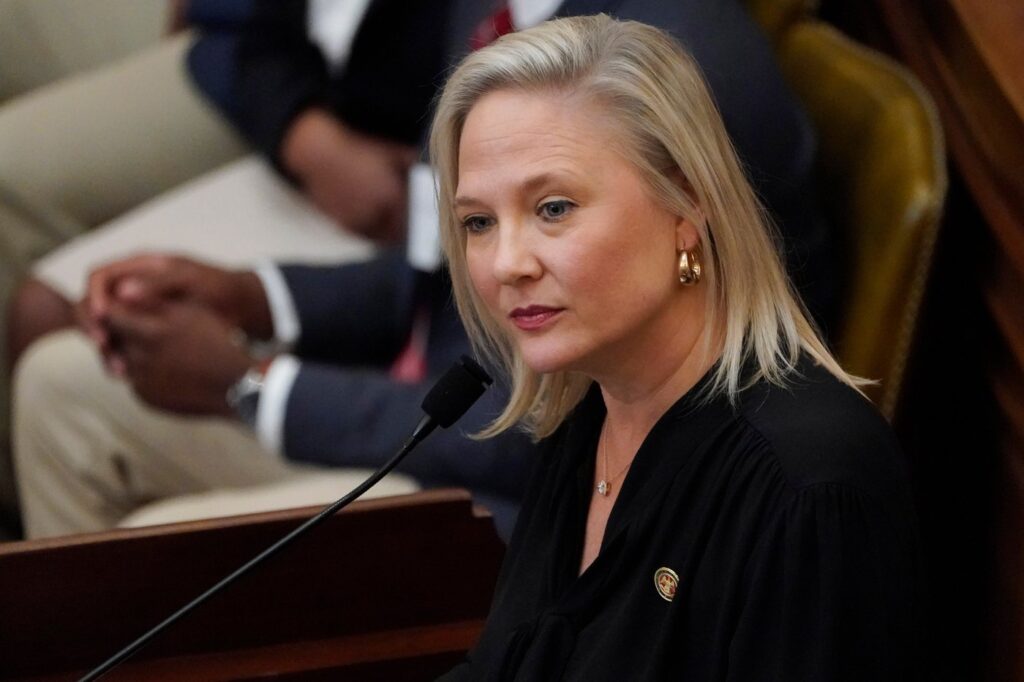
Democratic Representative Zakiya Summers expressed concerns that this bill could entrap individuals seeking autonomy over their bodies within the criminal justice system. Conversely, Republican Representative Celeste Hurst, an advocate for the amendment, stressed its purpose was to prevent abortion medications, like mifepristone and misoprostol, from being available in Mississippi. Hurst remarked that the objective is to thwart out-of-state physicians from circumventing Mississippi’s existing abortion laws.
Mary Ziegler, a notable expert on abortion law from the University of California at Davis, highlighted that Mississippi would face considerable challenges in prosecuting out-of-state providers for sending abortion pills across state lines. Legal protections, known as shield laws, in states where abortion remains legal serve to protect abortion providers and patients from investigations and lawsuits originating from states with restrictive abortion laws. Ziegler noted that while the legislation is envisioned to target medical professionals and manufacturers in states that support abortion rights, it would be far easier to prosecute individuals who possess these drugs in Mississippi.
The legislation's ambiguous language regarding possession raises further concerns. Possession of the medication is criminalized only upon proven intent to distribute, yet Ziegler anticipates that individuals using the drugs for personal reasons may also face prosecution. The lack of clarity surrounding clinical situations means that while Mississippi providers could only be prosecuted for prescribing abortion medications with the intent to induce an abortion, the potential for prosecution in cases involving miscarriages or hemorrhaging remains concerning.
This shift in legislation has emerged against the backdrop of rising abortion rates in recent years, which has disappointed opponents of abortion. The Supreme Court’s ruling in the 2022 Dobbs case, originating from Mississippi, overturned constitutional protections for abortion, previously seen as a significant victory for anti-abortion advocates. However, abortion rates have paradoxically surged nationwide, partly due to increased access to mailing abortion medications.
Senator Daniel Sparks, a Republican involved in finalizing the legislation, indicated that the bill enforces Mississippi's strong pro-life stance, suggesting that circumvention of state laws through mail or other means necessitates stricter enforcement. Conversely, Democratic Senator Bradford Blackmon criticized the bill as unjust and detrimental, particularly highlighting its adverse impact on low-income women. According to Blackmon, affluent residents would still find ways to access abortions, while the bill primarily punishes those who may lack resources.
This legislative move portrays the ongoing tensions surrounding reproductive rights in Mississippi and echoes a broader national discourse regarding access to abortion care following significant judicial changes. The implications of these restrictions, especially in an already vulnerable healthcare environment, pose critical questions about the balance between legislative intent and the realities faced by women in the state.








