

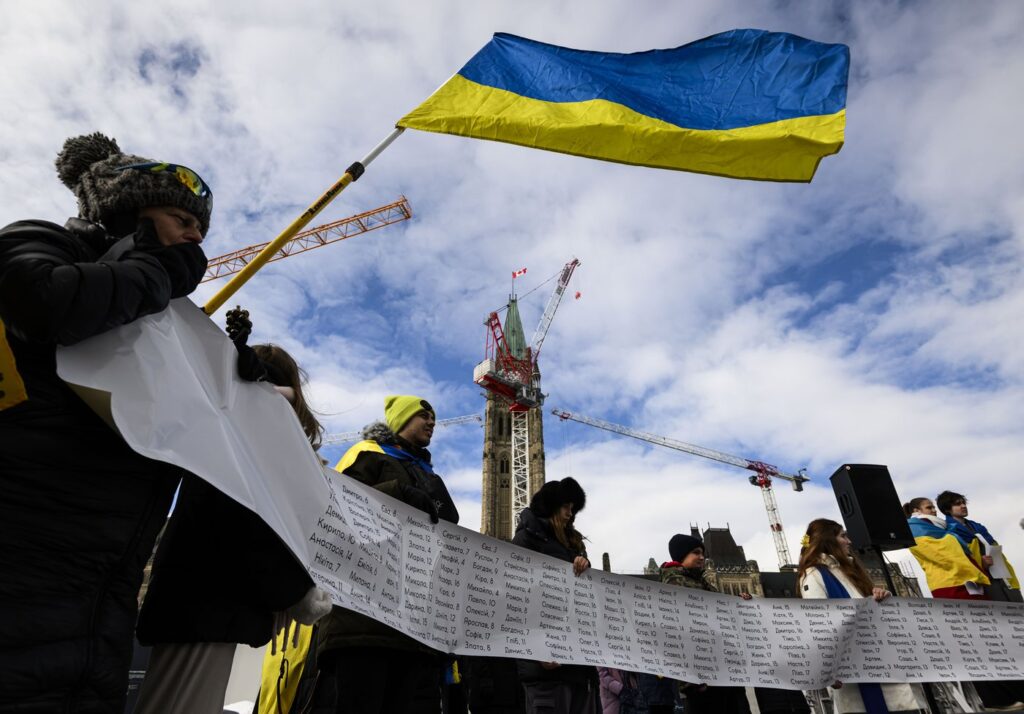
TORONTO – Following Russia's full-scale invasion of Ukraine in 2022, Canada enacted an emergency visa program that welcomed nearly 300,000 Ukrainians, allowing them to temporarily work and study in the country. As the Canada-Ukraine Authorization for Emergency Travel (CUAET) visas approach expiration, many of those who opted to remain face uncertainty regarding their future.
Ihor Michalchyshyn, the outgoing CEO and executive director of the Ukrainian Canadian Congress, noted the anxiety prevalent among community members regarding their ability to remain in Canada. “People have four years in, children are growing up in Canada, and people are developing roots here, but they’re still on this temporary status,” he remarked.
Initially, CUAET visa holders had until March 31 to apply for either a new work or study permit or to renew their existing work permits for up to three years. However, this deadline has recently been extended for another year, according to announcements from Immigration, Refugees and Citizenship Canada (IRCC). Approximately 2,500 CUAET holders have successfully gained permanent residency, while more than 25,000 have applied through family-based temporary streams, with only 3,200 applications approved to date.
IRCC has outlined additional pathways for permanent residency, including regular work-based and regional immigration programs. Nonetheless, Michalchyshyn argues that the government must streamline the process for those with Canadian degrees or work experience, similar to the pathways established for Hong Kong residents. Furthermore, he suggested increasing the number of slots available for Ukrainians in provincial nominee programs.
The federal government has expressed expectations that many Ukrainians will return home when the conflict concludes, which affects the outlook for those seeking permanent residency.
Several Ukrainians shared their personal stories about their hopes and challenges while living in Canada. Mariia Bokovnia, who arrived in May 2022, was initially reluctant to stay, feeling it would mean abandoning her loved ones in Ukraine. Ultimately, upon her parents' encouragement, she chose to remain in Canada. Bokovnia, who recently returned from a visit to Ukraine, described the difficulty of witnessing daily destruction and loss of life there.
Maryna Shum, another Ukrainian resident in Ottawa, is currently seeing a psychologist due to the emotional strain of living away from home amidst ongoing war and uncertainty regarding her work permit, which is set to expire next year. Shum, who had worked as a tour guide before the invasion, is now focused on finding a full-time job while assisting fellow newcomers in Canada.
Solomiia Loik, a 20-year-old who moved to Manitoba from Ukraine, faced challenges with language and culture but has since adapted, graduating high school and enrolling in biochemistry at the University of Manitoba. Despite her academic success, she lives in constant fear for her family's safety back home and worries about her uncertain immigration status.
Mariia Rudenko’s journey brought her to Canada in May 2022 after a successful internship application turned into a reality amid the chaos of war. She has since accumulated various roles within Parliament and remains optimistic about her future in Canada, although she lacks the points for permanent residency applications.
Galya Matkovska's family fled to Canada shortly after her daughter was born, seeking safety away from the violence. Now permanent residents in Ottawa, Matkovska and her husband have settled into stable job roles. However, Matkovska acknowledges the emotional toll of leaving Ukraine and adapting to immigrant life.
This narrative of resilience among Ukrainians in Canada reflects both the immediate challenges of navigating a new life and the overarching emotional impact of separation from their homeland during an ongoing conflict.








