

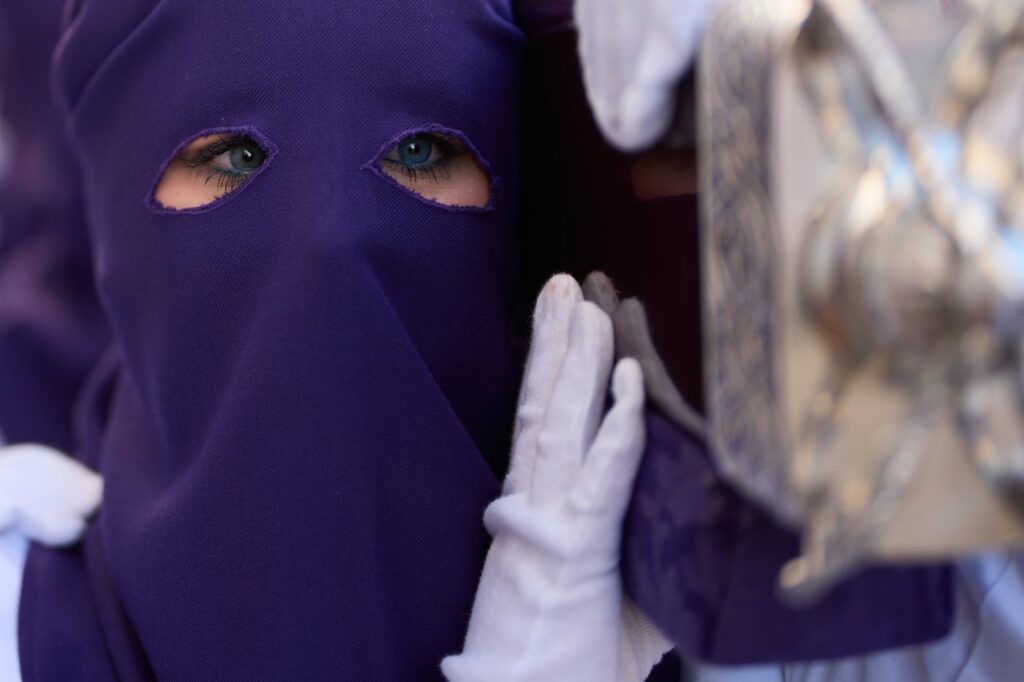
MONTORO, Spain (AP) — Controversy has erupted in Spain over the refusal of a religious brotherhood to allow women to participate in its Holy Week procession. This decision has gained significant media attention, especially considering that Spain's Easter celebrations are deeply rooted in tradition and are among the most passionately observed in the world.
The incident specifically involves the Puríssima Sang de Nostre Senyor Jesucrist brotherhood in Sagunto, which voted predominantly against including women based on a claim of "respect for tradition." This decision sparked protests from various segments of society, including government officials and local residents.
As Holy Week processions unfold across Spain, many are characterized by their elaborate preparations and engage thousands of participants and spectators. Events range from grand processions in cities like Seville to intimate village celebrations that reflect familial traditions. Typically, brotherhoods orchestrate these processions, involving hundreds of devotees who carry heavy floats adorned with religious statues representing significant scenes from the Gospel accounts of Jesus' suffering and death.
While men traditionally carry the heavier floats in these processions, women, referred to as "portadoras," occasionally assume the role of float bearers as well. In Baena, a village known for its picturesque whitewashed homes, women were seen adorned with makeup, proudly participating by carrying a flower-decked float featuring a statue of Jesus. In contrast, members of a local brotherhood in Montoro expressed support for equal roles for men and women, emphasizing that both Virgin Mary and Jesus are represented in the sacred images carried during the procession.
Ricardo Ruano, a participant and father of three daughters, underscored the importance of family involvement in these traditions. He noted that the whole family looks forward to participating in the processions, emphasizing that these events hold a special place in their hearts. Several women from Montoro echoed Ruano's sentiments, expressing frustration over the exclusionary practices in Sagunto. Rosa de la Cruz, one such participant, articulated that women should have an equal right to be part of the procession, stating their involvement is directed at honoring the image rather than seeking attention.
The sense of community during Holy Week is further deepened by the collective prayers dedicated to victims of tragedies, such as a train accident near the region in January that claimed almost four dozen lives. Despite Spain's gradual secularization, interest in joining these processions continues to rise, as noted by Juan Carlos González Faraco, a professor from the University of Huelva. He highlighted the historical context where brotherhoods have progressively begun to incorporate women into both leadership roles and processional functions over the last few decades.
In Montoro, the sentiments of equality among participants prevailed. Mari Carmen Lopez pointed out that while physical strength may differ, both genders share the same spiritual devotion and heartfelt participation in processions. She illustrated this unity in faith as her brotherhood's float maneuvered through the village’s winding streets, emphasizing that men should remember their origins and respect women's roles in religious practices.








