

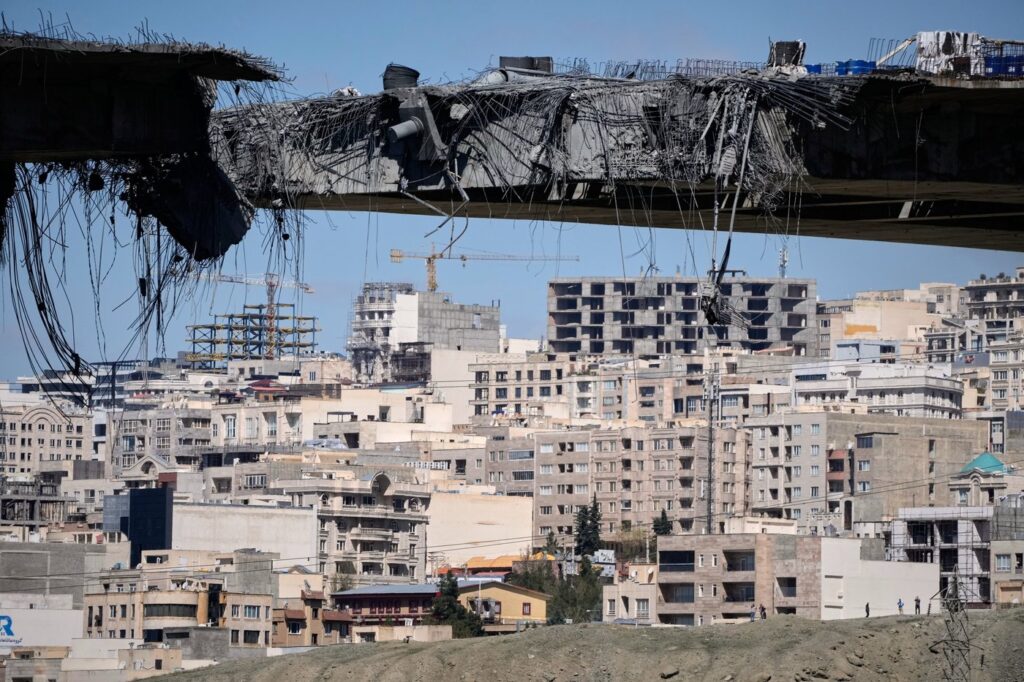
TEL AVIV, Israel (AP) — The U.S. military intensified efforts on Saturday to locate a missing pilot after an American warplane was shot down by Iran. Following the incident, Iran publicly called for citizens to assist in finding the pilot, even offering a reward for their cooperation.
The aircraft, an F-15E Strike Eagle, was one of two attacked on Friday, resulting in one service member's rescue while the status of another remains unknown. This incident marks the first occasion the United States has lost an aircraft over Iranian territory during the ongoing conflict, now entering its sixth week, representing a potential turning point in hostilities.
Launched by the U.S. and Israel on February 28, the conflict has claimed thousands of lives and disrupted global markets. Key shipping routes have been affected, fuel prices have surged, and the fighting shows no signs of abating as Iran retaliates to U.S. and Israeli airstrikes with its own attacks across the region.
On Saturday, missile and drone strikes persisted, including an Iranian drone that damaged the headquarters of U.S.-based tech firm Oracle in Dubai. Concurrently, Israel's military reported that Iran had launched missiles directed at its territory.
This airstrike incident occurred shortly after President Donald Trump, in a national address, claimed that the U.S. had "beaten and completely decimated Iran", emphasizing a swift conclusion to operations. Recently, U.S. and Israeli sources had expressed confidence that Iran's air defenses had been severely compromised.
In a separate incident, an Israeli airstrike reportedly targeted the vicinity of Iran's Bushehr nuclear facility, resulting in the death of a security guard and damage to a support structure. This marks the fourth attack on the facility since the commencement of hostilities.
While the White House and Pentagon have not disclosed much information regarding the downed planes, the Pentagon did confirm receiving reports of an aircraft being shot down in the Middle East. The military has initiated a search-and-rescue operation for the unaccounted service member.
Additionally, Iranian state media reported that a U.S. A-10 attack aircraft crashed in the Persian Gulf, allegedly after being hit by Iranian defense forces. However, the circumstances surrounding the aircraft's fate remain unclear, as well as the condition of its crew.
An Iranian television anchor urged citizens to notify authorities if they come across the "enemy pilot," marking a significant shift from previous claims Iran has made about downing enemy aircraft. This instance reflects a new strategy in attempting to locate and capture the missing American pilot.
In another reflection of regional tensions, an Iranian drone strike targeting Oracle's Dubai headquarters caused damage, following threats from Iran's paramilitary Revolutionary Guard, which accused large American technology companies of participating in espionage efforts against the Islamic Republic. Although there were no reported injuries from the Oracle incident, the damage to the building was visibly significant, with footage corroborating the attack.
Furthermore, Iranian Parliament Speaker Mohammad Bagher Qalibaf issued a veiled threat regarding the Bab-el-Mandeb Strait, a vital strategic maritime route. Amid ongoing disruptions in oil transportation through the Strait of Hormuz, global fuel prices have surged, putting additional pressure on the international economy. World leaders are confronting the challenge of addressing Iran's influence over these crucial shipping lanes as discussions within the U.N. Security Council are set to occur.
Since the war’s inception, more than 1,900 fatalities have been reported in Iran. A review released by the Armed Conflict Location and Event Data group indicated that civilian casualties have predominantly arisen from targeted strikes rather than indiscriminate bombings. Additionally, reports suggest over 1,300 casualties in Lebanon, alongside deaths among Gulf Arab states and Israeli military personnel.
This escalation highlights the complexities and dangers of the ongoing conflict, affecting not only military personnel but also civilians across multiple nations. The situation continues to evolve, precariously balancing international response and regional dynamics.








