

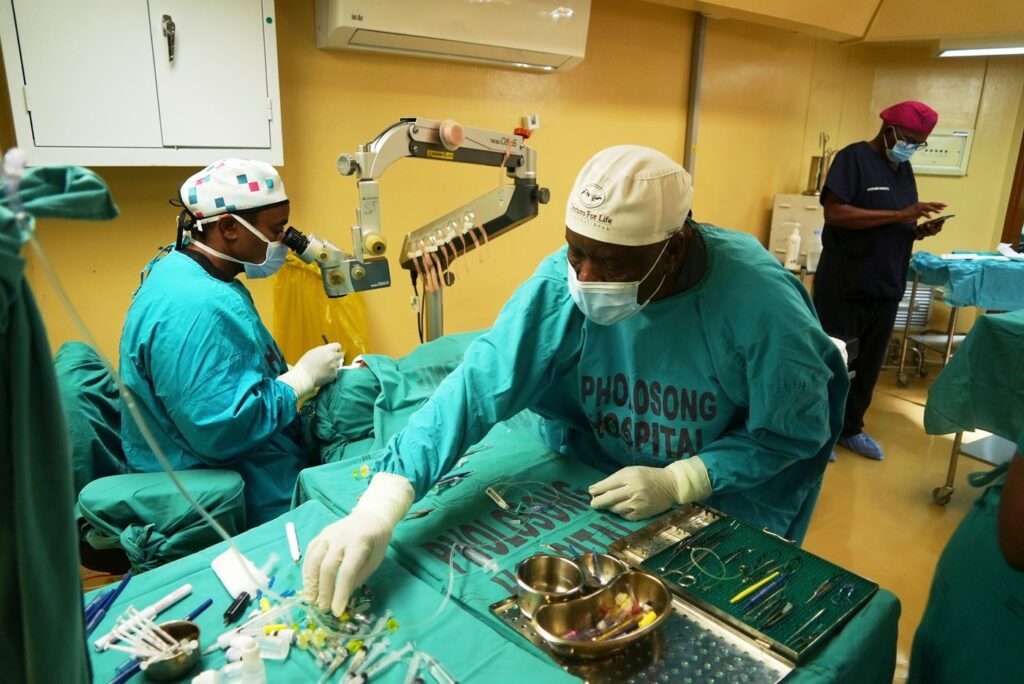
TSAKANE, South Africa (AP) — Gladys Khoza, an 84-year-old woman, has had her life transformed through free cataract surgery after experiencing significant vision problems. The surgery allowed her to reconnect with her family and engage in activities she once enjoyed, such as reading her Bible and watching late-night soap operas. Khoza is one of 133 patients who regained their sight during a "marathon" of cataract surgeries held at two hospitals in South Africa over two weekends last month.
“Wow!” exclaimed Khoza as a nurse removed her bandage a day post-operation, revealing the world around her. When asked if she could see well, she smiled broadly and responded, “Very well.” This experience highlights the urgent need for access to cataract surgeries within the country, as patients within South Africa's public health system often face years-long waiting lists for what is typically a 15-20 minute procedure. In fact, some individuals selected for this recent surgery had been waiting since 2019.
Cataracts, a common condition often associated with aging, lead to the clouding of the eye's lens and are the leading cause of curable blindness worldwide. Approximately 300,000 new cases of cataracts are diagnosed annually in South Africa alone, and nearly 100 million people globally are affected. However, more than half of those suffering from cataracts are still in need of surgical intervention, particularly in Africa, where this number dramatically rises to 75% without access to surgery.
The cataract surgery initiative, part of a broader effort to alleviate healthcare backlogs in South Africa, was first launched on Mandela Day in 2023. This public-private partnership aims to increase healthcare access and has previously focused on surgeries for prostate cancer, cleft palates, and stomach issues. With a significant backlog of over 240,000 people waiting for cataract operations, events like the recent surgical marathon are crucial for addressing these needs.
Dr. Tebogo Fakude, one of the many surgeons who volunteered their time for the cataract surgeries at regional hospitals near Johannesburg, noted the emotional and psychological benefits of restoring vision. “It’s beautiful because it alleviates depression," he remarked, highlighting the sense of relief for patients who no longer feel like a burden to their families. During the marathon, each patient underwent surgery approximately every 30 minutes, with soothing gospel music played in the operating rooms to maintain a positive atmosphere for the medical teams.
Despite the high demand, South African public health facilities are often overwhelmed, prioritizing emergency procedures over elective surgeries like cataracts due to limited resources. The Health Department has vowed to continue these surgical marathons, intending to create more opportunities for patients to receive the care they desperately need. For Khoza and others like her, regaining sight means a significant boost in quality of life, enabling connections with families and the ability to enjoy everyday activities once again.
Molefe Mokoena, a 72-year-old patient who participated in the latest surgery marathon, expressed his eagerness to regain independence after struggling with cataracts for years. “I want to see my great-grandchildren. I want to drive my car, and I’m happy about this,” he said. The hope and optimism embodied by patients like Khoza and Mokoena underscore the life-changing impact of cataract surgery and the necessity of making such essential medical procedures accessible to those in need.








