

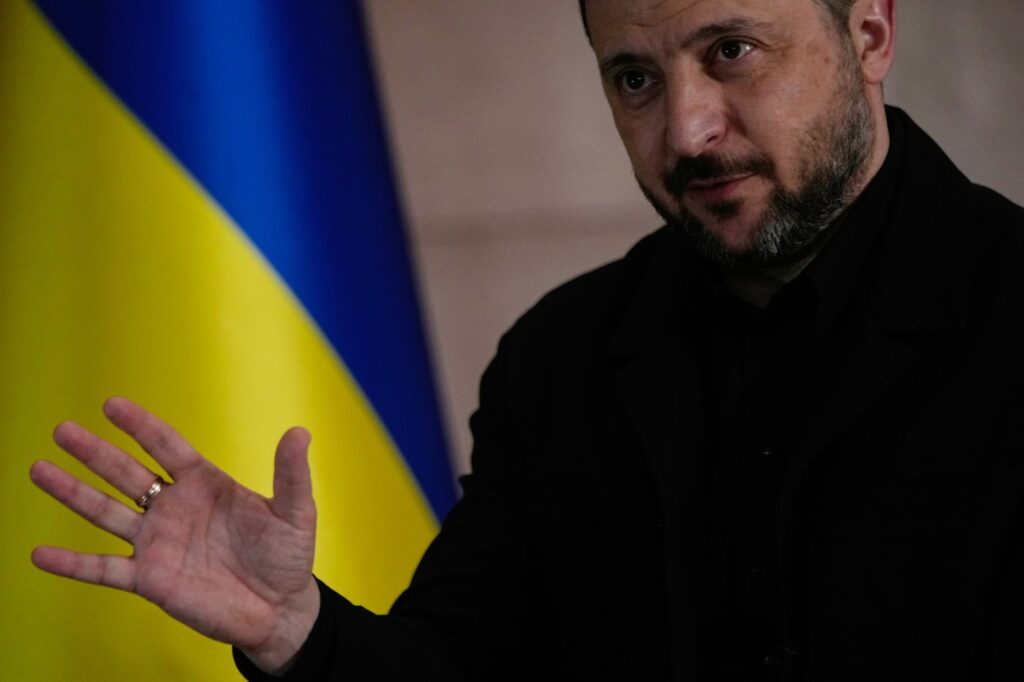
Ukrainian President Volodymyr Zelenskyy has voiced his concerns regarding a potential shift in U.S. priorities due to the ongoing U.S.-Israeli war on Iran. In an exclusive interview with The Associated Press on April 4, 2026, in Istanbul, Zelenskyy indicated that a prolonged conflict in the Middle East may undermine American support for Ukraine, especially as Kyiv anticipates a reduction in crucial deliveries of U.S.-made Patriot air defense missiles.
Zelenskyy emphasized the urgent need for these Patriot systems to defend against Russia's continuous missile attacks. He highlighted that Ukraine has not received sufficient quantities of these defense systems and warned that the situation could worsen if the conflict with Iran extends further. "If the Iran war doesn't end soon, the package, which is not very big for us, I think will be smaller and smaller day by day," he expressed.
The Russian offensive, which has intensified since the full-scale invasion of Ukraine over four years ago, has resulted in thousands of civilian casualties and extensive disruption to Ukraine's energy supplies. This has adversely affected Ukraine's industrial capabilities, particularly in producing drones and missiles essential for defending itself. Zelenskyy pointed out that increasing American support has become a secondary concern in the broader geopolitical landscape.
As discussions around peace negotiations continue, Zelenskyy remarked that these talks reflect a general decline in focus on Ukraine amidst the escalating conflict in the Middle East. He pointed out that while Ukraine remains engaged with U.S. negotiators, the urgency for enhanced security guarantees is critical.
In light of the ongoing war, Zelenskyy noted that the U.S. military resources and support have become strained. The conflict have not only impacted Ukraine but have also led to rising oil prices and fortified the Kremlin’s economic position by increasing its oil revenues. Zelenskyy mentioned the detrimental implications of this situation on Ukraine's strategy to weaken Russia economically.
To counterbalance the shifting focus away from Ukraine, Zelenskyy has offered to share Ukraine’s military expertise with the United States and its allies, particularly in countering Iranian attacks. He underscored Ukraine's ongoing efforts to innovate and respond effectively to the use of Iranian-supplied Shahed drones by Russia. This includes the development of low-cost interceptor drones tailored to combat these threats.
Looking to bolster international support, Zelenskyy has sought defense collaborations with Gulf Arab nations, showcasing Ukraine's experience in managing drone warfare, and offered assistance in securing critical maritime routes, including the Strait of Hormuz. His visit to leaders in Gulf Arab states aimed to strengthen these defense ties while promoting a collaborative approach against Iranian aggression.
In his discussions with Turkish President Recep Tayyip Erdogan, Zelenskyy highlighted potential defense agreements and the importance of maintaining dialogue about peace talks with Russia. Russia continues to ramp up its military operations, particularly as the weather improves, though it has struggled to capture major cities or make significant territorial gains in Ukraine.
Zelenskyy's unyielding stance against territorial compromise remains a focal point of Ukraine's negotiation strategy, asserting that any discussions involving land concessions will not be entertained. His commitment to Ukraine's sovereignty reflects the broader determination to defend the country against ongoing aggression.








