

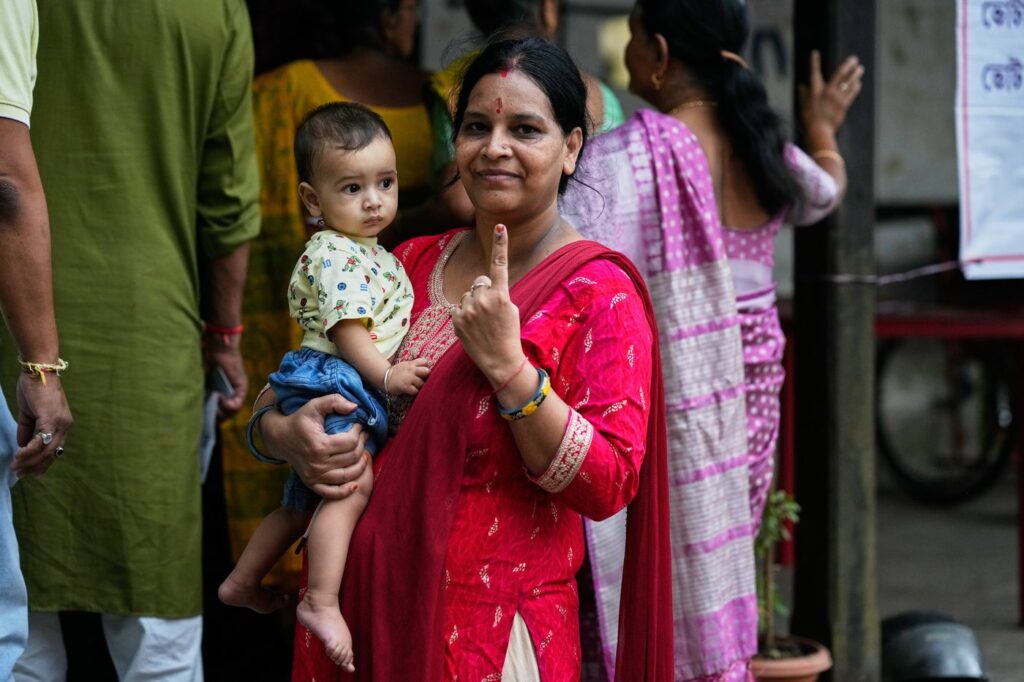
In India, voters in the northeastern state of Assam, the southern state of Kerala, and the federally administered region of Puducherry began casting their ballots on Thursday in local elections that are seen as a significant test of public support for Prime Minister Narendra Modi and his Bharatiya Janata Party (BJP). These local elections are critical as they showcase how well the ruling party can maintain its influence across different regions of the country.
The elections feature the BJP and its regional allies competing against a variety of opposition parties. Assam and Puducherry are currently governed by the BJP-led National Democratic Alliance (NDA), while Kerala is under the control of the opposition. In the upcoming weeks, voters in two other opposition-held states, West Bengal and Tamil Nadu, are set to participate in similar electoral contests, with results from all five regions expected to be announced on May 4.
As these elections unfold, the electorate is increasingly concerned about rising energy costs and a decrease in the availability of cooking gas, particularly in the context of the ongoing conflict in the Middle East. The outcomes of these elections could provide critical insights on whether Modi’s party can penetrate stronger opposition territories, thereby extending its reach. A solid performance by the BJP in these local elections would bolster Modi’s federal government, especially with the national elections approaching in 2024, which are likely to compel the ruling party to rely on regional allies for power.
In Assam, the BJP is focusing its campaign on a hardline stance concerning immigration, a contentious historical issue, particularly because of the state's border with Bangladesh. The ruling party has employed provocative rhetoric, claiming that illegal immigration from Bengali-speaking Muslims is a pressing concern. In contrast, the situation in southern Kerala presents a different challenge altogether; traditionally, power has oscillated between alliances led by the Indian National Congress and various communist parties. The BJP has struggled to make significant inroads here, despite heavy investments aimed at enhancing its visibility and influence.
Puducherry, a small federal territory, sees the BJP attempting to fortify its position by relying on a coalition with a regional party. In West Bengal, however, the electoral contest is expected to be both the most closely watched and contentious. The Trinamool Congress has held the state for three consecutive terms, while the BJP has never governed here. Allegations of irregularities during the revision of electoral rolls have heightened political tensions, with opposition parties claiming that millions, particularly among minority Muslims, have effectively been disenfranchised due to the recent revision efforts by election officials.
The Election Commission of India has denied these allegations, asserting that the revision process aimed at removing deceased, duplicate, and fake voters from the electoral roll, a standard procedure that has been implemented in multiple states. As the local elections progress, the outcomes hold substantial importance for both the ruling BJP and the opposition parties vying to construct a formidable challenge against the current ruling party's dominance throughout India.








