

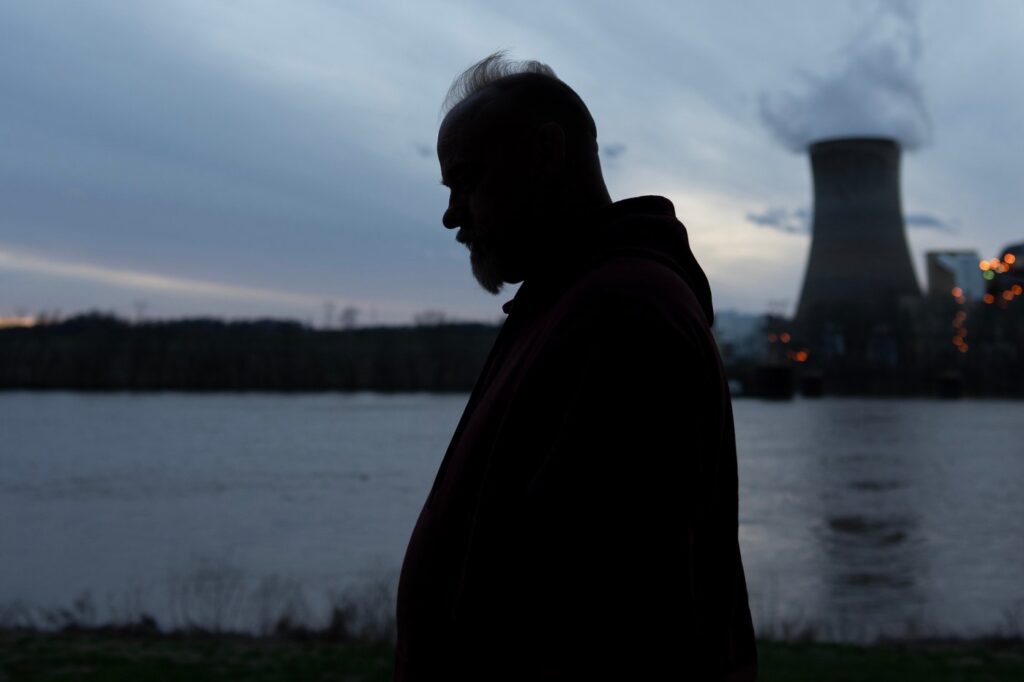
WEST COLUMBIA, W.Va. (AP) – Eric Pinson, manager of a camping trailer park in West Virginia, is grappling with the consequences of rising electricity costs. Located near a planned data center and the coal-powered Mountaineer Power Plant, Pinson's park has seen a significant drop in tenants after he raised the all-inclusive rent from $350 to $400 per month in response to soaring electric bills. This increase forced at least 16 campers, many of whom were longtime residents, to leave the site, replaced by out-of-state workers drawn to the area by new investments. Pinson remarked on the changes affecting his community, saying, “It’s all about change.”
Many residents of West Virginia are outraged by the spike in electricity prices, which have eclipsed both rents and mortgages during the winter months in a state known for its rich energy resources yet facing significant economic challenges. Screenshots of monthly electric bills shared on social media highlight the financial strain faced by thousands. President Donald Trump, during his presidency, promised to reduce electricity bills by at least half. However, instead of a decrease, electricity prices increased by 4.8% in February 2023, with natural gas prices rising by 10.9%, as reported by the Labor Department's Consumer Price Index. These increases surpassed inflation, worsening the situation as geopolitical tensions contributed to rising energy costs.
Rebecca Michalski, a disabled resident, finds herself in a dire financial situation due to high heating costs, taking out a loan to cover her February electric bill of $940.08, which exceeded her fixed income and mortgage. She fears that her electricity will be shut off, stating, “It’s breaking me. And there’s nothing that can be done for it, unless the president does something.” Michalski's disillusionment with Trump is evident as she expresses a sense of helplessness in the current landscape.
The Biden administration has made lowering electricity prices a priority, promoting the expansion of reliable energy sources including coal and natural gas. However, West Virginia remains resistant to adopting cleaner, cheaper sources of energy, relying heavily on aging coal-powered plants that account for approximately 87% of the state's energy production. Even with electricity bills higher in other states, West Virginia's stagnant wages exacerbate the problem; it is the only state where the median inflation-adjusted household income in 2023 is lower than it was in 1970, according to the Urban Institute.
Factors contributing to the rising electricity bills include increased demand, extreme weather events, the need for infrastructure upgrades, and higher natural gas prices. Residents are also concerned about the impact of new data centers, which consume vast amounts of electricity and water, and generate noise pollution. West Virginia Governor Patrick Morrisey recently announced plans for a $4 billion data center to be constructed on nearly 550 acres in Berkeley County, intensifying local concern.
Among those affected is Charles “Duke” Hodge, a veteran and retired railroad worker living in a mobile home park situated along the Ohio River. He reports a shocking increase in his electricity bills, skyrocketing from $120 to $450 in one winter season, which is more than his mortgage payment. Hodge states that he has had to take on part-time work to manage his expenses, illustrating the financial duress caused by climbing energy costs.
The situation is further compounded for local businesses. Some shop owners in nearby Ravenswood have been forced to close due to unaffordable electricity bills, indicating a broader economic impact on the community. As the energy landscape continues to evolve amidst these challenges, residents remain anxious about their financial futures and the stability of their communities.








