

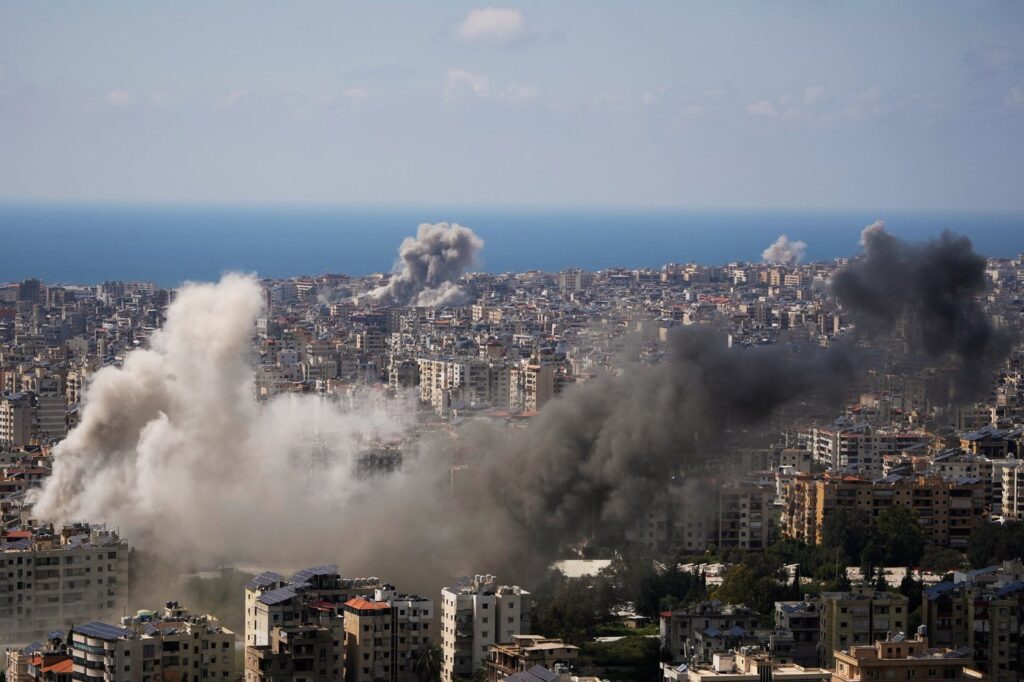
BEIRUT (AP) - In the wake of a tentative ceasefire announcement by the U.S. and Iran, Israel has significantly escalated its military actions against Hezbollah in Lebanon. Reports indicate that Israeli airstrikes across central Beirut and various regions in Lebanon have resulted in the deaths of over 200 individuals and left more than 1,000 injured, as per health officials.
The Israeli military stated that its operations targeted Hezbollah-affiliated sites and claimed to have eliminated an aide to Hezbollah's leader, Naim Kassem. However, local Lebanese officials reported that numerous civilian casualties occurred due to the strikes, which struck busy residential and commercial areas during rush hour.
In retaliation for the intensified Israeli bombardments—which have sparked widespread international condemnation—Hezbollah launched missiles into Israel, although no significant casualties have been reported on the Israeli side. The latest outbreak of hostilities between Israel and Hezbollah follows a chain of events where the U.S. and Israel initiated a war against Iran in late February. Following the recent ceasefire announcement, a contentious debate emerged regarding whether it would extend to Israeli-Hezbollah confrontations; Iran claims it does, while the U.S. and Israel maintain it does not apply.
The conflict between Israel and Hezbollah has a long history, with multiple wars fought since Hezbollah's formation in the 1980s to resist Israeli occupation of southern Lebanon. The most recent escalation began on March 2, following the attacks on Iran by Israel and the U.S., which prompted Hezbollah to retaliate with missile strikes against Israel, citing the killing of Iranian Supreme Leader Ayatollah Ali Khamenei and ongoing Israeli aggressions in Lebanon as justification.
As of now, more than 1,730 people have been killed and over 5,870 injured in Lebanon due to the Israeli strikes since March 2. While the exact number of civilian casualties is unclear, these figures reportedly include hundreds of women, children, and health officials. The ongoing conflict has also displaced over one million Lebanese citizens, with many being forced into makeshift shelters, such as overcrowded schools or their vehicles, as Israeli forces continue their bombardment of various regions.
Hezbollah is alleged to have launched thousands of missiles into Israel, though most have been intercepted or have landed in uninhabited areas. The Israeli military has confirmed that 12 soldiers have been killed in southern Lebanon and over 400 wounded, with a few civilian deaths occurring in northern Israel. Residents there are increasingly frustrated with the government for not providing evacuation assistance similar to that offered during previous conflicts.
Additionally, Israeli forces have initiated a ground invasion of southern Lebanon, resulting in fierce clashes with Hezbollah militants. U.N. peacekeeping forces have found themselves caught in the crossfire, suffering casualties among their ranks. Some Israeli officials have expressed support for a military occupation of southern Lebanon extending up to the Litani River, provoking concerns among displaced Lebanese about the potential creation of a depopulated buffer zone that would prevent their return.
In response to the ongoing conflict, Lebanese officials are making efforts to negotiate directly with Israel for a cessation of hostilities. Israeli Prime Minister Benjamin Netanyahu indicated that Israel is open to talks focusing on disarming Hezbollah and establishing a peace agreement. However, it remains contentious whether the recent ceasefire agreement between the U.S. and Iran includes Lebanon, as Iranian representatives assert, while U.S. and Israeli officials refute this claim. Hezbollah has stated it will only observe a ceasefire if Israel does the same.
Analyst Joe Macaron suggests that the forthcoming negotiations will test the commitment of the Iranian regime to support Hezbollah. He emphasizes that it appears unlikely Israel will accept a comprehensive ceasefire that includes a withdrawal from Lebanon, indicating that a prolonged state of attrition may continue between Israel and Hezbollah, particularly in the southern regions.








