

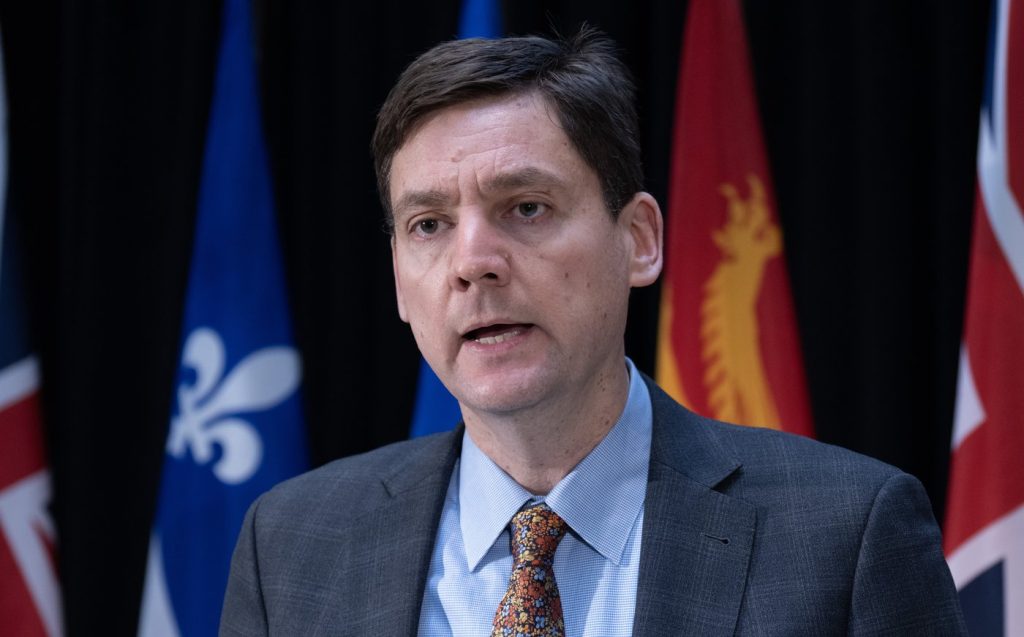
VICTORIA — British Columbia Premier David Eby has addressed Indigenous leaders in a letter expressing regret over the limited time available in the legislative calendar to discuss significant government actions regarding the Declaration on the Rights of Indigenous Peoples Act (DRIPA). The letter, which was obtained by The Canadian Press, highlights the challenges faced by Eby’s government due to a recent ruling by the B.C. Appeal Court that has sparked political and legal tensions.
The premier explained that suspending parts of DRIPA has become necessary due to the court ruling, which he claims introduces an “untenable degree of legal uncertainty.” As it stands, the ruling allows for the potential challenge of any provincial law on the grounds of inconsistency with the United Nations Declaration on the Rights of Indigenous Peoples, upon which the B.C. legislation is based. Eby emphasized that the suspension aims to avoid lasting amendments to the act and to maintain space for the Supreme Court of Canada to provide clarity regarding the implications of the mining rules decision before any further legislative changes are enacted.
The proposed vote on the suspension is deemed one of confidence, where the New Democratic Party (NDP) government holds a narrow single-seat majority, including three Indigenous members. Eby stated that all caucus members acknowledge the significance of the legislative work for the economy’s future. However, several First Nations leaders have voiced their opposition to the suspension, arguing that the government has misinterpreted the consequences of the B.C. Appeal Court's ruling.
In December of the previous year, the B.C. Appeal Court asserted that DRIPA must be interpreted in a way that integrates the UN declaration into B.C. laws with “immediate legal effect.” Eby’s letter articulated concerns that this judicial decision has altered the collaboration process between the government and Indigenous nations into one dominated by costly and time-consuming litigation, leading to an increasing level of legal uncertainty.
The premier noted that there are already “unintended consequences” stemming from the ruling, evidenced by ongoing litigations where claimants are asking the courts to align their legal situations with the UN declaration. He communicated the government’s awareness of First Nations leaders’ disapproval regarding any amendments to the Declaration Act, particularly those proposed unilaterally without allowing adequate consultation and cooperation with Indigenous stakeholders.
Despite this, Eby stressed that the suspension of certain parts of the act is not intended to incite lasting changes but rather to serve as a temporary measure that automatically expires after a predetermined maximum period. He reassured Indigenous leaders that the ongoing dialogue surrounding this legislation is far from over, framing the pause as a way to create space for a more productive future discussion.
Robert Phillips, a representative from the First Nations Summit, has urged the three Indigenous members of Eby’s caucus to either abstain from voting or oppose the proposed pause. Nonetheless, Eby remains confident that he possesses the required votes to enact the suspension of the legislation.
This news release marks a critical moment in the discourse between the British Columbia government and Indigenous leaders, showcasing the complexities and sensitivities surrounding legislative actions related to Indigenous rights.








