

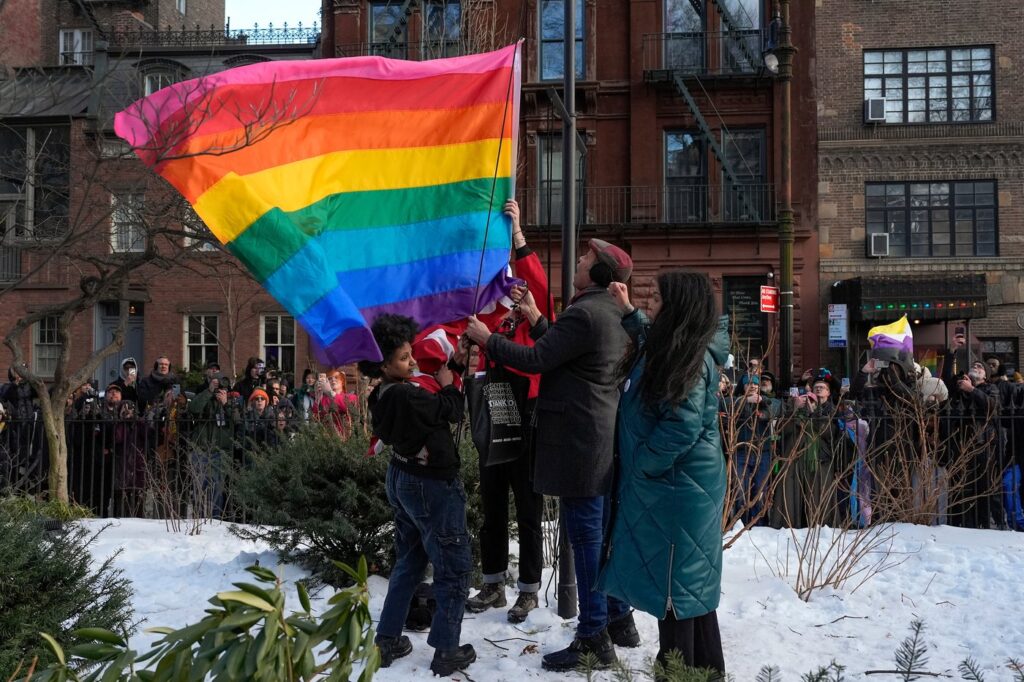
NEW YORK (AP) – The Trump administration announced on Monday that it will continue to fly the rainbow Pride flag at the Stonewall National Monument, reversing its earlier decision to remove the flag in February 2026. This decision comes as part of a settlement of a lawsuit filed by LGBTQ+ advocacy and historic preservation groups, challenging the flag's removal. However, the agreement is still subject to a judge's approval.
According to court documents, the Interior Department and the National Park Service have stated their commitment to maintaining the Pride flag at Stonewall, which will only be taken down for maintenance or practical reasons. As part of this renewed commitment, within a week, the Park Service plans to hang three flags on the flagpole at Stonewall: the U.S. flag, the Park Service flag, and the Pride flag, which will be positioned in between the two.
The decision to maintain the flag at Stonewall has reignited discussions around President Donald Trump's administration and its policies towards LGBTQ+ rights, especially in relation to the Stonewall site, which is recognized as the first national monument dedicated to LGBTQ+ history. The monument commemorates the 1969 police raid of the Stonewall Inn, a pivotal event that sparked the modern LGBTQ+ rights movement.
The clash over the Pride flag intensified following its removal earlier this year. The National Park Service cited compliance with federal guidelines for flag displays, which restrict the display of flags to only the U.S. flag, the Department of the Interior flag, and a POW/MIA flag, although there are exemptions for historical context. However, LGBTQ+ activists perceived the flag's removal as a deliberate attack on their rights and visibility.
In response to the flag’s removal, advocates and certain Democratic officials from New York showcased their commitment by raising another rainbow flag outside the monument soon after, leading to heated moments as they insisted on placing it at a prominent height alongside the U.S. flag.
The Stonewall National Monument was created by former Democratic President Barack Obama in 2016, focusing on a small park adjacent to the Stonewall Inn. This site has been a focal point in the ongoing struggle for LGBTQ+ rights, and the presence of the Pride flag is seen as an essential element of that narrative.
Since returning to office last year, Trump has redirected focus toward diversity, equity, and inclusion initiatives and has made efforts to limit protections for transgender individuals. His administration's policies have included the removal of references to transgender people from the Stonewall monument's website and other materials.
Similarly, the administration has scrutinized national parks, museums, and historical landmarks, making attempts to alter or eliminate materials deemed "divisive or partisan." These actions reflect a broader strategy to sanitize the narrative presented by national monuments and other federal properties, prompting significant backlash from advocacy groups and concerned citizens.
This complex interplay of actions and reactions around the Pride flag at the Stonewall National Monument highlights the ongoing struggles for LGBTQ+ rights in America, underscoring the significance of symbolism in the fight for visibility and recognition within the overarching national discourse.








