

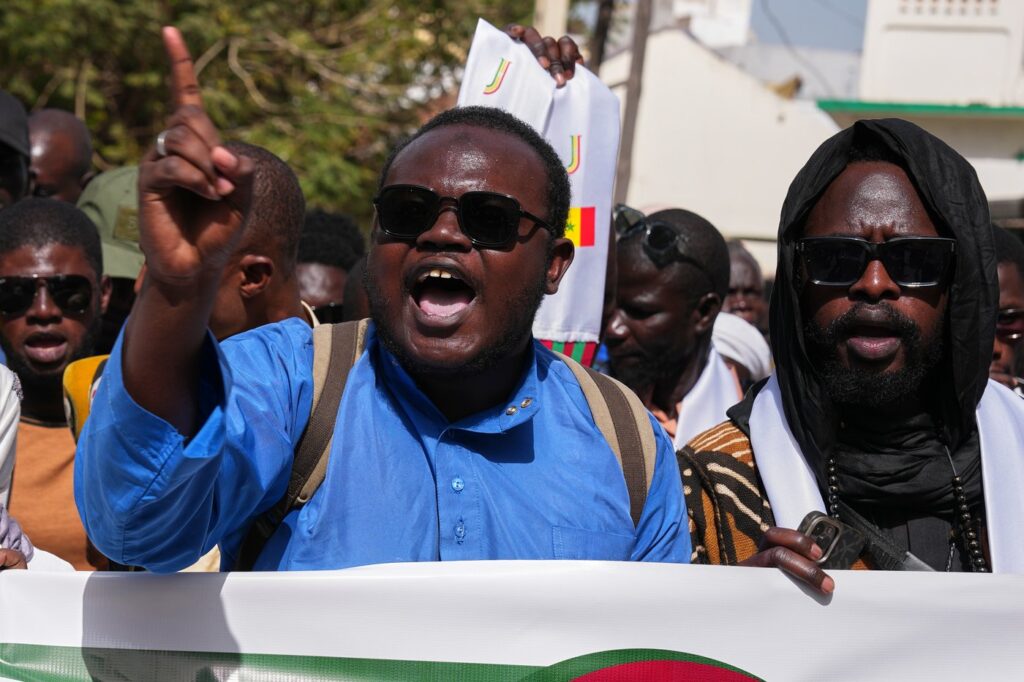
DAKAR, Senegal (AP) – A significant legal development has emerged in Senegal, where a court has issued the first conviction under a newly enacted law designed to impose stricter penalties for homosexuality. This ruling took place in the suburb of Pikine-Guédiawaye in Dakar, where a 24-year-old laborer was sentenced to six years in prison and fined 2 million CFA (approximately $3,300) for “acts against nature and public indecency.” The individual was arrested earlier this month, marking a critical moment in the enforcement of this controversial legislation.
Senegal, a predominantly Muslim nation, is following a troubling trend among African countries that are increasingly imposing harsher penalties against the LGBTQ+ community. The new law, which elevates imprisonment terms for homosexual acts to between five and ten years, reflects a broader regional pattern of legal repercussions for sexual minorities. In addition to increased prison sentences, the legislation also criminalizes what it describes as the “promotion” or “financing” of homosexuality, signaling a targeted crackdown on organizations and groups that support sexual and gender minorities.
Human Rights Watch researcher Larissa Kojoué expressed profound concern regarding the impact of this law, stating that it has fostered a climate of “constant fear” within the LGBTQ+ community. She noted that arrests related to homosexuality have become more aggressive, facilitated by a sense of endorsement from the state apparatus. This development raises significant alarm among human rights advocates, who fear further marginalization and violence against sexual minorities.
Within the context of Africa, the criminalization of homosexual acts is prevalent, with over 30 of the continent's 54 countries enacting laws against it. Some nations, including Somalia, Uganda, and Mauritania, impose even more severe penalties, with the possibility of the death penalty for those found guilty of homosexual acts. The increasing severity of laws in Senegal is indicative of a worrying trend whereby social and legal stigmas against the LGBTQ+ community are not only maintained but are reinforced through legislative action.
The conviction in Dakar highlights the tangible consequences of these oppressive laws, serving as a stark warning to individuals who may identify as part of the LGBTQ+ community. Activists argue that such legal measures not only strip away basic human rights but also fuel societal animosity and discrimination against already vulnerable populations. The international community watches closely as Senegal navigates its social and legal landscape concerning LGBTQ+ rights, and activists call for urgent interventions to protect human rights in the face of growing intolerance.
In summary, the recent conviction under Senegal's new law on homosexuality marks a pivotal moment in the country's legal approach to LGBTQ+ issues. The severe penalties and subsequent climate of fear underscore the challenges faced by sexual and gender minorities in Senegal and beyond.








