

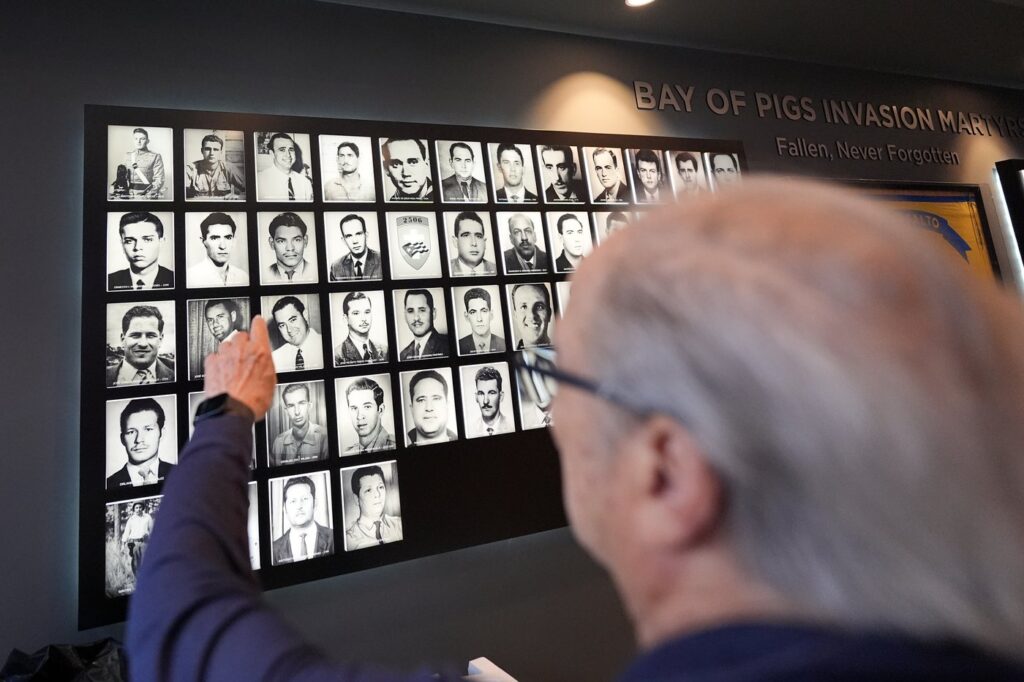
MIAMI (AP) Manuel Portuondo, a Cuban exile, was only a teenager when his family fled to Miami in 1960 following the Cuban Revolution. Motivated by ideals of freedom, he and his classmates joined a U.S.-backed military force of Cuban refugees, enrolling in the invasion set to overthrow Fidel Castro's Communist government.
On April 17, 1961, approximately 1,500 Cuban exiles, supported by the CIA, launched the Bay of Pigs Invasion. The operation aimed to overthrow Castro but resulted in disaster; over 100 fighters were killed or drowned, and about 1,200 were captured, spending nearly 20 months in imprisonment. Today, about 200 veterans of Brigade 2506 remain, with the youngest in their 80s. This month, they are hosting the grand reopening of the Bay of Pigs Brigade 2506 Museum and Library in Little Havana, Miami, to mark the 65th anniversary of this pivotal event in Cuban and American history.
Portuondo emphasizes the museum’s role in preserving the legacy of the Brigade's efforts, stating its purpose is to educate new generations on the cost of freedom. Rafael Montalvo, president of the Brigade 2506 Veterans Association, noted that the museum also serves to raise awareness about the impact of decades of Communist rule in Cuba, asserting that the failed Bay of Pigs intervention helped solidify the permanence of communism on the island.
The roots of the Cuban Revolution can be traced back to 1953, when Fidel Castro led an armed revolt against Fulgencio Batista's U.S.-backed dictatorship. With rising dissatisfaction among the populace, Batista fled in January 1959, allowing Castro to establish a socialist government aligned with the Soviet Union. By the Cuban missile crisis in October 1962, nearly 250,000 Cubans had already migrated to the United States.
The Brigade members, historically leaning conservative, notably endorsed U.S. President Donald Trump in 2016, a departure from their tradition of political neutrality. They appreciated his promises of imposing new sanctions on Cuba and rolling back policies from former President Barack Obama that had eased restrictions on travel and trade. Montalvo expressed hopes for Trump to facilitate a permanent change in Cuba, although he advocated for a supportive role rather than a direct military occupation.
While Montalvo recognizes the potential necessity of military action, he advocates against an outright invasion, fearing the loss of American lives. He believes that genuine change in Cuba should stem from a grassroots uprising of its citizens, backed by U.S. support and investment for rebuilding the country.
Members like Carlos Leon reflect on the impact of violence and warfare, questioning whether military actions would truly enhance Cuba's prospects for freedom. Leon, while proud of his past involvement in the Bay of Pigs, expressed doubt about the effectiveness of military interventions, contemplating the moral implications of such actions on Cubans.
The original Bay of Pigs Museum opened in 1988 but has now been replaced by a new facility detailing historical events of the invasion, with a two-story, 11,000-square-foot structure funded through various sources including Miami-Dade County. The museum's reopening event is set for Friday, prior to welcoming the public, with efforts from veteran members like Ernesto Freyre highlighting the significance of their past commitments.
Freyre encapsulated the sentiments of many Brigade members, expressing a lifelong dream of witnessing a liberated Cuba, whether through U.S. intervention or not. With almost seven decades having passed since the revolution, the hope for liberation continues to resonate among the veterans, as they look forward to a future where their descendants may experience the freedom they long for.








