

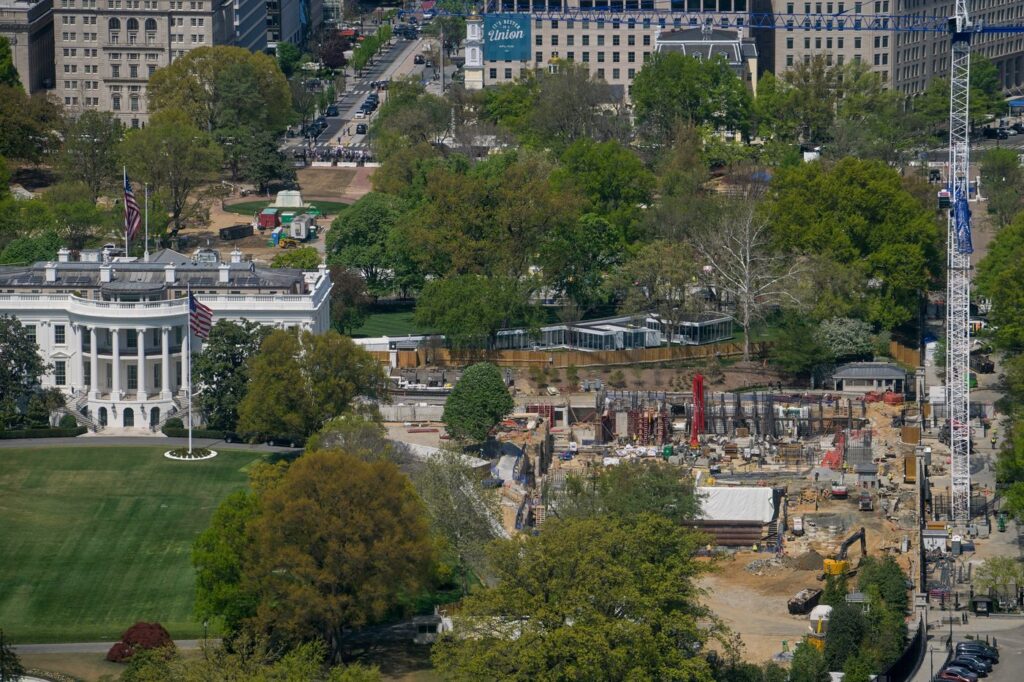
On April 6, 2026, a significant ruling emerged from U.S. District Judge Richard Leon regarding the construction of President Donald Trump’s proposed $400 million ballroom at the White House. The judge temporarily halted all above-ground construction for the project but clarified that the administration is permitted to proceed with below-ground construction, which includes a bunker and other “national security facilities” at the site.
This ruling came in the context of a lawsuit initiated by the National Trust for Historic Preservation, which sought to challenge the ballroom project, particularly after the East Wing of the White House was demolished to clear the area for the new construction. The National Trust filed its lawsuit in December 2025, shortly after the demolition was completed, arguing against the impacts on historic preservation and the overall integrity of the White House.
The judge's decision followed a directive from a three-judge panel of the U.S. Court of Appeals for the District of Columbia Circuit, which instructed Leon to reassess the national security implications of halting the project. Government lawyers asserted that the ballroom project includes essential security features to protect against various threats, such as drones, ballistic missiles, and biohazards. Judge Leon had previously barred any work from proceeding without congressional approval, but his March 31 order included a two-week suspension for enforcement, which was subsequently extended.
Judge Leon's recent ruling specifically allows for the continuation of certain critical construction activities while stopping any above-ground work related to the ballroom. He emphasized that the safety and security exception cannot be applied indiscriminately, stating, “national security is not a blank check to proceed with otherwise unlawful activity.” This indicates the judge’s careful approach to balancing national security interests against legal and regulatory compliance.
After receiving final approval from the National Capital Planning Commission on April 2, 2026, which is responsible for overseeing federal construction projects in the Washington region, the Trump administration had anticipated starting above-ground construction imminently. The ballroom is designed to accommodate 999 guests and is said to be funded primarily through private donations, though public funds are allocated for the constructions of security upgrades and the bunker.
As Judge Leon commences his ruling, he intends to ensure that any part of the construction that violates legal standards remains halted. His judgment reflects his recognition of the complexities involved, particularly regarding the safety of the president, the first family, and White House personnel, while also stipulating that “I have no desire or intention to be dragooned into the role of construction manager.” His remarks reinforce the judiciary's role in related legal disputes, which encompass broader themes of governance and accountability.
The latest developments point toward a legal tussle that will likely continue as multiple parties assess the implications of both national security and adherence to preservation laws. As the situation unfolds, it is clear that the construction project remains a focal point for significant political and public scrutiny.








