

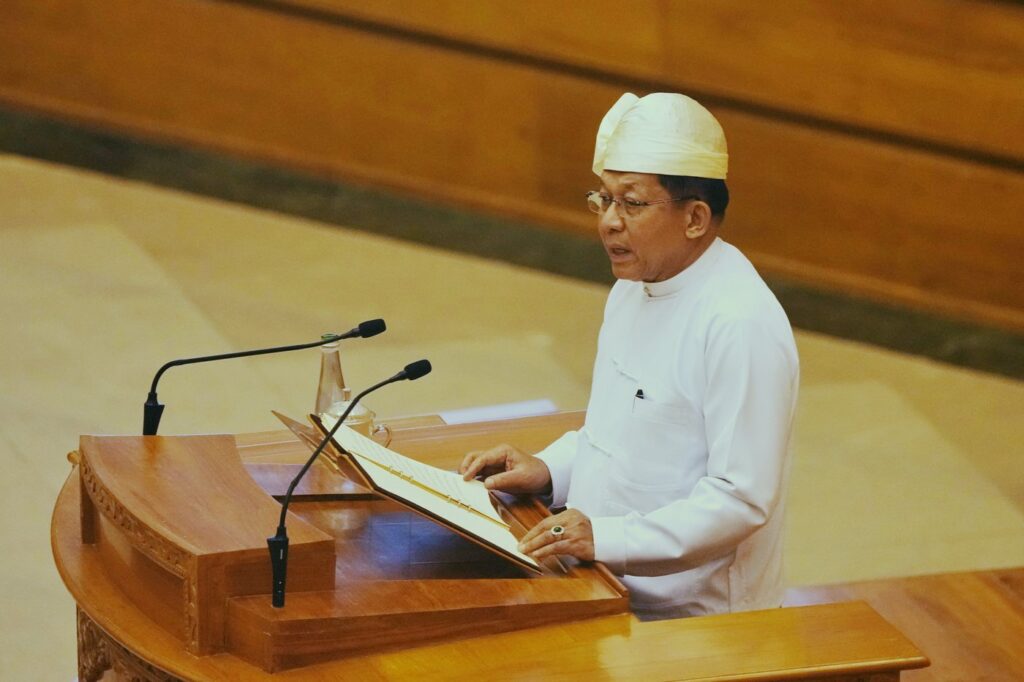
BANGKOK (AP) — More than 4,500 prisoners in Myanmar have been granted amnesty, and others have had their sentences reduced under a pardon order issued by President Min Aung Hlaing to commemorate the traditional New Year. This news was reported by state-run media on Friday.
The identities of those granted amnesty were not immediately available, leading to anxiety among relatives and friends of prisoners who waited outside the main gate of Insein Prison, located in the northern outskirts of Yangon, since the morning. There is yet to be any information indicating whether former leader Aung San Suu Kyi would be among those released or if the pardon also extends to the thousands of political detainees jailed for opposing military rule.
The amnesty follows a week after Min Aung Hlaing was sworn into office after an election criticized for being neither free nor fair, which critics argue served to maintain the military's iron grip on power. In his inauguration speech, Hlaing expressed his government's commitment to implementing amnesties aimed at social reconciliation, justice, peace, and overall national development.
According to a report from state-run MRTV television, a total of 4,335 prisoners received pardons, and nearly 180 foreigners will also be released and subsequently deported. The terms dictate that if any released prisoners commit new offenses, they will be required to serve the remainder of their original sentences in addition to any new sentences incurred. Furthermore, some death sentences were commuted to life imprisonment, life sentences were reduced to 40 years, and prison terms below 40 years were diminished by one-sixth. Under this provision, Suu Kyi's 27-year sentence would see a reduction of 4 and a half years.
Releases of prisoners are commonplace during holidays and other significant occurrences in Myanmar. Since the army took over on February 1, 2021, nearly 8,000 civilians have reportedly lost their lives, and around 22,170 political detainees, including Suu Kyi, remain imprisoned, as documented by the Assistance Association for Political Prisoners, a rights monitoring organization. The true death toll in this ongoing conflict is believed to be significantly higher.
Many political detainees have faced charges of incitement, a law widely utilized to arrest government critics, which carries a penalty of up to three years in prison. Additionally, some have been prosecuted under a counterterrorism law that can impose the death penalty, targeting political opponents, journalists, and other dissenters. The military takeover was met with widespread nonviolent resistance, which has unfortunately escalated into a civil war.








