

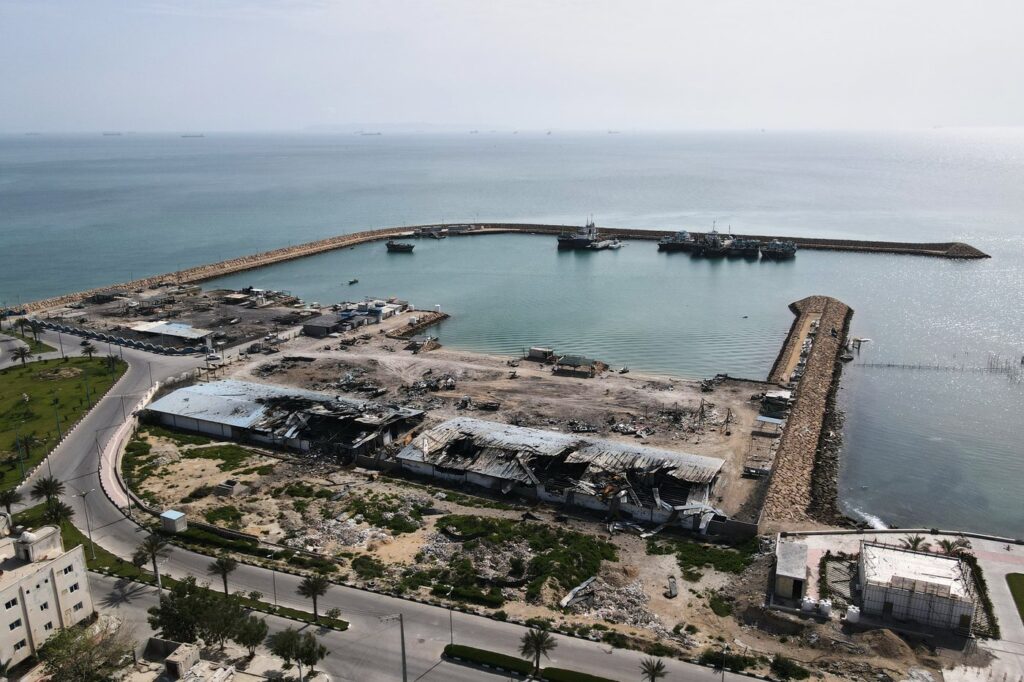
On Friday, the leaders of France and the United Kingdom will convene a meeting of dozens of countries, excluding the United States, in Paris to advance plans for reopening the Strait of Hormuz. This vital oil route has been effectively shut down due to the ongoing U.S.-Israeli conflict with Iran. The meeting aims to address the ramifications of a conflict that many nations did not instigate nor have joined, yet one that has had drastic consequences for the global economy, following the onset of war on February 28, 2026.
In light of the situation, Iran has significantly restricted access to the strait, a critical passage for a substantial portion of the world's oil trade. Notably, the United States is not involved in the planning of what is being called the Strait of Hormuz Maritime Freedom of Navigation Initiative. French President Emmanuel Macron stated the objective of ensuring security for shipping in the region would be "strictly defensive," delineated to non-belligerent countries and contingent on favorable security conditions.
Macron and British Prime Minister Keir Starmer are at the forefront of international efforts to augment diplomatic and economic sanctions on Iran, with Starmer accusing Iran of "holding the world’s economy to ransom." Trump's announcement of an American blockade of Iranian ports has exacerbated economic vulnerabilities, increasing the urgency of the meeting.
Macron expressed the shared responsibility of the international community to ensure the immediate and unconditional reopening of the Strait to revitalize global energy and trade. Military planning has already commenced, with France and Britain convening discussions reminiscent of the coalition efforts for securing Ukraine amid its ongoing conflict.
French military spokesperson Colonel Guillaume Vernet indicated that the initiative is still being formulated. Macron's administration emphasized that contributions would vary by a nation's capabilities, with plans focused on ensuring safe passage with considerations for the security landscape following a potential ceasefire. An official from Macron’s office noted the imperative for ship operators to have the means to safeguard their vessels against potential threats while navigating through the strait.
Sidharth Kaushal of the Royal United Services Institute suggested that mine-clearing operations and the establishment of a warning system for maritime risks are more plausible roles for the coalition than dispatching warships to escort commercial vessels. The scale of vessels needed for such escort missions poses a logistical challenge that many nations currently face.
Additionally, experts like Ellie Geranmayeh have highlighted that European nations could more effectively handle mine-clearing operations without further escalating military tension in the region. Discussions have included utilizing mine-hunting drones in missions originating from the British ship RFA Lyme Bay.
The war has underscored the diminished operational capability of the Royal Navy, which has only one major warship stationed in the eastern Mediterranean, while France has dispatched its nuclear-powered aircraft carrier along with other naval vessels to the area. More than 40 countries have participated in recent diplomatic and military discussions led by France and the UK, with an attendance of approximately 30 nations projected for the upcoming talks, including delegations from Middle Eastern and Asian countries.
Notable attendees for Friday’s meeting include German Chancellor Friedrich Merz and Italian Premier Giorgia Meloni, alongside others joining remotely. This operation serves partly as a countermeasure to Trump's critique of allies for not joining the conflict, as he deemed the reopening of the strait as "not America’s job" and admonished NATO countries for their lack of action.
Kaushal emphasized that many European nations, along with Canada, may wish to showcase their capability to ensure security distinctly from U.S. involvement, thereby demonstrating their capacity for independent military action. However, there remains uncertainty regarding how many nations possess the necessary resources to contribute effectively.








