

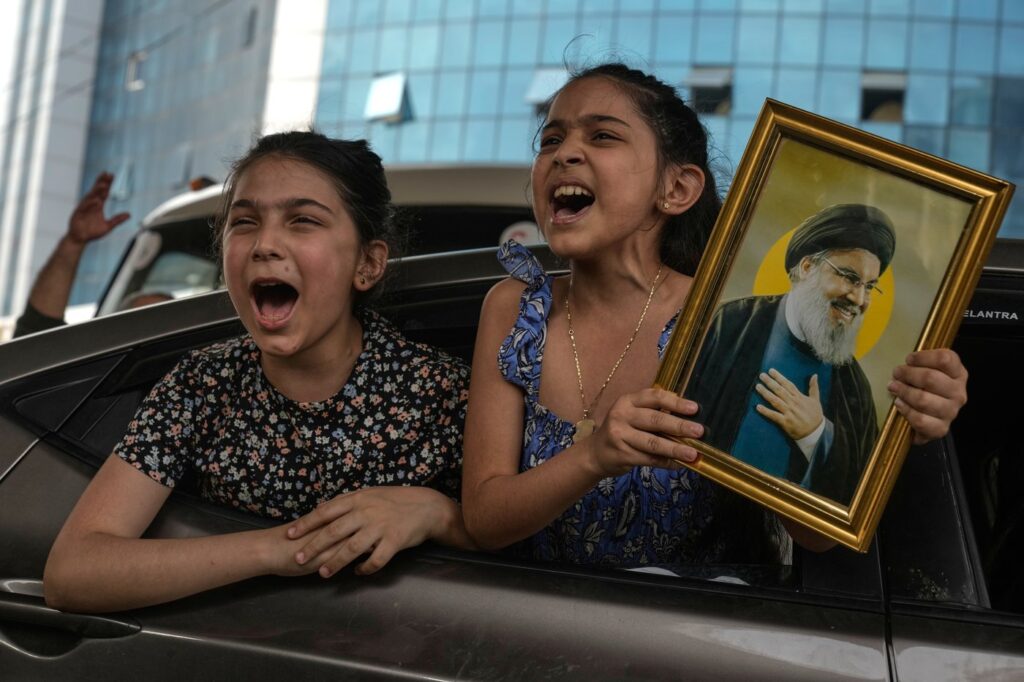
BEIRUT (AP) – A fragile calm emerged in various parts of Lebanon on Friday as a 10-day ceasefire brokered by the United States took effect between Israel and Hezbollah. This development prompted thousands of displaced families to begin their return home, despite the lingering uncertainty, widespread destruction, and Israeli warnings regarding safety in parts of southern Lebanon.
By early morning, traffic was severely backed up for kilometers leading to the Qasmiyeh bridge, which was a crucial route connecting the southern coastal city of Tyre to northern regions. Cars loaded with mattresses, suitcases, and salvaged belongings slowly moved forward through a single lane that had been hastily repaired following an Israeli airstrike the previous day.
The recent Israel-Hezbollah war has displaced over a million people. Despite warnings from Lebanese officials advising against immediate returns, many began heading toward southern Lebanon shortly after the ceasefire announcement, which appeared to be holding overnight.
In villages like Jibsheet, a small number of residents returned to their neighborhoods ravaged by conflict, where apartment buildings stood flattened and streets were cluttered with debris, including chunks of concrete, twisted aluminum shutters, and dangling electrical wires. Zainab Fahas, 23, expressed her mixed feelings, stating, “I feel free being back, but look they destroyed everything—the square, the houses, the shops, everything.”
However, many returnees remained skeptical about the true end of hostilities. Ali Wahdan, 27, a medic who was severely wounded in an Israeli airstrike, stated, “Israel doesn’t want peace… I wish it were different, but this war will continue.” His remarks highlighted the pervasive fear and doubt among those returning home.
In Haret Hreik, a neighborhood in Beirut’s southern suburbs, entire buildings lay in ruins following weeks of intense Israeli bombardment. Ahmad Lahham, 48, stood atop the rubble of his former apartment, waving a yellow Hezbollah flag and expressing his unwavering support for the group. He attributed the ceasefire to Iranian pressure in negotiations with the U.S. and condemned Lebanese leaders for engaging in direct talks with Israel, referring to them as the “leadership of shame.”
A local government official noted that Israel had conducted airstrikes on Haret Hreik 62 times over the previous six weeks. Sadek Slim, the neighborhood’s deputy mayor, indicated that while partial debris cleanup was underway, specialized equipment would be necessary to address the destroyed structures. The area saw heavy traffic as people returned to assess the state of their homes, with various Hezbollah supporters riding scooters and displaying the group’s flag.
As displaced individuals began returning, they faced both the emotional aftermath of their experiences and the stark realities of the extensive damage to their communities. The ceasefire may have provided a temporary pause in the violence, but the challenges of rebuilding and addressing safety concerns loom large over the return of the residents.








