

SOFIA, Bulgaria (AP) On Sunday, Bulgarians are set to head to the polls for the eighth time in five years, in the hope of electing a parliament that can break the political deadlock that has persisted in the Balkan nation. The snap election comes on the heels of a resignation from a conservative-led government, following widespread protests in December that saw hundreds of thousands, mainly youths, demanding an independent judiciary to combat rampant corruption.
Since 2021, Bulgaria, a country with a population of 6.5 million, has experienced continual political instability, marked by fragmented parliaments unable to form lasting governments. Each government has struggled to maintain its position for more than a year, often succumbing to public protests or political maneuvering. This political turmoil has led to increasing public distrust, voter apathy, and, consequently, declining turnout rates in elections.
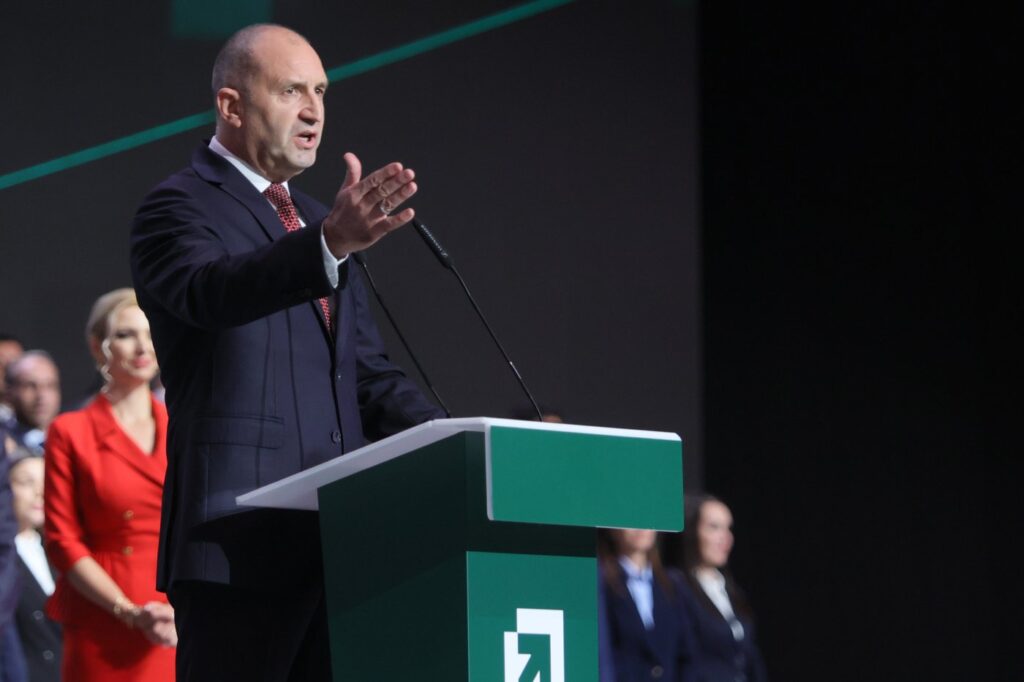
This Sunday’s election is particularly noteworthy as it holds the potential for the ascendancy of Rumen Radev, a left-leaning, pro-Russian former president. His candidacy comes shortly after the Hungarian electorate rejected the authoritarian approach of Viktor Orbán, who has maintained close relations with Russian President Vladimir Putin. Radev, who launched his bid for the premiership after vacating the largely ceremonial presidency in January, is leading a newly formed coalition known as Progressive Bulgaria.
The 62-year-old Radev, a former fighter pilot and air force commander, is currently regarded as the most popular politician in Bulgaria. He has pledged to provide the country with a fresh start. His supporters are divided; some are hopeful he can eradicate the pervasive oligarchic corruption, while others rally behind his Eurosceptic and pro-Russian stance.
Polling stations opened at 7 a.m. and are scheduled to close at 8 p.m. Initial exit poll results will be made public shortly thereafter, with preliminary results anticipated on Monday. Bulgaria joined the European Union and NATO and entered the eurozone on January 1. Nevertheless, political turmoil has plagued the nation since the resignation of three-time conservative Prime Minister Boyko Borissov in 2021, which was triggered by widespread public ire over corruption and injustice.
Radev has positioned himself as a fierce opponent of the entrenched political elite and their connections to organized crime. During his campaign rallies, he has vowed to dismantle the corrupt and oligarchic governance model that has characterized Bulgarian politics. While he has publicly condemned Russia’s invasion of Ukraine, he has consistently opposed sending military aid to Kyiv, favoring renewed negotiations with Russia to resolve the ongoing conflict.
Current opinion polls indicate that Radev’s coalition could capture more than 30% of the votes, placing him nearly 10% ahead of his nearest competitor, Boyko Borissov's center-right GERB party. Most polls indicate a margin of error between 3 to 3.5% for the results.








