

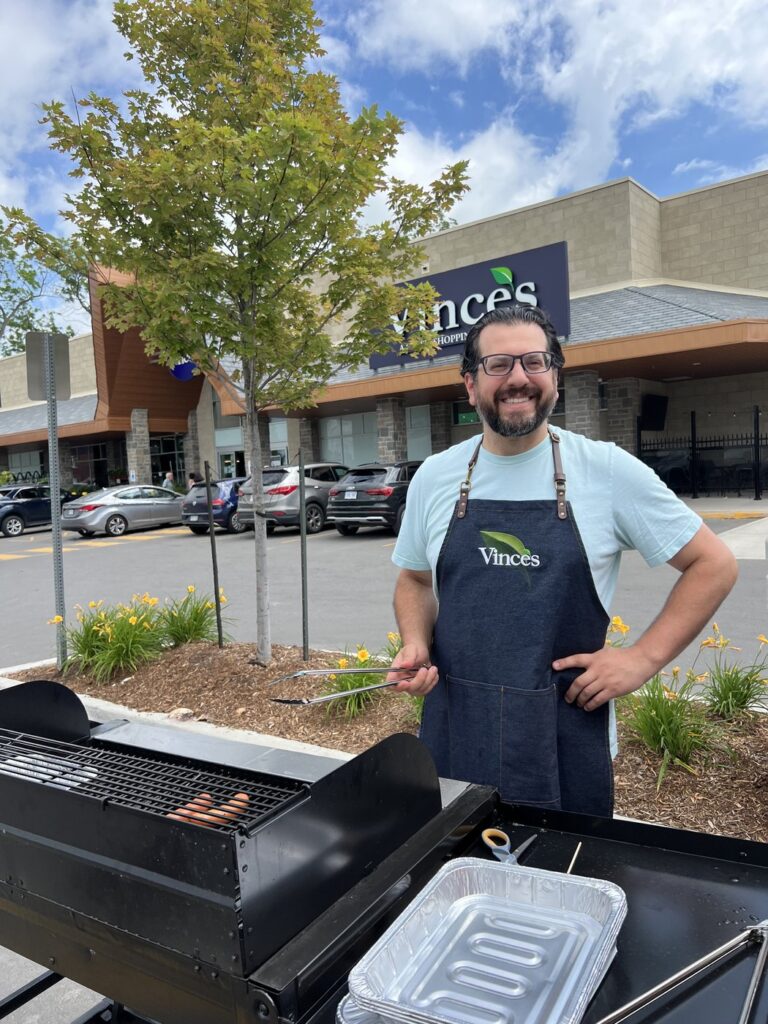
In the wake of the ongoing conflict in Iran, independent grocers in Ontario are grappling with rising delivery costs imposed by suppliers. Giancarlo Trimarchi, president of Vince's Market, which operates four locations north of Toronto, notes that surcharges ranging from $15 to $50 per truckload have begun to emerge, which significantly impacts smaller grocers due to their smaller order sizes.
Trimarchi explains that independent grocers typically order less frequently to keep store shelves well-stocked, causing these delivery surcharges to have a larger proportional effect on their overall costs. The situation is exacerbated by increasing fuel prices, which have surged following the disruption of a substantial portion of the global oil supply at the Strait of Hormuz due to the conflict in the Middle East. Economists are predicting a rise in grocery prices as independent grocers are particularly vulnerable to these surcharges, as they often rely on more frequent and smaller deliveries.
Many independent grocers have already received notifications about impending price increases and temporary surcharges from suppliers. Gary Sands, a senior vice-president at the Canadian Federation of Independent Grocers, indicated that some suppliers are adding surcharges of 10% to 15%, while others are increasing the prices of the goods themselves.
The impact of these price hikes on food costs hinges on how far products must be transported. Food economist Mike von Massow from the University of Guelph noted that transportation generally accounts for about 3.5% to 4% of retail food prices, but this figure can vary significantly. For instance, the transportation costs of fresh produce can represent between 10% to 15% of the retail price due to their longer journey from the United States or Mexico to Canadian stores, alongside their shorter shelf lives.
Von Massow pointed out that independent grocers like Vince's Market face higher shipping costs because they typically require more frequent deliveries of smaller loads. Additional factors, like trucks idling in heavy traffic or delays in unloading, also escalate delivery expenses. To mitigate costs, some independent grocers opt to pick up fresh produce directly from wholesale markets, which allows them to remain agile in the current turbulent market.
Trimarchi shared that Vince's Market routinely picks up fresh produce from a wholesale food market several times a week, with each round trip covering approximately 100 kilometers, in addition to delivery stops. As a result, rising transportation costs are exerting pressure on their operational expenses, with gas prices having increased by about 25% month-over-month.
The Canadian federal government’s planned pause on certain fuel taxes is anticipated to alleviate some pressure, potentially saving consumers 10 cents per litre on regular gasoline and four cents per litre on diesel. However, grocery stores in rural areas, such as the Tignish Co-operative Association Ltd. in Prince Edward Island, are facing additional challenges. General manager Darren MacKinnon noted that some truck operators are delaying shipments due to rising fuel prices, adding further complications to the already strained supply chain.
These delivery delays, which can stretch from a couple of days to a week, result in lost sales opportunities and mismatched labor schedules for the Tignish Co-op. Von Massow cautioned that independent grocers might see their profit margins, typically around 2%, further squeezed if the situation does not stabilize. In contrast, larger grocery chains generally operate with higher average margins of about 3.5%.
As independent grocers consider whether to pass on rising costs to consumers, Trimarchi highlighted the need for careful decision-making to avoid losing customers to competitors. Conversely, MacKinnon expressed a lesser concern about rival retailers, asserting that every grocery store will be impacted by the cascading effects of logistics and supply chain challenges.
Currently, both Vince's Market and Tignish Co-op are absorbing these increased costs without passing them along to consumers. However, changes may be necessary in response to ongoing shipping cost fluctuations. Grocers are striving to adopt flexible approaches to mitigate the repercussions of these economic pressures while navigating this uncertain landscape.








