

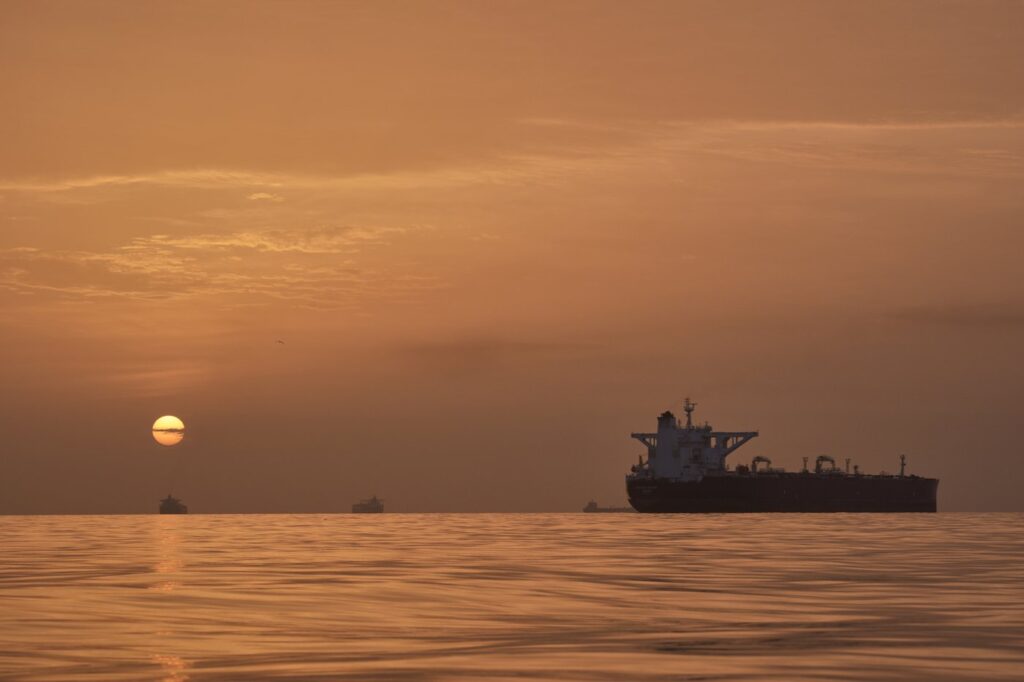
CAIRO (AP) — Iran reaffirmed its commitment to limit maritime activities in the Strait of Hormuz in response to the ongoing U.S. blockade of Iranian ports. This development raises concerns as mediators, particularly from Pakistan, attempt to extend a ceasefire that is set to expire on Wednesday.
The competing blockades complicate mediation efforts and cast doubt on the potential extension of the two-week truce. Iranian parliamentary Speaker Mohammed Bagher Qalibaf stated in a televised interview that it is "impossible for others to pass through the Strait of Hormuz while we cannot." He criticized the U.S. blockade as a "naive decision made out of ignorance," but expressed that Iran continues to seek peace amidst deep-seated distrust of the United States.
Despite Iran announcing a temporary reopening of the strait following a 10-day ceasefire between Israel and the Hezbollah militant group in Lebanon, U.S. President Donald Trump’s assertion that the blockade would remain "in full force" has led to Iran's decision to maintain restrictions in the strait. Following a brief increase in the transit of ships, naval activities in the Persian Gulf came to a halt after two India-flagged vessels were fired upon, underscoring the dangers that loom over this critical waterway through which about one-fifth of the world’s oil trade typically passes.
As the expiration date of the ceasefire approaches, Iran announced it received new proposals from the United States. However, Iranian officials reported that Pakistani mediators are striving to initiate another round of negotiations. The strait's closure, which was a consequence of the U.S. and Israel's military actions beginning on February 28, has become one of Iran’s most significant tools, posing a threat to the global economy and complicating political dynamics for the Trump administration. For the U.S., the blockade serves to further strain Iran's already frail economy.
While the ceasefire has been observed, the escalating tensions in the Strait of Hormuz threaten to derail peace efforts and reignite conflict, which has already led to the deaths of at least 3,000 individuals in Iran and over 2,290 in Lebanon, along with casualties in Israel and Gulf Arab states. U.S. military bases in the region rely on supplies that pass through the strait, making control over this maritime route vital for both nations.
Incidents of aggression have escalated, with Revolutionary Guard gunboats reportedly opening fire on merchant vessels, prompting concerns from India, which has summoned Iran's ambassador over the incidents involving its flagged ships. Iranian Deputy Foreign Minister Saeed Khatibzadeh criticized U.S. decisions as endangering international stability and the ceasefire agreement.
The Supreme National Security Council of Iran subsequently stated that the blockade represents a breach of the ceasefire, emphasizing its stance on enforcing strict control over traffic in the Strait of Hormuz until the war reaches a conclusive end. They outlined that any re-opening of the strait would be conditional upon Iran’s oversight and issuing of transit certifications.
Amidst these tensions, Pakistan continues to advocate for dialogue, with Foreign Minister Ishaq Dar announcing efforts to bridge differences between the U.S. and Iran, while also preparing for further negotiations anticipated early next week.
As Iran reviews the new U.S. proposals highlighted by Pakistan’s army chief, government representatives articulated their reluctance to engage in direct talks, warning that the U.S. has maintained a maximalist approach. Iranian officials firmly stated that they would not relinquish their stock of 970 pounds (440 kilograms) of enriched uranium, declaring the notion as "a nonstarter." Khatibzadeh mentioned readiness to address any concerns related to enriched uranium but refrained from discussing other proposals.
Trump recently commented that while there had been noteworthy discussions, the U.S. remains firm, stating, "They can’t blackmail us." As mediation efforts continue, the situation in the region remains precarious, with the potential for further conflict escalating at any moment.








