

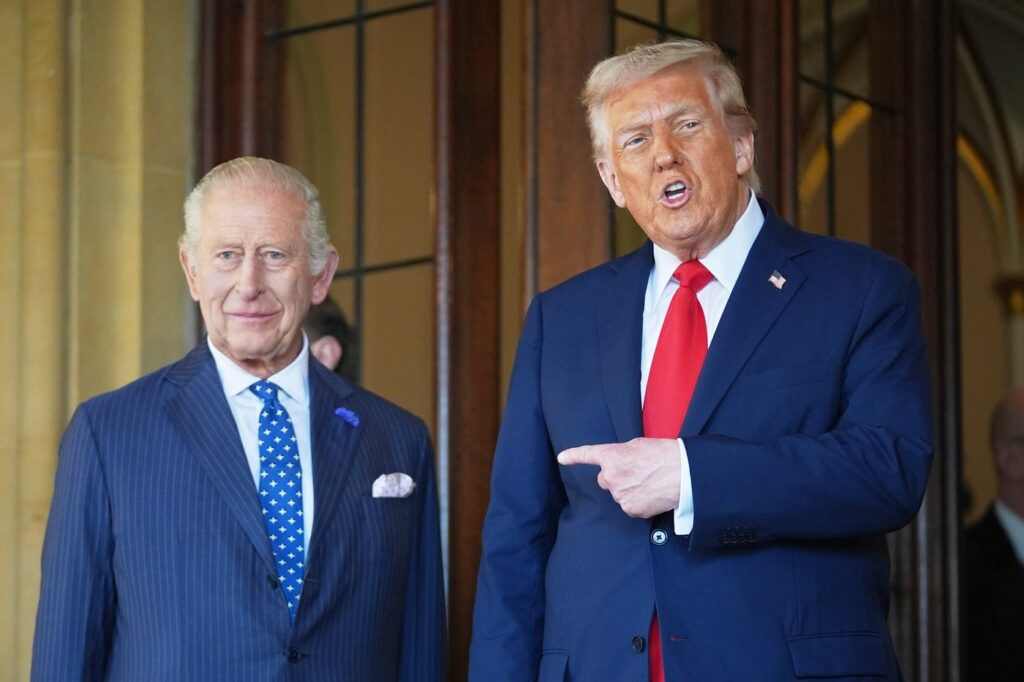
WASHINGTON (AP) — Two and a half centuries after the American colonies declared independence from Britain, King Charles III arrives in Washington on Monday. His visit comes at a time when trans-Atlantic ties are strained and security concerns are heightened. The state visit, organized to celebrate the 250th anniversary of the United States and the enduring "special relationship" between the U.S. and the U.K., has undergone a last-minute security review following a shooting at a dinner attended by President Donald Trump that took place on Saturday.
Buckingham Palace has confirmed that King Charles is relieved the president, first lady, and all attendees left unharmed. Following a security reassessment, the palace deemed the trip will go ahead as planned.
The political implications of this visit are compounded by existing tensions between Trump and the U.K. government, particularly regarding military engagements in Iran. Trump has openly criticized Prime Minister Keir Starmer for his reluctance to support U.S. military actions, stating that the British leader does not embody the qualities of Winston Churchill, the World War II prime minister who emphasized the importance of the U.K.-U.S. alliance.
This discord extends to Trump’s broader critiques of NATO allies, whom he has termed "cowards" for hesitating to intervene in the Iran conflict. A concerning leaked Pentagon email hinted at a possible reassessment of the U.S.'s support for U.K. sovereignty over the Falkland Islands, which Britain fought a war over against Argentina in 1982.
Despite these tensions, Trump has expressed admiration for King Charles, describing him as a "friend" and a "great guy." During an interview, Trump indicated that the royal visit could indeed help mend relationships across the Atlantic. He reminisced fondly about his previous state visit to the U.K. in September and the pageantry that accompanied it.
However, not all feel the same. Some U.K. politicians have voiced their concerns and even called for the trip to be canceled, citing potential embarrassment and unpredictability surrounding Trump. Ed Davey, leader of the centrist Liberal Democrats, labeled Trump a "dangerous and corrupt gangster," cautioning against putting King Charles in a position vulnerable to Trump's unpredictable behavior.
In contrast, Starmer defended the visit, asserting that the monarchy plays a crucial role in strengthening international ties through its established relationships. The backdrop of this visit is compounded by the controversial figure of Prince Andrew, King Charles’s brother, who remains embroiled in scandal and police investigation due to his associations with Jeffrey Epstein.
During his four-day visit, King Charles will engage in several key events, including a private tea with the Trumps, a formal state dinner at the White House, and a visit to the Sept. 11 memorial in New York. His schedule also includes a public address to Congress, marking only the second time a British monarch has spoken before a joint session of both houses since Queen Elizabeth II did so in 1991.
King Charles, who has championed causes such as environmental conservation, will likely use his platform to communicate messages aligned with his values, even amid contrasting views with Trump. The visit serves both as a celebration of the long-standing U.K.-U.S. alliance and as a reflection of the complexities surrounding modern diplomacy.
This visit underscores the enduring significance of the monarchy in navigating international relations, maintaining a symbolic role in a world where traditional political influence has waned. As both countries hope for a successful visit, the dynamics at play signal ongoing challenges and the delicate nature of diplomatic interactions in the current geopolitical climate.








