

NEW YORK (AP) – The much-anticipated fashion exhibit "Costume Art" will be unveiled at the Met Gala on May 8, 2026, exploring the dressed body through the lens of art history over centuries. One of the standout pieces is a striking column gown by Dolce & Gabbana, adorned with shimmering gold sequins and an image of the Greek goddess Aphrodite, symbolizing a longstanding ideal of beauty. However, curators emphasize that the goal of this exhibit is not to glorify traditional forms of beauty but to transform them into a foundation for celebrating diverse representations of the human body.
Andrew Bolton, curator at the Metropolitan Museum of Art's Costume Institute, leads a tour of the newly designed Conde M. Nast galleries, highlighting the exhibit's conscious emphasis on body positivity. Among its most notable features are mannequins modeled after real individuals of various body types. Guests attending the gala will preview the exhibit, which opens to the public on May 10 and runs through January 10, 2027.
The exhibit signals a significant evolution in how fashion is presented within the museum. Following a record-breaking fundraising effort that generated $31 million last year, the Costume Institute has claimed prominent new space on the museum's main floor, near the Great Hall. Bolton expressed pride in this central location, stating that it signifies the importance of fashion in the museum's narrative, allowing future exhibitions to be more easily accessible and longer in duration.
The exhibit is divided into distinct sections that pair fashion garments with art objects, aiming to convey that both fashion and art are intertwined. The opening gallery, titled "Bodily Being in its Diversity," juxtaposes flowing Grecian gowns with images from Greek vases. It seeks to challenge traditional perceptions, moving away from conventional forms towards those historically marginalized in art.
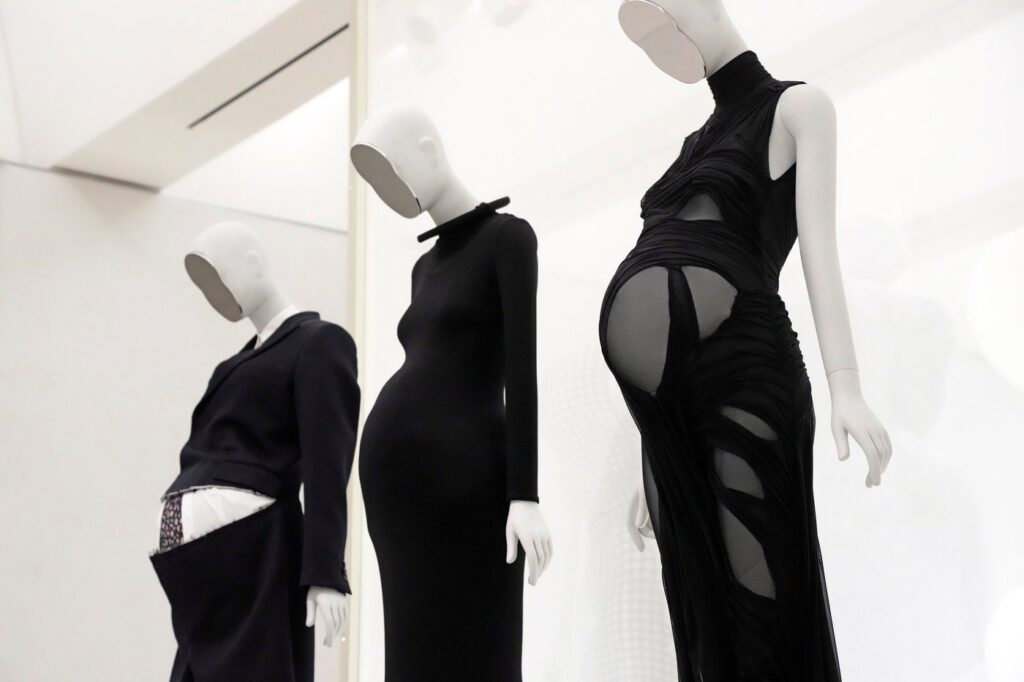
One section prominently features the pregnant body, which Bolton notes has often been ignored or stereotyped in artistic representations. Here, the designs of Georgina Godley are shared, including a "pregnancy dress" from her "Bump and Lump" collection, celebrating the pregnant form in stark contrast to historical portrayals. It is paired with Edgar Degas's sculpture "Pregnant Woman," offering a contemplative reflection on motherhood.
In another section dedicated to the corpulent body, designer Michaela Stark exhibits her corsetry work through mannequins that challenge the narrative that larger bodies equate to fertility. Stark's ensemble "Fat Not Fertile" embodies empowerment through fashion, showcasing how corsetry can accentuate rather than obscure the body. This display is complemented by an ancient statuette mirroring the featured body type.
Next, the exhibit shifts focus to the disabled body, a segment that encompasses different forms of disability, including physical, sensory, and cognitive. Mannequins based on Paralympian Aimee Mullins don Victorian-inspired Alexander McQueen boots, crafted as prosthetics. The presentation is paired with John Gutmann's 1965 sculpture "The Amputee," inviting discourse on representation and visibility.
Among other powerful representations, Irish disability activist Sinéad Burke contributes mannequins dressed in Burberry and Vivienne Westwood, each reformulated for accessibility while referencing historical figures through ancient artifacts. Aariana Rose Philip, a model who uses a wheelchair, is also featured, dressed in contemporary fashion that reflects her identity and advocacy.
Another poignant piece by Scottish designer Nadia Pinkney pays tribute to her ancestors who suffered from Alzheimer's disease. Her coat's pattern, derived from brain scans, symbolizes the impacts of the illness and is displayed alongside a lithograph from Willem de Kooning that addresses similar themes drawn from his own experiences with the condition.
The second gallery focuses on themes of universality among bodily experiences, such as aging and mortality. Here, pieces like Vivienne Westwood’s "Martyr to Love" jacket, decorated with deep red beads reminiscent of blood, are displayed alongside Albrecht Dürer's poignant work "Man of Sorrows with Arms Outstretched."
Overall, "Costume Art" promises to be a groundbreaking exhibit, illuminating the complexities and diversities of the human experience through the artistic lens of fashion. As it prepares to open, it is set to inspire discussions about body positivity, representation, and the evolution of fashion within cultural contexts.








