

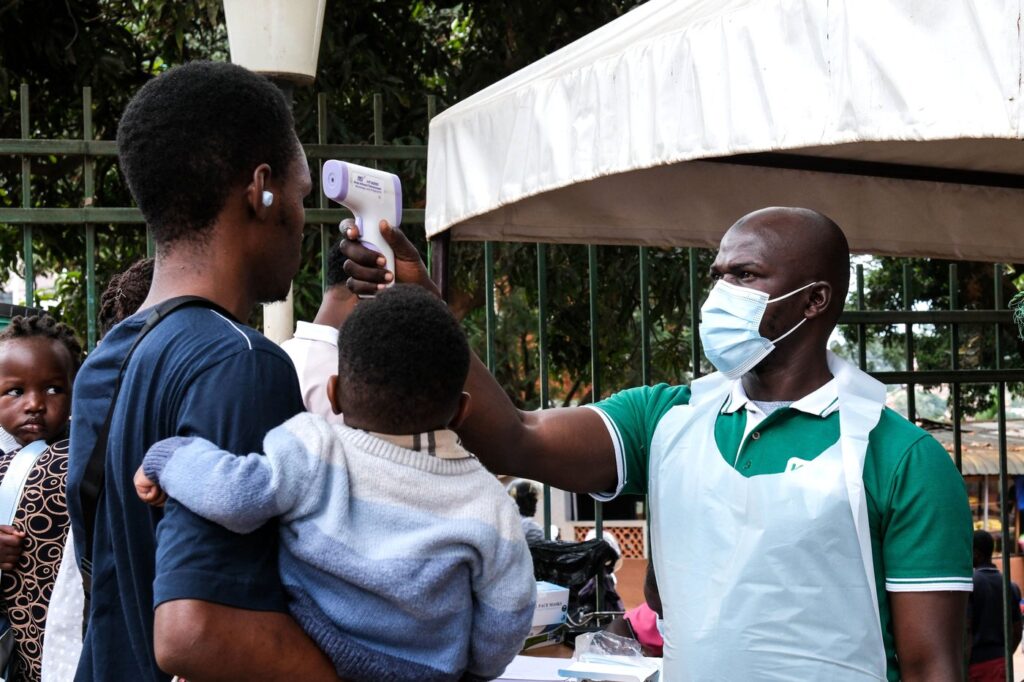
ABUJA, Nigeria (AP) – The World Health Organization (WHO) Director-General, Tedros Adhanom Ghebreyesus, issued a declaration on Sunday regarding the Ebola disease outbreak in the Democratic Republic of Congo and Uganda, designating it a public health emergency of international concern. This decision comes in light of more than 300 suspected cases and 88 fatalities associated with the outbreak.
The WHO communicated via a post on social media platform X, clarifying that this outbreak does not achieve the criteria to be classified as a pandemic emergency, akin to the COVID-19 pandemic. Consequently, the organization advised against the closure of international borders, emphasizing that such measures could be unwarranted and harmful.
Health authorities confirmed that the current outbreak is attributed to the Bundibugyo virus, a rare variant of the Ebola virus, which notably lacks approved therapeutics or vaccines. Historically, over 20 Ebola outbreaks have transpired in Congo and Uganda. However, this marks only the third documented incidence of the Bundibugyo virus, highlighting its rarity in the region.
The unfolding situation began to draw attention on Friday when officials notified the presence of the disease's spread in the eastern province of Ituri, a region that borders Uganda and South Sudan. By Saturday, the Africa Centres for Disease Control and Prevention had reported an alarming total of 336 suspected cases and 87 deaths.
According to the WHO, Congo is overwhelmingly the source of the reported cases, accounting for all but two instances; the remaining two were identified in Uganda. On Saturday, health authorities in Uganda confirmed one case that they claimed was imported from Congo. This patient ultimately succumbed to the disease at a hospital in Uganda's capital, Kampala. Additionally, the WHO reported a second case emerging in Kampala, with both patients having traveled from Congo yet demonstrated no apparent connection to each other.
The Bundibugyo virus was first identified during an outbreak in Uganda's Bundibugyo district between 2007 and 2008, impacting 149 individuals and resulting in 37 deaths. The second documented outbreak occurred in 2012 in Isiro, Congo, which saw 57 cases and 29 fatalities. These past incidents underline the importance of vigilance and rapid response to emerging health threats in the region.
Overall, the ongoing Ebola outbreak, marked by the presence of the Bundibugyo virus, presents a significant public health challenge for both the Democratic Republic of Congo and Uganda. With the WHO's classification of this situation as a public health emergency, the global health community remains attentive to the developments and the necessary steps to control the spread of this deadly disease. Health authorities are urged to enhance surveillance, reporting, and response efforts to mitigate further transmission and protect the affected populations.








