

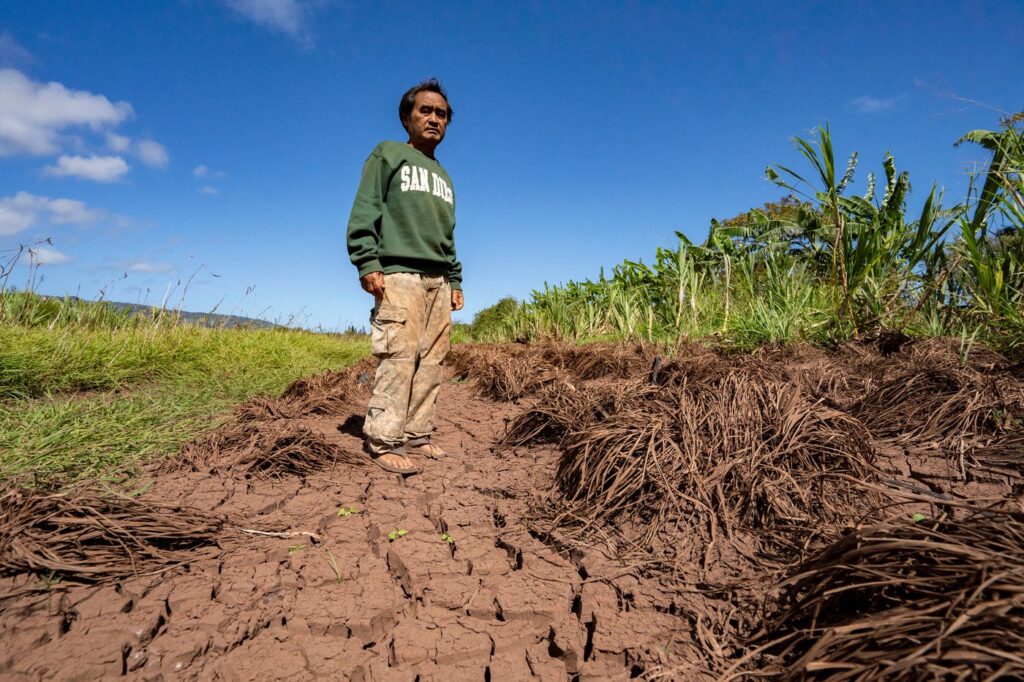
WAIALUA, Hawaii (AP) – Tropical storms in March have inflicted significant damage on small farms in Hawaii, particularly in the North Shore area of Oahu. Bok Kongphan's farm, once thriving with lemongrass, cucumbers, and okra, is now buried under hardened reddish-brown mud. Similarly, his niece, Jeni Balanay, has lost her crops of choy sum, bitter melon, and tomatoes, leaving her recently planted banana, coconut, and mango trees struggling to survive.
The storms have led to what officials are calling Hawaii's worst flooding in two decades, severely impacting local agriculture, crucial for the isolated archipelago. Brian Miyamoto, executive director of the Hawaii Farm Bureau, reported that entire farms have been wiped out, with some farmers just days away from harvest before the disaster struck.
Approximately 600 out of Hawaii's 6,500 farms reported nearly $40 million in damages to crops, livestock, and equipment. However, Miyamoto noted that the total estimate could reach $50 million affecting about 2,000 farms, highlighting the broader impact of the devastating flooding.
The agricultural landscape of Hawaii has evolved over the past century; large plantation-style agriculture dominated the late 19th and 20th centuries. However, after losing ground to international competition by the 1990s, smaller farms with diverse crops began to appear. These farms sell produce locally, which has become increasingly important due to worldwide shipping disruptions during the COVID-19 pandemic. State officials have implemented measures to support these smaller farms, providing infrastructure funding, farm-to-school programs, and loans for those denied credit by banks.
Despite these efforts, challenges persist. Many Hawaii farms are too small and diversified to access crop insurance, leaving farmers vulnerable to natural disasters. As noted by Miyamoto, many farmers are immigrants who were barely making a living before the floods struck, and the majority of Hawaii's farms report less than $10,000 in annual sales, complicating their economic prospects in the wake of the flooding.
Without insurance, Kongphan has been seeking government assistance to recover and restore his 5-acre farm. His niece is assisting him in navigating the recovery process, which includes federal disaster relief and emergency grants. A charitable fund raised around $850,000 following the floods, and many farmers have set up online fundraising pages to seek additional help.
Kongphan expressed deep loss but remains committed to his farm, cultivating vegetables for local farmers markets and retail establishments. His home was also affected by the floodwaters, with visible water marks and a makeshift living arrangement highlighted by a donated tent. The local farming community has been grappling with despair, questioning the future viability of farming after witnessing the widespread destruction.
The flooding adds to a series of crises farmers in Hawaii face, including wildfires and volcanic ash from eruptions. Sharon Hurd, the state's top agriculture official, stressed the necessity of revitalizing these farms, emphasizing that officials are conducting soil tests and providing seeds to aid recovery.
At local farmers markets, diminished offerings are evident, with many farmers unable to bring their typical produce. For example, Kula Uli’i shared that her family now offers only a fraction of their usual harvest, suffering substantial losses of crops that were scheduled for planting. Colorful produce such as tomatoes and even taro, which typically flourishes in water, have been compromised due to contamination from floodwaters.
Overall, Hawaii's small farmers are facing an uphill battle against the aftermath of severe flooding, natural disasters, and economic uncertainties. The community's resilience and support systems will be crucial as they strive to rebuild and sustain local agriculture amidst these ongoing challenges.








