

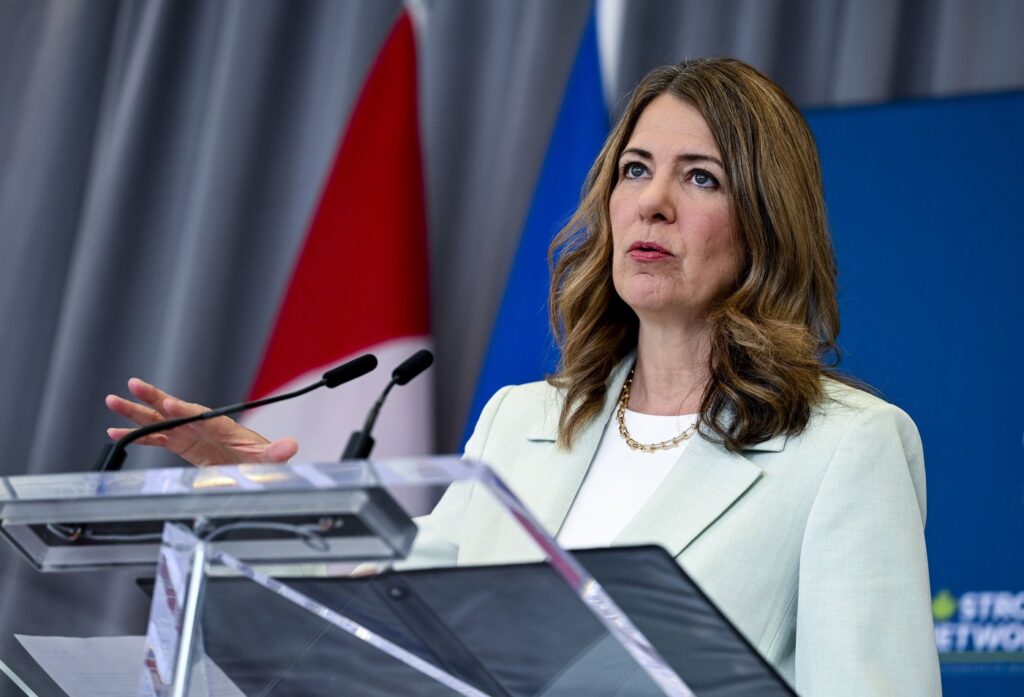
CALGARY – The leader of the Canadian Chamber of Commerce has expressed concerns regarding the uncertainties surrounding Alberta's future within Canada, highlighting the potential risks to investor confidence, economic growth, and Canada's competitiveness on the global stage. Candace Laing made her remarks in a written statement following an announcement by Alberta Premier Danielle Smith, indicating that Albertans will vote this fall on whether to hold a binding referendum on separation.
Laing emphasized that Canada is already grappling with economic challenges that are largely beyond its control. She noted the importance of addressing self-imposed barriers that could further impact economic stability. While acknowledging that there are legitimate concerns arising in Alberta, Laing asserted that Canada's democratic system has the strength to tackle these issues in a constructive manner.
Among Alberta's business leaders, ATCO Ltd. chief executive Nancy Southern stands out for her outspoken support for Alberta remaining within Canada. After the company's annual general meeting held last week, Southern elaborated on her views during a conversation with reporters. She urged Albertans to look at the implications of the Brexit vote from a decade ago, which resulted in the United Kingdom's exit from the European Union, suggesting that such a move has not benefited Great Britain.
Southern expressed her sentiments, saying, “It’s in my heart and soul to be a proud Canadian as well as a proud Albertan. I don’t believe this discussion should have gone as far as it has.” Her comments reflect a broader hesitation among certain business leaders regarding the push for Alberta’s potential separation from Canada, underscoring the complexities and potential fallout associated with such a decision.
This discussion comes at a crucial time as Alberta’s economy faces numerous challenges. Leaders in various sectors are weighing the implications of a referendum on separation, considering not only the immediate economic impacts but also long-term consequences for the province and its relationship with the rest of Canada. The idea of separation has galvanized public debate and concerns about stability in the region, which is already facing its own economic hurdles.
Laing’s statement serves as a reminder that the path forward involves careful consideration of both local and national interests. As Alberta navigates this pivotal moment, the perspectives of business leaders like Southern may play a significant role in shaping the conversation surrounding autonomy and the future of the province’s alignment with Canada.
The dynamics at play in Alberta reflect a broader trend of regionalism and autonomy discussions in different parts of the country, prompting leaders at all levels to engage thoughtfully in dialogue. As Albertans prepare for the upcoming vote, the outcomes will undoubtedly have far-reaching implications, not just for the province, but for Canada's economic landscape as a whole.








