

DUBAI, United Arab Emirates (AP) — Early Thursday, the United States executed a series of airstrikes against Iran, which in turn retaliated by targeting Bahrain, Kuwait, and Qatar. This exchange of fire presented a significant threat to an interim agreement aimed at ending the ongoing conflict in the Persian Gulf. The U.S. strikes were launched just hours after President Donald Trump remarked that recent Iranian provocations against vessels in the Strait of Hormuz indicated a collapse of the fragile ceasefire.
The U.S. military targeted around 90 sites throughout Iran, including military installations and port facilities. Eyewitness accounts reported that sirens sounded at least twice in Bahrain, where the U.S. Navy's 5th Fleet is based. Although there was no immediate damage reported in Bahrain, Kuwait, or Qatar, Kuwait's military stated it was engaged in intercepting incoming drones and missiles. Iranian authorities claimed to have conducted strikes on both Bahrain and Kuwait.
The Central Command of the U.S. military emphasized its readiness to act under the directive of the Commander in Chief, asserting that these strikes were intended to diminish Iran's capabilities to threaten the free navigation of vessels in the Strait of Hormuz, which is critical as it accounts for a fifth of the world's traded oil and natural gas. Following U.S. strikes, Iranian state media reported explosions in several key locations, including Bushehr, which houses Iran's nuclear power plant complex, and other southern port cities like Chabahar and Bandar Abbas. Reports state that at least one firefighter was killed in a strike in Iranshahr.
For the first time since April, the U.S. airstrikes reportedly targeted Iranian bridges, with the Iranian Revolutionary Guard announcing that two bridges on the route to Mashhad were struck. Meanwhile, Trump took to social media following his departure from a NATO summit in Turkey, sharing videos of explosions in Iran and issuing a stern warning to the nation. He stated, "This is in retribution for yesterday's bombing of ships by Iran. If it happens again, it will get much worse!" Despite the escalating hostilities, Trump insisted earlier in the day that the situation would not result in a lengthy military engagement.
Trump expressed doubts about the potential for a long-term ceasefire, suggesting that the interim agreement had effectively ended. He advised that while U.S. representatives could continue negotiations, they were "wasting their time." Iranian officials, particularly Parliament Speaker Mohammad Bagher Qalibaf, asserted in defiance that the U.S. was facing consequences for its bullying tactics, emphasizing that any strikes would be met with retaliation.
The renewed military actions amplified fears of a potential resumption of war, particularly following Trump's declaration that the interim truce was "over." His comments coincided with rising oil prices, reflecting market concerns over the prospect of conflict spreading throughout the Middle East, which could disrupt energy shipments through the strategically vital Strait of Hormuz.
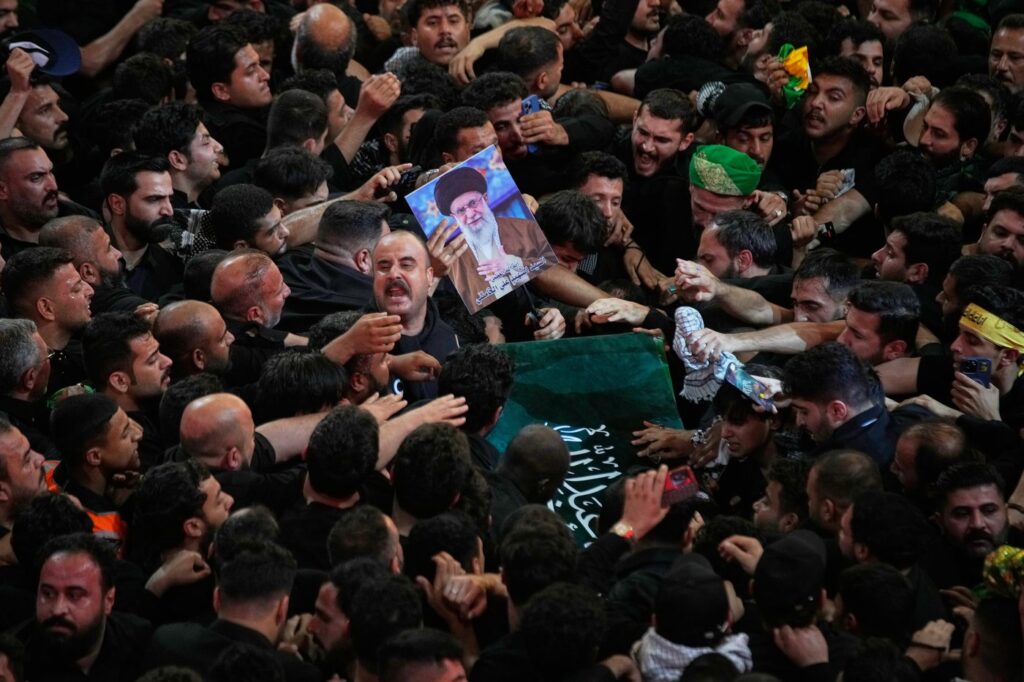
While some factions within Iran seek to maintain control over the Gulf waters, others advocate for a permanent peace settlement to alleviate international sanctions and stabilize the Iranian economy. Negotiations on a final resolution were expected to begin following the funeral of the late Ayatollah Ali Khamenei, who died amid the warfare that erupted on February 28. The funeral, which occurred on Thursday, was anticipated to serve as a moment for reduced tensions, but the latest developments point to an increasingly volatile situation as both sides prepare for further confrontation.








