

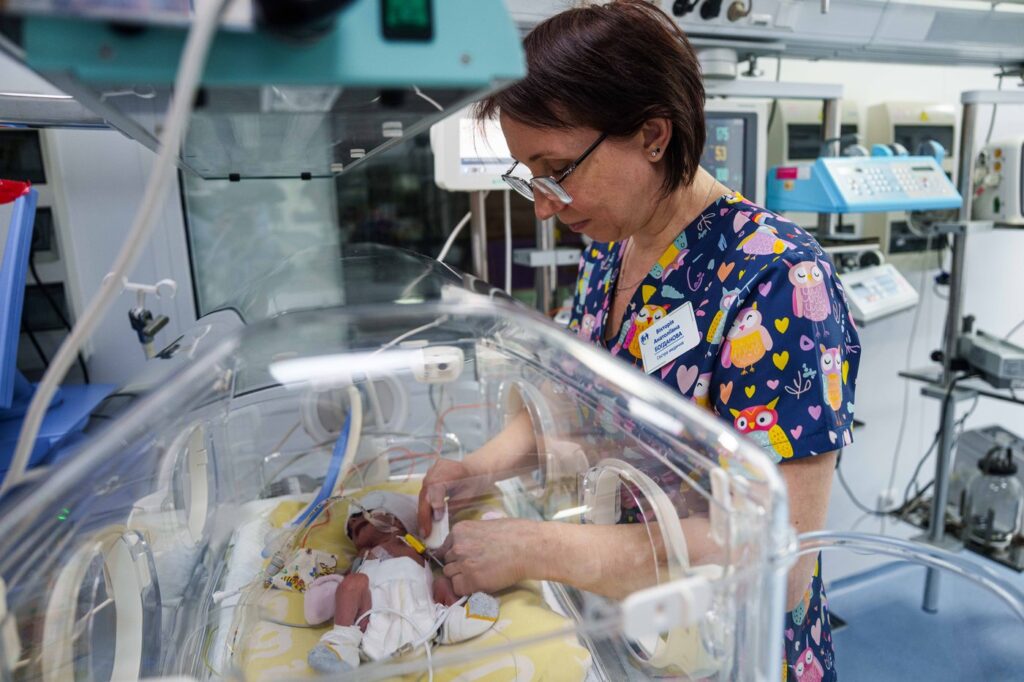
ZAPORIZHZHIA, Ukraine (AP) — Marharyta Nekhoroshyva experienced profound fear upon the birth of her son, Mark, who arrived prematurely at just 26 weeks and weighed only 940 grams (2 pounds). With diapers smaller than an adult's palm, the fragile newborn's survival was uncertain. Tears filled Nekhoroshyva's eyes as she recalled the doctors' words: survival beyond the first three days would be a positive indicator. Despite her lack of faith, she found herself praying for her son's life.
Now nine months old, Mark is vibrant and lively, yet he continues to struggle with chronic breathing problems that require frequent hospitalization. His mother faces the dual challenge of managing her son's health and the perils of living in Zaporizhzhia, a Ukrainian city that constantly fears attacks. With hospitals boarding up windows to protect against blast waves from Russian strikes, Nekhoroshyva is navigating this precarious situation alone, as her husband is fighting in the ongoing war.
Reports indicate a troubling trend in Ukraine, revealing a rise in premature births—defined as births occurring before 37 weeks of pregnancy—especially in regions close to the frontlines. The conflict has nearly doubled the rate of premature births in some areas since Russia's invasion in 2022. Experts attribute this increase to a combination of factors, including the psychological and physical toll the war inflicts on pregnant women, complicating efforts to keep fragile newborns alive.
While overall births in Ukraine have decreased due to displacement and emigration caused by the war, the proportion of premature births is on the rise. According to United Nations data, in Kherson, the preterm birth rate has risen from 5.4% in 2019 to 9.8% in 2025. Similarly, in the Zaporizhzhia region, the rate rose from 5.7% to 7.6%, and in Poltava, from 7.7% to 9.8% over the same period. The ongoing conflict correlates with these increases, as the front line disrupts normal life and healthcare access for pregnant women.
The relationship between maternal stress and premature birth is intricate. Research indicates that chronic psychological stress raises the likelihood of early births, which may lead to infections—known triggers for preterm labor. Dr. Andrew Weeks from the University of Liverpool notes that inadequate access to healthcare diminishes the chances of timely diagnosis and treatment for expectant mothers, thereby increasing the risk of premature labor.
In Ukraine, the rise isn't solely limited to premature births; complications such as emergency cesarean sections are also becoming more prevalent. Isaac Hurskin, a spokesperson for the U.N. Population Fund, highlights the connection between acute stress and various pregnancy-related complications. These challenges contribute to a demographic crisis, as Ukraine's fertility rate has fallen dramatically to about one child per woman, significantly below the 2.1 replacement threshold.
Premature babies require extensive medical care, a daunting task amid war conditions. In Zaporizhzhia's neonatal intensive care unit, a baby born at just 30 weeks and weighing only 700 grams (1 pound, 9 ounces) is sustained in a temperature-controlled incubator. The fragile infant receives nutrients through IV lines, medication, and assistance with breathing from a ventilator. With careful management needed for conditions such as oxygen levels to prevent blindness related to abnormal eye vessel growth, the challenges are substantial. Even after intensive care, these babies often need long-term medical support due to respiratory or neurological issues.
As daily life unfolds in the neonatal units, air raid sirens have become alarmingly routine. Medical staff stay beside the vulnerable infants during such alerts instead of moving them to shelters, as doing so poses a greater risk. Dr. Nataliia Bohuslavska, head of the neonatal unit in Zaporizhzhia, expressed that the war amplifies the fears experienced by mothers, raising concerns about the world their children will enter and the conditions of their births.
Many mothers face these trials alone, as their husbands are away fighting. In moments of devastating news, such as learning of a husband's death in battle, Bohuslavska reassures them that the hospital staff will provide care and support, fostering hope amidst profound loss.
For some, there is cause for celebration. Mariia Skladan, whose daughter Elina was born at just 26 weeks and weighed 740 grams (1 pound, 10 ounces), finally got to take her baby home after extensive medical care. Yet, the relief was short-lived as Elina returned to intensive care the following day due to a viral infection.








