

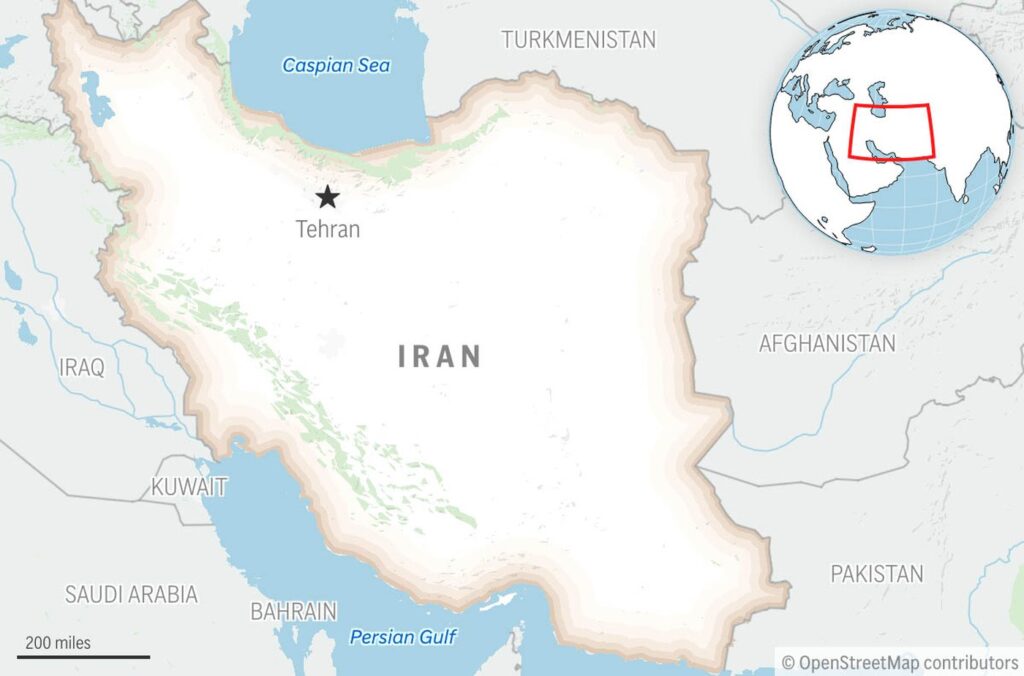
DUBAI, United Arab Emirates (AP) – Early Monday, Israel and Iran engaged in retaliatory strikes that risked escalating into a broader regional conflict. Israeli authorities reported two waves of Iranian missiles targeting the country, prompting emergency sirens and calls for residents to seek shelter. Explosions were heard in central Israel as Israeli air defenses attempted to intercept the incoming missiles.
This exchange of fire followed Israel's airstrikes on central and western Iran in response to missile launches from Tehran. This marked the most intense confrontation since a ceasefire was established on April 8 during the current Iran war, which began on February 28 after the assassination of Supreme Leader Ayatollah Ali Khamenei and other high-ranking Iranian officials by Israel and the United States.
On Monday, which signified the 100th day of the conflict, tensions heightened due to Iran's control over the Strait of Hormuz—a critical route for global oil and gas trade—alongside ongoing hostilities between Israel and Hezbollah, a Lebanese Shiite militia. With the potential for disruption in global energy supplies and Iran's substantial stockpile of highly enriched uranium, the situation was one of significant concern.
Reports from Iranian state media indicated that explosions were heard in several cities, including Isfahan, Karaj, Tabriz, and Tehran. A witness in Tehran described hearing a large blast to the west of the capital. In response to the Israeli attacks, Iran closed airspace around Imam Khomeini International Airport, its main airfield. Concurrently, Israeli military forces reported a missile launch aimed at the country from Yemen, which is home to the Iranian-backed Houthi rebels. However, there were no immediate reports of casualties or damage from this launch.
The Houthis have previously targeted Israel during the Israel-Hamas conflict but had not been significantly involved in the broader Iran war until now. Iranian officials did not provide specific details about the damage from Israeli strikes, although the Revolutionary Guard noted that Israel used air-launched ballistic missiles in its assault.
In a statement, the Israeli Air Force confirmed it had attacked Iranian military targets in western and central Iran. Meanwhile, missile alert sirens were also activated in Saudi Arabia, particularly in the Al Kharj governorate near a U.S. airbase, although the country’s authorities later reported the alert had subsided.
In Washington, the White House has not yet commented on whether the Israeli strikes were coordinated with the U.S. Notably, a U.S. official revealed that President Donald Trump had urged Israeli Prime Minister Benjamin Netanyahu not to retaliate immediately against the Iranian missile attacks. The official stated that Trump believed he had successfully persuaded Netanyahu to wait before acting.
In the lead-up to the strikes, tensions had escalated due to stalled negotiations between Iran and the U.S. regarding the fragile ceasefire, further complicated by Israel's military actions in southern Lebanon. On Sunday, Israel had conducted airstrikes in Beirut before Iran launched missiles at Israel, leading to Monday morning's strikes by Israel.
During a conversation with a Fox News reporter, Trump expressed his desire for Iran to cease missile attacks and return to diplomatic discussions. He also noted his dissatisfaction that Israel's actions in Lebanon were not synchronized with U.S. strategies. Trump asserted his influence over Netanyahu, stating, “He won’t have any choice. I call the shots.”








