

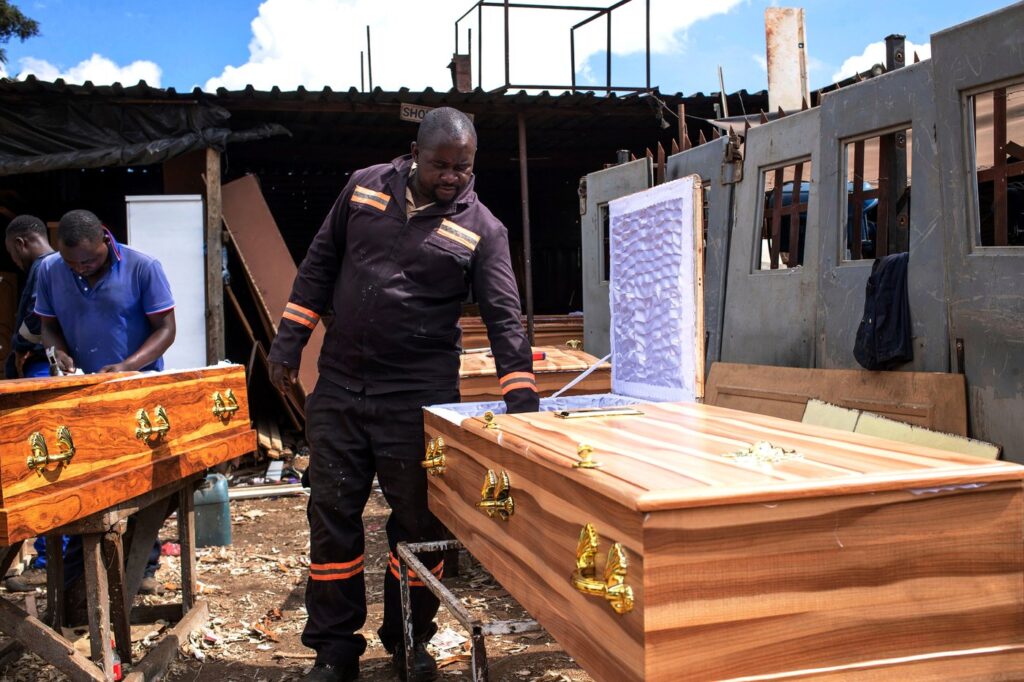
HARARE, Zimbabwe (AP) Melisa Kasu experienced a profound loss when her mother passed away unexpectedly, leaving her family unprepared for the costly demands of a funeral in Zimbabwe. Funerals within the country often require a lavish send-off, including food and music, which can lead families to incur debt to avoid public shame. Kasu's family was aided by a local burial society that provided necessary resources, such as large pots, sacks of cornmeal, and cooking assistance, which made her realize the value of such support.
In 2023, Kasu took over her late mother’s membership in the burial society and learned that these organizations are evolving beyond just supporting funerals. Specifically, some burial societies in various parts of Africa are expanding their services to assist the living. These organizations aim to address rising living costs, limited access to loans, and unstable incomes, as over two-thirds of Zimbabweans are informally employed. Members typically pay a small monthly subscription to access these services.
During a recent meeting held by the Kuchemana Burial Society, founded in Kuwadzana, Harare, in 2021 by a group of women, the focus was not exclusively on death. Instead, activities included singing, debating, and sharing business ideas, demonstrating a cultural shift toward seeking dignity and livelihood for the living. Society secretary Nyadzisayi Mirisawu expressed the ambition to prevent suffering among members while they are alive, moving beyond the mourning context they were initially established for.
The Kuchemana Burial Society comprises 40 members, aged 23 to 72, who contribute $3 monthly. In return, they receive groceries, cooking help, and a cash payout of $150 when a member passes away. Alongside these funeral contributions, members now contribute an additional $10 monthly to a collective savings club. This fund allows members and trusted community members to borrow money at a 20% interest rate, with the opportunity to share in profits annually.
Kasu, who was laid off from her job at a hardware store in 2022, finds this aspect of the society particularly beneficial. She received $100 from the savings cycle and borrowed another $30 without the typical challenges associated with banks. This financial support enabled her to purchase cooking gas tanks and scales to start selling cooking gas to her neighbors. She reported that her business is thriving, allowing her to support herself effectively.
Researchers have noted that this trend reflects a broader pattern across Africa, where traditional frameworks such as burial societies are adapting to meet contemporary needs. Sharon Chilunjika, a lecturer at Midlands State University in Zimbabwe, pointed out that banks often do not lend to the poor or unemployed, and government support is insufficient. As a result, many turn to burial societies, trusted organizations they are already familiar with, to meet a wider range of financial needs.
Funerals are typically viewed as an essential family obligation in Zimbabwe, where poorly managed ones can lead to public ridicule and shame. This societal expectation drives families into debt or reliance on predatory loan systems. Traditional burial societies, with roots tracing back to the early 20th century, were initially formed by migrant workers for dignified burials. Today, these societies remain an essential aspect of community life in Zimbabwe, focusing not just on providing burial assistance but also on fostering community support and belonging.
The prevalence of funeral insurance in Zimbabwe often surpasses that of health insurance; fewer than 10% of individuals have health coverage. Burial policies, commonly promoted by insurers and mobile companies, highlight the importance of funerals in the community's collective consciousness. Members of burial societies emphasize that these community-based organizations offer an unmatched sense of belonging that commercial entities struggle to replicate.








