

The Sagrada Familia basilica in Barcelona, Spain, is renowned for its stunning architecture, designed by Antoni Gaudí. Characterized by sandcastle-like spires and a kaleidoscopic interior, the basilica is a treasure trove of intricate details that astonish even its regular worshippers. Recently, Josep Turull, the Catalan rector of the Sagrada Familia, provided The Associated Press with a private tour, highlighting the hidden gems of this iconic landmark ahead of Pope Leo XIV's Mass, scheduled for a Wednesday night.
According to Turull, “one of the elements of the Sagrada Familia Basilica is that you never exhaust it.” He explained that after eight years as its rector, he continues to discover new details every day. The tour emphasized the complexities of the basilica, beginning with its elaborately decorated façades. They are filled with numerous religious scenes, symbols, and enigmas. For instance, the westward-looking Façade of the Passion, which portrays the suffering of Christ, was intentionally designed by Gaudí to appear harsh and cruel, emphasizing the pain of Christ’s final days.
One notable feature is the “magic square” next to Judas, which is a puzzle representing the inevitability of Christ's death—every row, column, and diagonal of the square adds up to 33, symbolizing Jesus's age at the time of crucifixion. Additionally, a small labyrinth near the scene of Peter denying Christ signifies the importance of maintaining faith in God amidst feelings of being lost.
The tour continued to the heights of the basilica where nature flourishes. The Tower of Jesus Christ, which recently made the Sagrada Familia the world's tallest church, features a variety of natural elements. From fruits adorning the spires to fauna, including peregrine falcons nesting in the Tower of St. James, these birds help manage the pigeon population, an important aspect for maintaining the site.
Peregrine falcons were chosen as part of a project to reintroduce them to the urban landscape, having once been a common sight before their disappearance in the 1970s. For over two decades, these birds have thrived at the basilica, symbolizing the cycle of natural life as described by Turull.
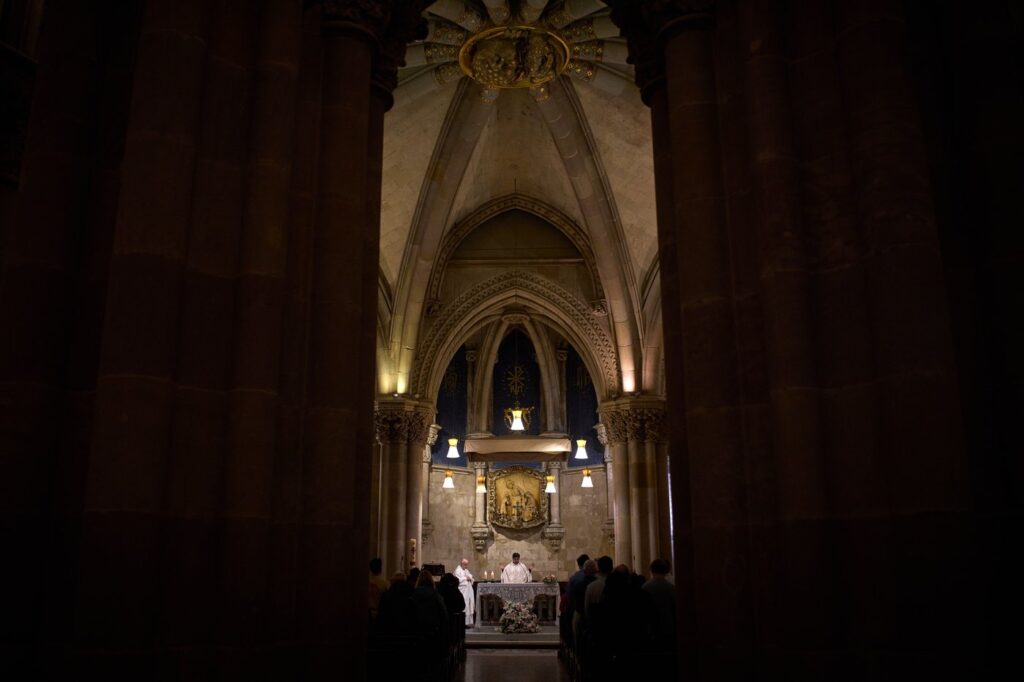
The tour then proceeded underground to Gaudí’s crypt, considered the “spiritual heart” of the basilica. Accessible through a modest side entrance, the crypt houses a small chapel where Mass is celebrated, and visitors often find a needed respite from the bustling crowds above. Here lies Gaudí’s discreet tomb, where he has rested since dying 100 years ago after being struck by a streetcar. Turull noted the numerous candles lit by visitors who come seeking intercession and favors through Gaudí.
The Vatican is currently in a prolonged process to potentially canonize Gaudí, who was designated “venerable” by Pope Francis in 2025. The next steps involve proving miracles attributed to his intercession for his beatification and eventual canonization.
Further along the tour, Turull showcased an enormous seashell, a real one designed by Gaudí as a holy water basin, emphasizing how the architect drew inspiration from nature in his designs. Finally, the tour culminated in a private changing room fitted with intricately designed oak cabinets crafted by Gaudí, designed to hold sacred relics and clerical garments, including the chasuble that Pope Leo XIV will wear during his Mass. The vestment is currently being tailored to reflect the significance of the occasion and the recently raised Cross of Jesus Christ.








