

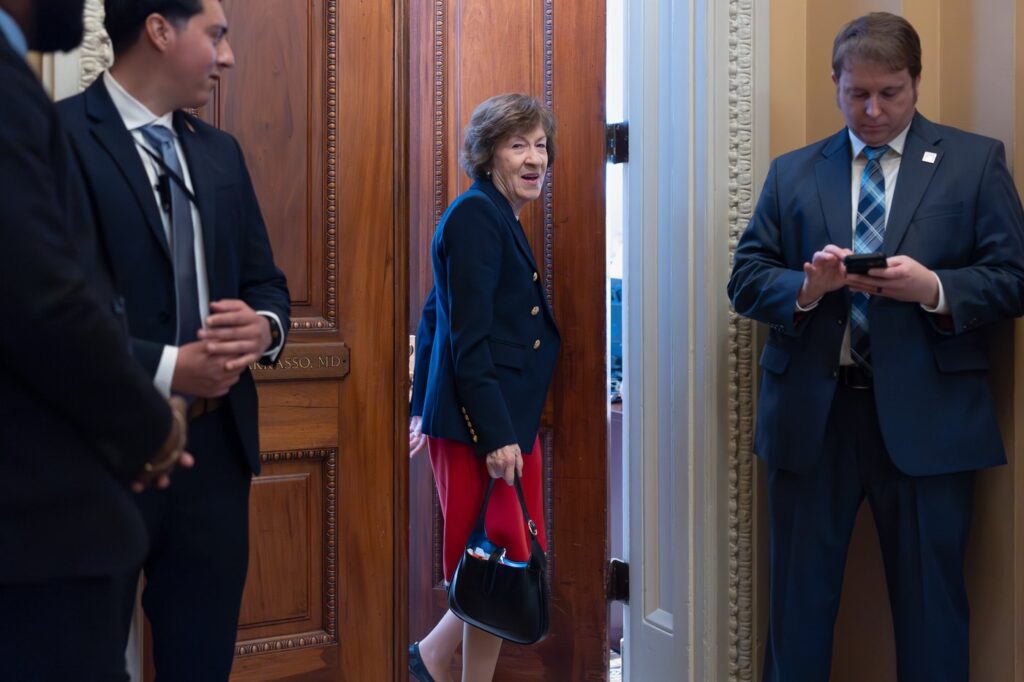
PORTLAND, Maine (AP) – This election year feels familiar for Senator Susan Collins, the Maine Republican seeking reelection while Democrats focus their attention on a new challenger, combat veteran and oyster farmer Graham Platner. Previously, in 2020, Collins faced state lawmaker Sara Gideon, but she has managed to maintain a strong position in her state despite the challenges posed by her opponents.
Collins has proved to be a formidable target for Democrats over the years, despite the controversies surrounding Platner. He has faced criticism for his relationships with women, inflammatory social media posts, and a past tattoo associated with Nazi symbolism. Collins is campaigning for her sixth term, backed by high name recognition and a record of bringing substantial federal funding to Maine. Her unique ability to distance herself from former President Donald Trump while retaining party support has been a critical element of her political strategy.
While Trump’s influence has caused difficulties for other Republican senators, such as John Cornyn from Texas and Bill Cassidy from Louisiana, who lost primaries to Trump-endorsed candidates, Collins appears to have navigated these challenges successfully. Trump's criticism of her has not been harmful enough to threaten her position, as he refrained from supporting any challengers during her primary election, recognizing the need for Republican unity in Congress.
The Democrats are focused on flipping four Senate seats in the upcoming November elections to gain control, positioning Maine as one of their primary targets, alongside states like Alaska, Ohio, and North Carolina. Platner's campaign aims to challenge Collins' perceived independence from Trump, highlighting her support for the president’s Supreme Court nominations, which notably led to the overturning of Roe v. Wade.
"Susan Collins may have started her career decades ago in Washington with good intentions, but she has become just as spineless and corrupt as the establishment she now serves," Platner stated during a campaign event. His supporters express a desire for change, with some feeling that Maine is overdue for fresh leadership and new ideas.
Despite earlier tensions, Trump has recently been more accommodating towards Collins, understanding the importance of Republican control in Congress. Political analysts pointed out that this shift reflects an awareness of the electoral landscape in Maine and suggests that Trump’s political operation is analyzing the state’s dynamics more cautiously this election cycle.
Collins, who has been in office since 2015, is noted for her independent stance, even diverging from Trump's agenda on occasion. This has appealed to many Maine Republicans who appreciate a more pragmatic approach. Some voters hold Collins in high regard for consistently advocating for Maine’s interests rather than strictly adhering to party lines.
This strategic distance from Trump may work in Collins' favor, as evidenced by her ability to gather support from constituents despite previous disagreements with the former president. Recent political observations indicate that local Republicans may prefer representatives who display some level of independence over strict party loyalty.
With her impressive record, including her recent accomplishment of casting her 10,000th consecutive Senate vote, Collins continues to emphasize her dedication to serving the people of Maine. The White House has chosen to maintain a distance from her race, reflecting a broader strategy to prevent challenges from arising within the party.
As both Collins and Platner gear up for the upcoming election, the stakes are high for both candidates. Collins aims to secure her position, while Platner seeks to leverage a wave of demand for change among the electorate. The unfolding dynamics in Maine will be closely watched as the election approaches, showcasing the complexities of modern political campaigns in the era of Trump.








