

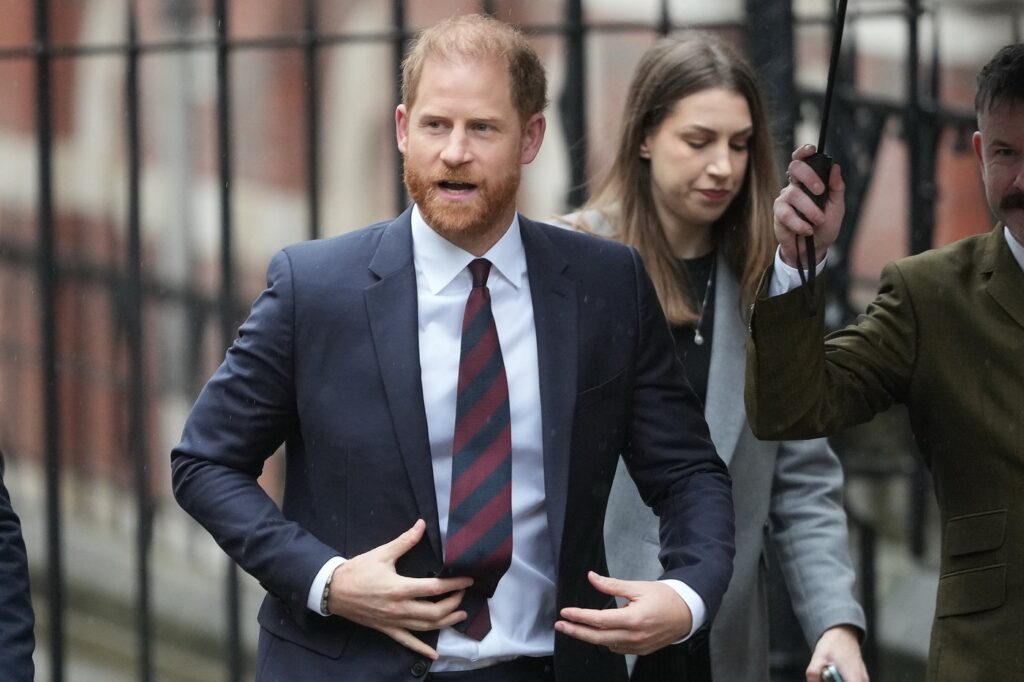
LONDON (AP) - Prince Harry's long-standing battle with the British tabloids is set to culminate in a significant ruling on Tuesday. A judge in London’s High Court will deliver a decision on the Duke of Sussex's privacy invasion lawsuit against the publisher of the Daily Mail, concluding a series of lawsuits that accuse the media of unlawfully intruding into his personal life.
Harry, alongside six other claimants, is seeking substantial damages in this high-profile case, which has seen legal costs soar to an estimated 40 million pounds ($53.5 million) over an 11-week trial. Among the prominent figures included in the lawsuit are singer Elton John, actress Elizabeth Hurley, and actress Sadie Frost. They have accused Associated Newspapers Ltd. of engaging in practices such as tapping phones, intercepting voicemails, and deceiving individuals to acquire personal information.
The newspapers involved have denied the allegations, labeling them as “preposterous.” They argue that the approximately 50 articles under scrutiny were sourced legitimately from friends, royal aides, and publicists who voluntarily provided information to the reporters.
The verdict coincides with Harry’s visit to the U.K., and speculation surrounds whether he will bring along his wife, Meghan, Duchess of Sussex, and their two children, Prince Archie and Princess Lilibet, to visit his grandfather, King Charles III. This visit could be rare and is anticipated amidst concerns over security arrangements.
Harry has been vocal about his mission to reform the press, accusing it of creating a toxic environment throughout his life. During his emotional testimony in February, he recounted how the intrusive nature of the press has affected him personally. He has attributed the media’s relentless pursuit as a factor in the tragic death of his mother, Princess Diana, who died in a car crash in 1997 while being chased by paparazzi. His comments on how the press has made his wife's life "an absolute misery" highlighted the consistent distress he believes has been caused by tabloid culture.
The phone hacking scandal, which began in the 1990s and persisted for over a decade, provided Harry with grounds to diverge from royal tradition and pursue legal action. He notably became the first senior royal in over a century to testify in court three years ago, where he successfully won a judgment against the publishers of the Daily Mirror for “widespread and habitual” phone hacking. Additionally, in the previous year, Rupert Murdoch's tabloid, The Sun, issued an unprecedented apology for its long history of intruding into Harry’s life and settled his privacy invasion lawsuit with substantial damages.
The current case against the Daily Mail, led by attorney David Sherborne, argues that the publication, along with its sister paper, Mail on Sunday, employed a “clear, systematic and sustained use of unlawful information gathering” against its clients. Evidence presented connected payments made to detectives with specific articles, suggesting how journalists may have illicitly tracked down information regarding Harry’s then-girlfriend, Chelsy Davy.
Harry’s own testimony highlighted the profound impact these press intrusions had on his mental health, leaving him feeling "paranoid beyond belief" and straining his relationships. Hurley described horrific invasions by the Mail, accusing it of placing listening devices outside her home and stealing her medical records, expressing feelings of being constantly monitored and violated by unseen forces.
Other claimants in this case include anti-racism activist Doreen Lawrence, former politician Simon Hughes, and David Furnish, John’s husband. Meanwhile, defense lawyer Antony White claimed that the case rests on conjecture rather than evidence, asserting that legitimate journalism was the actual source of information, rather than unlawful activities. Some journalists asserted that Harry's claim about leaking social circles was inaccurate, emphasizing that many insiders were not discreet about information related to his life.
A pivotal point discussed during the trial was whether the claimants were allowed to raise allegations dating back to the 1990s, as they were past the standard six-year limit. They avoided the deadline by stating they were unaware of the illegal actions until private investigator Gavin Burrows confessed in 2021. However, Burrows testified that he never worked for the Mail, disavowing previous statements attributed to him and stating they were fabricated.
As the judgment looms, it arrives during Harry's charitable activities in London. The family dynamics are further complicated by Harry's ongoing negotiations over security arrangements, as a government committee denied requests for taxpayer-funded protection, which has led to past legal disputes. Harry’s potential reunion with his family hangs in the balance as these legal and personal challenges continue to unfold.








