

This World Cup has inspired numerous questions that remain unanswered. Among the most popular inquiries are whether anyone can stop Lionel Messi, the peculiar case of Merlin the duck and his jersey, and what might have transpired if Congo's statue fan faced a sneeze during a critical moment. For first-time soccer viewers still grappling with the terminology surrounding the sport, this guide aims to elucidate the rules and phenomena of the game during this World Cup period.
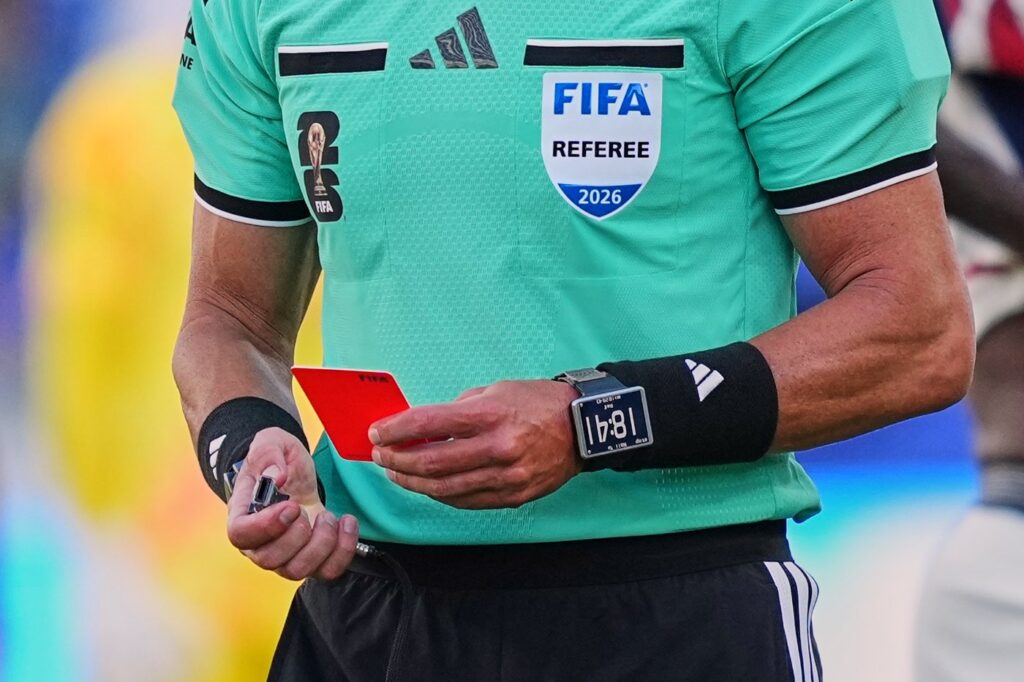
One intriguing question revolves around the case of Folarin Balogun, whose experience of receiving a red card and subsequent suspension has not been seen for 64 years in World Cup history. Back in 1962, Brazilian midfielder Garrincha faced a similar situation, being sent off for an offense during the semifinals. In a twist, Garrincha was allowed to play in the final, thanks to the intervention of Chile’s president, highlighting the differing nature of Balogun's one-year suspension.
Referees selected for the tournament go through a rigorous vetting process before being appointed. FIFA chose 52 referees based on their performance quality over the previous three years in international and domestic matches. They receive extensive training, which includes support from mental specialists, emphasizing the importance of their role in maintaining the game’s integrity.
On the field, the kids accompanying players during match introductions are officially known as “player escorts.” These children are selected from underprivileged communities, in collaboration with a FIFA sponsor and local organizations, allowing them to share a moment with their heroes before the game begins.
Interestingly, the term “soccer” used in countries like the United States, Australia, Canada, and South Africa, originates from Britain, with its roots traceable back to the 1880s. The word emerged from “association football,” which was the sport's official title. Although many Brits prefer the term “football,” the differentiation is practical for Americans, who have their own version of football.
Weather conditions are a crucial factor in the scheduling of matches. Soccer can be played in heavy rain, but if conditions worsen, the referee reserves the authority to suspend or abandon the match to ensure player safety. FIFA regulations dictate that if a match is interrupted due to inclement weather, it resumes from the moment of interruption rather than restarting completely.
Penalty shootouts add an intense layer of excitement, especially if the teams are tied following five penalty kicks. If that occurs, the process transitions to "sudden death," where teams alternate penalty attempts until one scores while the other does not. Remarkably, memorable shootouts can involve an extraordinary number of attempts, as evidenced by a notable match in 2024 that saw 56 attempts taken.
Alcohol consumption is permitted in World Cup venues, contrasting with restrictions seen in events like the Paris Olympics. Official sponsors provide a range of alcoholic beverages, allowing fans to enjoy a drink while watching the games.
The dimensions of a soccer pitch differ significantly from that of an NFL field, with NFL fields being longer and narrower. The standard pitch dimensions recommended by FIFA allow for a wider playing area. The term "pitch" itself derives from English vernacular, with historical references suggesting it relates to how goalposts were physically placed into the ground.
For viewers wondering how to differentiate between free kicks and penalty kicks, it's essential to note that a penalty kick is awarded only for fouls within the penalty area, whereas a free kick is granted for offenses that occur outside of that area. The dynamics of these situations play a critical role in influencing match outcomes.
During the group stage, a primary tiebreaker for teams ending with the same points is head-to-head results, a notable change for this World Cup. The draw process for the 48 teams involved ensures groups maintain a balance of competitive quality, based on FIFA rankings.
Player eligibility in international competition allows for participation without requiring citizenship, provided a player has ancestry or residency rights. This leads to diverse national team compositions, showcasing talent from across the globe.
In terms of officiating, while a head referee oversees the match, there are additional officials present. Two assistant referees manage offside and other calls, while a fourth official assists with substitutions and indicating stoppage time.
Uniform choices during games are determined by FIFA to ensure clarity on the pitch, avoiding situations where teams are too visually similar. As the tournament unfolds, FIFA's directives regarding branding are evident, including the covering of certain sponsor logos within stadiums to maintain exclusive visibility for official partners.
Lastly, European soccer fans often seem able to attend more matches during the World Cup due to the generous vacation policies in many countries, where employees may be entitled to ample paid leave annually.








