

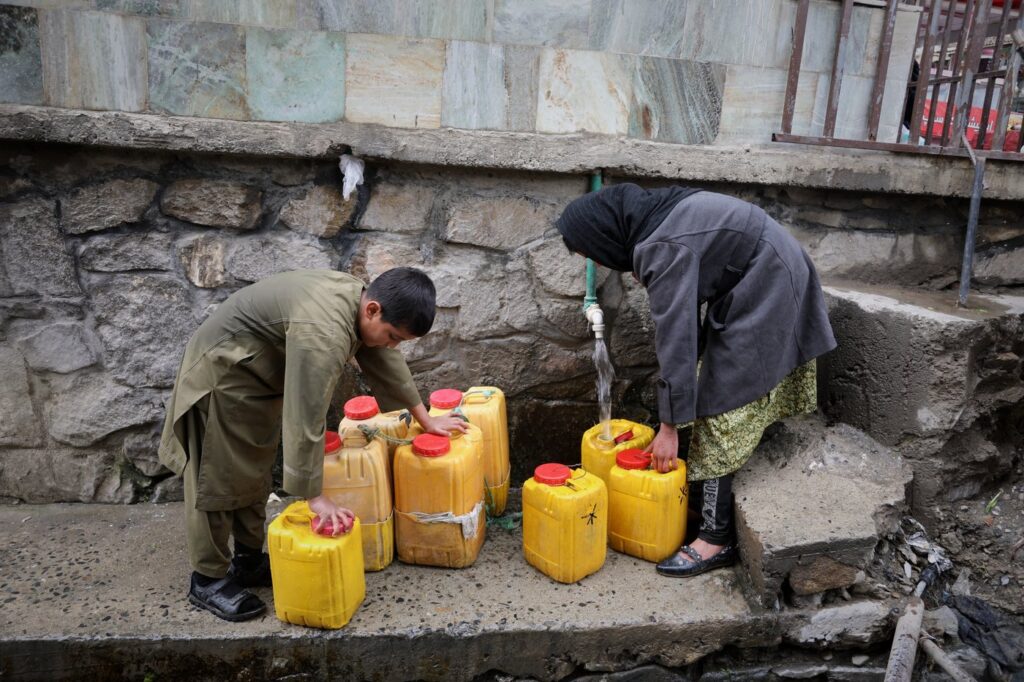
Two high-ranking United Nations officials emphasized the importance of Western nations engaging with Afghanistan to avert the country from reverting to instability, which could have broader implications. Barham Salih, the United Nations High Commissioner for Refugees, underscored in a recent interview that lessons from the past make it clear that ignoring Afghanistan can lead to detrimental outcomes. During a joint visit to Afghanistan with Alexander De Croo, head of the United Nations Development Program, Salih stressed the need for constructive engagement and support for policies that aim to ensure the country's security.
Since the Taliban's takeover in August 2021, Afghanistan has faced a multitude of crises. The war-torn nation is now experiencing hardships induced by natural disasters and climate change, compounded by a significant influx of returning refugees—nearly 6 million have repatriated since 2023, mainly from neighboring Pakistan and Iran. These two countries have intensified their crackdowns on Afghan migrants, leading to an expected additional 2 million returnees this year. Alexander De Croo highlighted that Afghanistan's crises are interconnected, with escalating challenges always stacking upon one another.
The influx of returnees has strained local communities, many already suffering from scarce resources in a country where poverty is pervasive and malnutrition is prevalent among vulnerable populations. The situation has worsened due to substantial cuts in international aid, exacerbating existing issues and leading to the closure of 422 medical centers within a year, impacting over three million people who lost access to essential medical services. Furthermore, the Taliban government has imposed severe restrictions on women and girls, denying them educational opportunities and limiting their access to numerous employment sectors, adding to the already critical humanitarian crisis.
Since the Taliban assumed power, Afghanistan's government has remained unrecognized by any Western nation. A historic shift occurred in 2025 when Russia became the first country to recognize the Taliban regime. A recent meeting between a Taliban delegation and EU staff in Brussels suggested a slight easing of Afghanistan's diplomatic isolation, opening up avenues for conversation and potential collaboration.
Despite the bleak scenario, both U.N. officials noted some progress in areas such as security and in combating drug production, which has reportedly decreased by 95%. De Croo emphasized that the international community must not overlook Afghanistan, as regional instability could have wider ramifications beyond its borders. He reinforced the notion that to maintain peace domestically, ensuring stability in neighboring regions is essential.
The harsh restrictions imposed on women and girls remain a significant contention between Afghanistan's government and the international community. Salih expressed hope that ongoing engagement could facilitate tangible reforms within the country, promoting a more inclusive system. They acknowledged that without a united effort to address humanitarian and social challenges, the consequences could be dire, as past action has shown that neglecting Afghanistan only leads to greater crises.
The Taliban government initiated a campaign to eradicate opium poppy cultivation, which has seen a striking decrease in drug production. However, without international support and funding for sustainable alternative crops, there is a risk that drug cultivation could resurface. Salih reiterated the necessity for the global community to remain focused on Afghanistan, stressing the importance of addressing the repercussions of inaction, which extend far beyond the country itself.








