

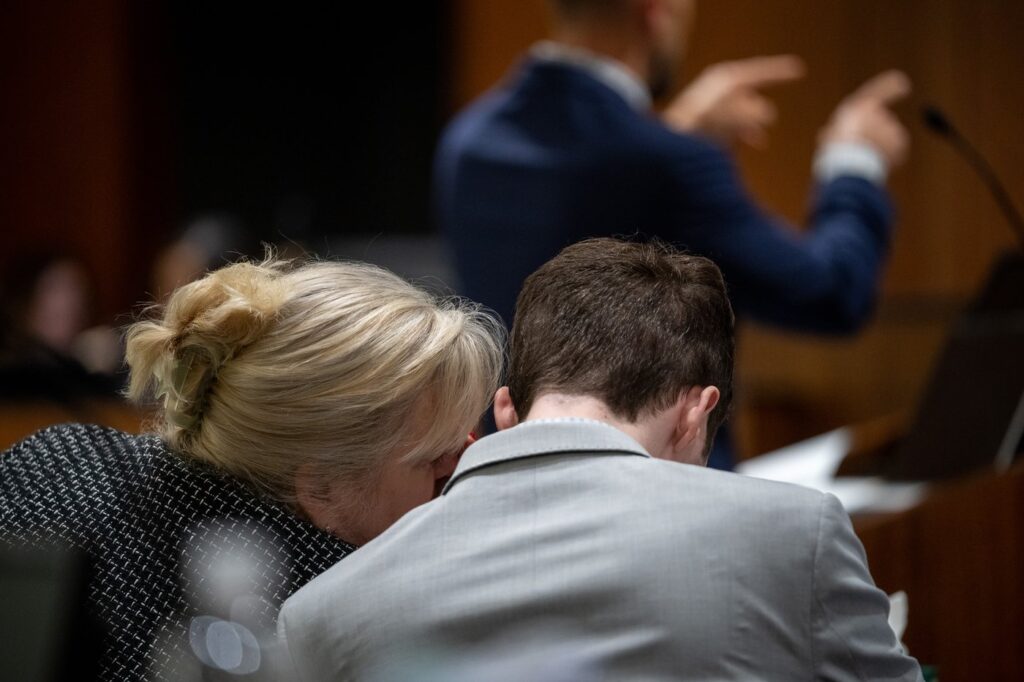
Provo, Utah (AP) In the ongoing preliminary hearing for Tyler Robinson, accused of killing conservative activist Charlie Kirk, defense attorneys are focusing on questioning the reliability of DNA testing presented by the prosecution. The testing purportedly links Robinson to a rifle found at the scene of Kirk's shooting at Utah Valley University in September. As the hearing continues, anticipation builds around defense efforts to contest the validity of the DNA evidence.
During Tuesday’s proceedings, defense lawyer Michael Burt cross-examined an FBI DNA analyst regarding the methods used to connect Robinson to the firearm, which was discovered wrapped in a towel. Burt concluded that the analyst could not definitively match Robinson to the questioned DNA samples, a line of questioning that is expected to recur throughout the weeklong preliminary hearing.
In response, Deputy Utah County Attorney Ryan McBride argued that the issue of the DNA's reliability could be thoroughly examined during a potential trial, suggesting that it was not pertinent at this stage of the legal process. He emphasized that different interpretations of the evidence are viable and that it is ultimately the court's responsibility to assess whether the evidence meets the reliability threshold during the trial.
Robinson has not yet entered a plea regarding the charges against him, and his legal team has refrained from commenting on his guilt or innocence. However, they are actively pursuing efforts to prevent the death penalty from being applied in this case, a request that has not been granted to this point. Prosecutors are tasked with demonstrating that sufficient evidence exists to proceed to trial on an aggravated murder charge.
FBI analyst Amanda Bakker testified that following the collection of a DNA sample from Robinson's roommate for comparison purposes, she was able to identify two individuals’ DNA from the towel. According to testimony from Jennifer Faumuina of the State Bureau of Investigation, one of the DNA profiles likely belonged to Robinson.
The towel and the suspected murder weapon, described as a bolt-action rifle with a spent round, were located in a wooded area adjacent to the site where Kirk was shot. Prosecutors indicated they intend to pursue the death penalty, citing that Kirk's murder endangered others at the event as an aggravating factor under Utah law. Additionally, they allege that Robinson may face sentence enhancements due to claims that he targeted Kirk because of his political beliefs.
In court, surveillance footage from the day of the shooting depicted Robinson engaging in suspicious activity, including climbing over a railing and moving toward a site overlooking the amphitheater where Kirk was addressing attendees. Once he allegedly fired at Kirk, Robinson is said to have fled the scene on foot after running back across the rooftop.
Robinson's defense team challenged the handling of evidence by the law enforcement personnel involved in the investigation. Attorney Kathryn Nester raised questions about a bullet found elsewhere on campus, suggesting it was linked to an officer's weapon that had been cleared of unused rounds. This inquiry was a part of their systematic effort to undermine the prosecution's narrative.
The prosecution maintains that Robinson's behavior and the motive behind the shooting—a confession he reportedly left for his roommate expressing intent to kill Kirk due to his political views—are contributing factors justifying the push for capital punishment. Furthermore, Robinson’s defense team has resisted the introduction of political statements from Turning Point USA, claiming the relevance of such material to Robinson's state of mind is questionable.
Judge Tony Graf is currently determining the admissibility of these statements while emphasizing the importance of contextual understanding in the trial yet to potentially unfold. The hearing's developments will play a significant role in shaping the prosecution's strategy as they seek to substantiate the charges against Robinson.








