

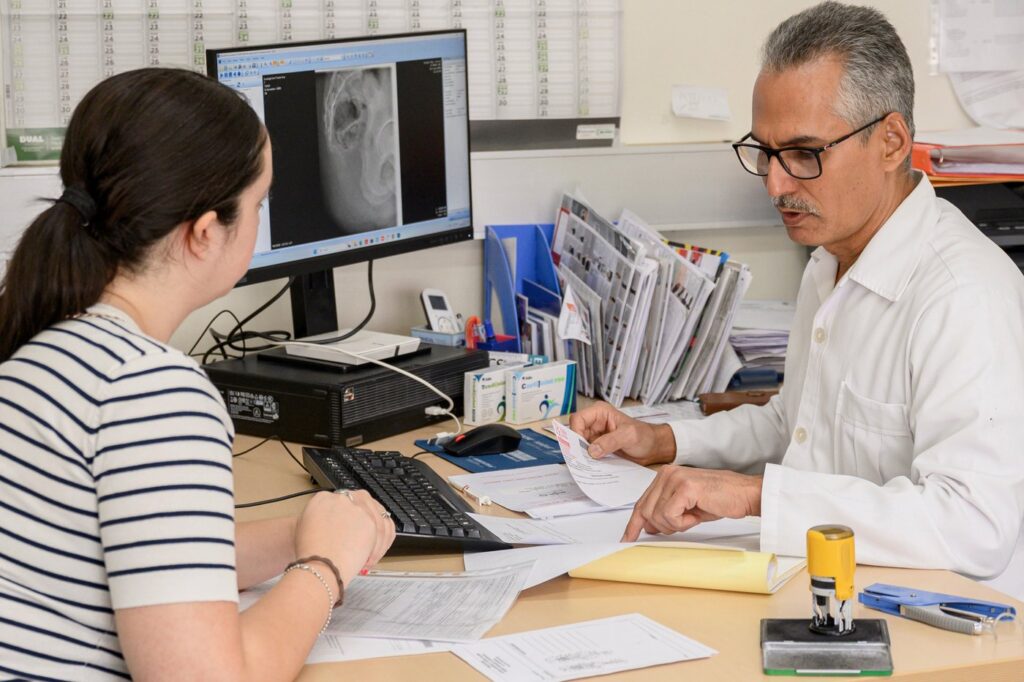
POLISTENA, Italy (AP) In a peculiar arrangement, Cuba sends medical professionals to Italy's southern Calabria region, a rare occurrence in Europe that has drawn the attention and criticism of the United States. Under a long-standing program, over 200 Cuban doctors are now serving in remote hospitals across Calabria, which is struggling with a significant shortage of healthcare workers. This influx of medical personnel has helped alleviate some of the pressures faced by the local healthcare system, which had been strained to the breaking point.
Francesco Moschella, the chief physician of Polistena hospital, described the state of the emergency room prior to the arrival of the Cuban doctors in January 2023, saying, “It was a disaster. I was keeping the emergency room open all by myself.” The challenge was stark: with a lack of homegrown healthcare workers, some hospital departments had shut down completely.
The U.S. has viewed Cuba’s medical missions critically, labeling them as a revenue-generating initiative for the socialist government that the Trump administration aimed to isolate and pressure into change. In light of U.S. scrutiny, several Caribbean and Central American countries have terminated their agreements with Cuba. However, the governor of Calabria, Roberto Occhiuto, has chosen to retain the Cuban physicians, stating that despite his divergent political beliefs, the region depends on their contributions.
Despite economic growth from tourism and agriculture, Calabria remains the poorest region of Italy, with wages approximately 30% lower than the national average and an unemployment rate that is double that of the rest of the country. The region has consistently ranked last among Italy's 20 regions in public healthcare access. A series of factors including persistent budget deficits and corruption scandals had plunged Calabria into a state of special administration for 17 years, further exacerbating healthcare challenges.
During the COVID-19 pandemic, Cuba extended its support by sending medical teams to various regions in Italy. Post-pandemic, the practice continued, particularly in Calabria, where emergency medicine specialist Zoila Yakelin Arevalo Cruz remarked on the excessive wait times patients faced prior to Cuban assistance. She noted, “In this hospital, there were lines that lasted up to eight or 12 hours. Now, thanks to our work, in less than an hour a doctor visits you.” Arevalo Cruz, who has learned Italian and even local dialects, expresses her commitment to the community.
U.S. Secretary of State Marco Rubio has accused the Cuban medical missions of constituting a form of human trafficking, criticizing the Cuban government for retaining a majority of the doctors' salaries and allegedly confiscating passports. The U.S. State Department has stated that these missions are crucial for Cuba’s economy, asserting that they are sharing information about the realities surrounding Cuban medical brigades with allied nations.
As some nations like Jamaica and Honduras sever ties with Cuban medical programs, Mexico’s President Claudia Sheinbaum defended the initiative, emphasizing its significance in providing care to underserved populations. Notably, Occhiuto, despite being part of a politically conservative party, indicated a desire to further expand the Italian-Cuban medical partnership, considering increasing the number of Cuban medical personnel from 200 to around 1,000.
Importantly, Calabria’s agreement operates differently from other Cuban medical missions, as it provides individual contracts to Cuban doctors directly, depositing their payments into Italian bank accounts. While the doctors indicate that they still contribute a portion of their salaries back to the Cuban government, they view it as a contribution to their homeland, citing their medical training and education received in Cuba.
Locals have expressed gratitude towards the Cuban doctors, with resident Maria Morano highlighting their empathy and humility compared to some local practitioners. The cooperation has proven essential to maintaining hospital operations in Calabria, enabling it to better serve the community amid ongoing healthcare challenges.








