

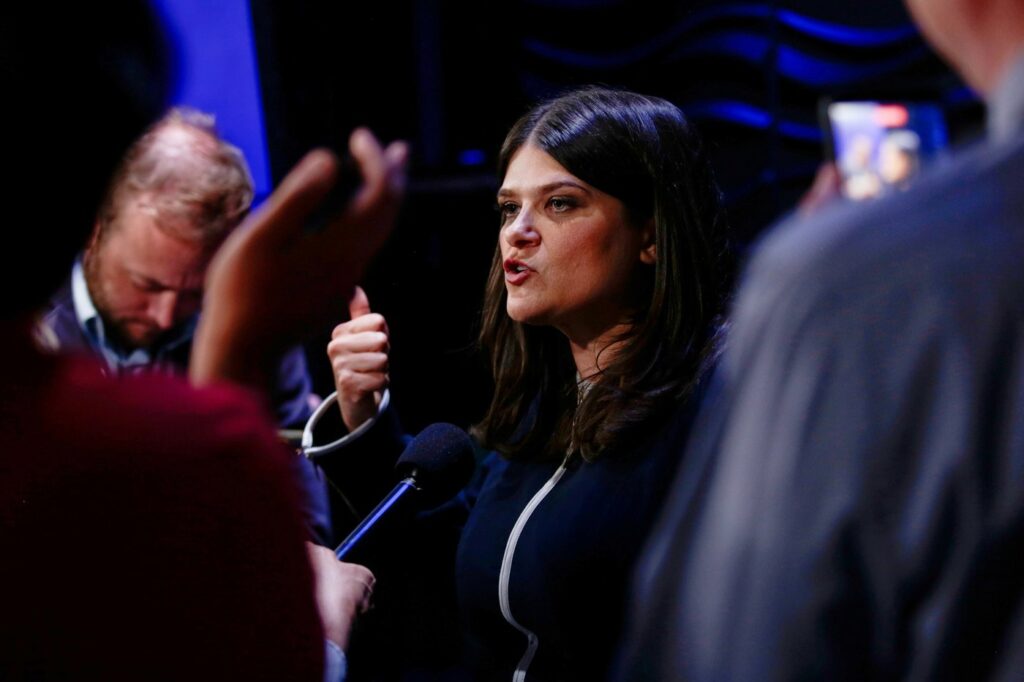
SOUTH HAVEN, Mich. (AP) - U.S. Representative Haley Stevens is focusing her campaign efforts on the final weeks leading up to Michigan's Democratic Senate primary, arguing that she is the candidate most likely to win against Republicans. Having flipped a Republican-held House seat in suburban Detroit in 2018, Stevens has not lost a race since, even managing to withstand a tough primary challenge from a fellow Democratic incumbent after redistricting in 2022. "It is not a hypothetical that I beat Republicans," Stevens stated after a campaign stop in West Michigan this week, emphasizing her track record in competitive elections.
As the Democrats aim to retain their Senate seat in Michigan, maintaining control of the Senate majority this fall has become increasingly crucial. This need intensified after the Democratic nominee in Maine, Graham Platner, announced he would drop out following sexual assault accusations against him, thereby threatening another Senate seat that Democrats hoped to keep competitive. While no Republican has managed to win a U.S. Senate seat in Michigan since 1994, former U.S. Representative Mike Rogers came within just 20,000 votes of winning in the 2024 election.
The pressing need to hold onto Michigan's Senate seat has prompted significant support from Senate Democratic leader Chuck Schumer and other influential state Democrats, including former Senator Debbie Stabenow, who argue that Stevens represents the Democrats' strongest chance against Rogers, who is campaigning again. Despite this establishment support, it remains uncertain whether primary voters in the Democratic party prioritize electability in the same way. Supporter Dave Burdick of Douglas expressed a desire for Democratic leadership to focus more on substantive changes rather than broad appeal.
Stevens contrasts herself with her opponent, progressive Abdul El-Sayed, who has surged in the race with a bold policy platform emphasizing progressive ideals. El-Sayed eschews corporate PAC money and positions himself as a challenger to the existing Democratic establishment. He argues that Democratic voters desire candidates who will instigate change rather than moderate options.
During a recent campaign event in South Haven, Stevens demonstrated her experienced campaigning style by engaging easily with local business owners and voters alike. Her allies highlight her personalized approach to politics and ability to connect with constituents in smaller, intimate settings. While she may lack the viral appeal that has bolstered El-Sayed's campaign, her supporters believe her tactical approach in small venues is critical for winning elections, consistent with successful Michigan Democrats like former Governor Jennifer Granholm.
However, Stevens's campaign has yet to ignite the same broad grassroots enthusiasm that characterized the successful campaigns of Granholm or current Governor Gretchen Whitmer. El-Sayed has been able to stimulate fervent support among progressive voters, packing rallies and gaining endorsements from prominent figures. Stevens's campaign has also benefited from extensive outside spending, totaling over $30 million, dwarfing El-Sayed's financial backing. This spending has raised questions about her independence, with some voters expressing unwillingness to support her due to her connections with outside groups like AIPAC.
El-Sayed's platform focuses on significant reforms, including Medicare for All, campaign finance reform, and the abolition of U.S. Immigration and Customs Enforcement (ICE). His identity as a Muslim, coupled with his outsider status, raises concerns among Democratic leaders who view him as a risky nominee in a state traditionally seen as moderate. Nonetheless, Michigan has a history of supporting candidates who position themselves against the political establishment, illustrated by Bernie Sanders's victory over Hillary Clinton in the state's 2016 Democratic primary.
As the primary approaches, the race dynamics shifted with the suspension of state Senator Mallory McMorrow's campaign, leading more establishment Democrats to rally behind Stevens. Organizations such as EMILY's List and Michigan's Attorney General Dana Nessel have endorsed Stevens, highlighting her intelligence and proven electoral success. Conversely, El-Sayed continues to garner support from labor groups, such as endorsement from the United Auto Workers, appealing to constituents seeking change and reform.
The current Democratic landscape indicates a shift away from traditional candidates favored in past elections, as voters increasingly advocate for progressive policies and candidates willing to challenge the party status quo. This evolving sentiment reflects a broader discontent within the party and among the electorate, as individuals seek representatives who prioritize meaningful change. Voter sentiment is complicated and diverging, showcasing a more complex Democratic primary environment as Michigan moves closer to the election.








