

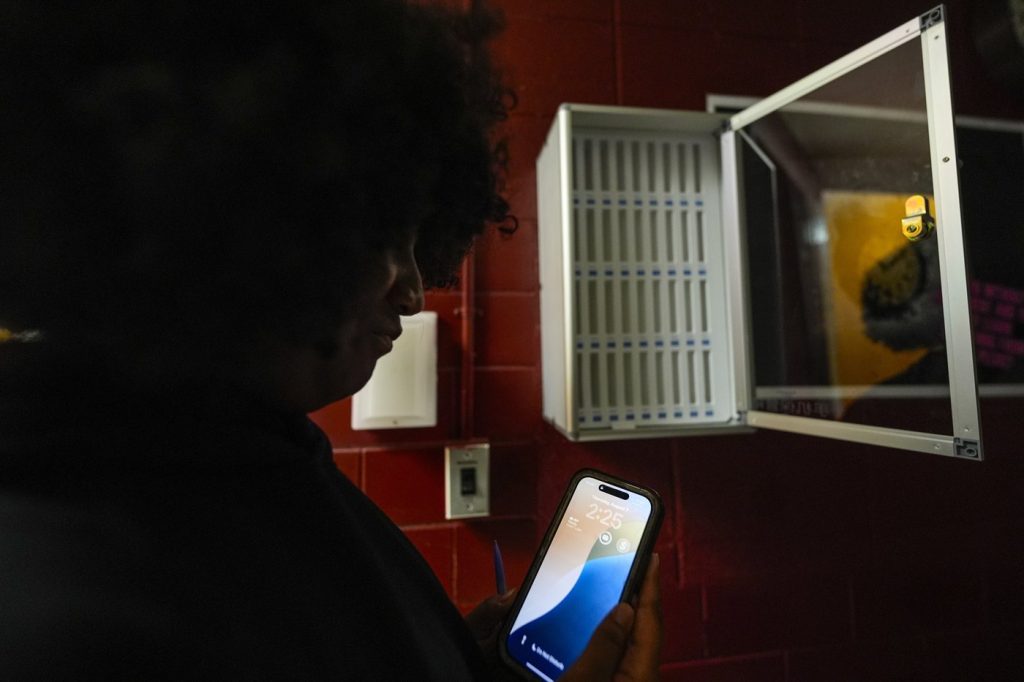
Jamel Bishop is experiencing a notable shift in his learning environment as he approaches his senior year at Doss High School in Louisville, Kentucky, where a new policy now bans cellphones during instructional hours. Reflecting on past experiences, Jamel noted that students often struggled to pay attention and wasted time asking repeated questions, whereas the new rules allow teachers to dedicate more one-on-one time to those who genuinely need assistance.
Kentucky is part of a broader movement, with 17 states and the District of Columbia implementing new restrictions on cellphone use for the current school year. This initiative has rapidly gained momentum, with a total of 35 states now having laws or guidelines that limit phone usage in schools. The trend began in 2023 when Florida became the first state to enact such legislation.
The bipartisan nature of these restrictions underscores a growing consensus among lawmakers that cellphone use negatively impacts children's mental health and detracts from their learning experiences. Both Democrats and Republicans are rallying behind this cause, despite some researchers suggesting that the issue might not be so straightforward. Georgia state Rep. Scott Hilton remarked that the popularity of cellphone-related legislation in both California and Florida indicates a significant societal shift.
While some states impose complete bans on phones during school hours, others present more lenient regulations. Eighteen states and the District of Columbia enforce all-day bans, albeit Georgia and Florida restrict this "bell-to-bell" policy to grades K-8 only. In contrast, seven states permit cellphone use during non-instructional times like lunch or passing periods, while others encourage local school districts to establish their own cellphone guidelines.
Students are adapting to these new rules, implementing routines such as securing their devices in magnetic pouches or designated lockers. At McNair High School in suburban Atlanta, junior Audreanna Johnson mentioned that the initial reluctance among students to surrender their phones is diminishing, as many now recognize the benefits of reduced distractions. However, she expressed ambivalence about the policy, highlighting the downside of not being able to listen to music while studying—a tool she finds helpful for maintaining focus.
Parents have expressed concerns regarding their children's safety in schools, particularly the need for continuous communication in case of emergencies. Survey data from Emory University indicated that parental resistance is a significant barrier to enforcing cellphone regulations. Audrena Johnson, Audreanna's mother, articulated her fears about remaining unaware of school incidents or threats, emphasizing that having access to her child's phone is crucial for immediate communication during emergencies.
Many parents support restrictions on cellphone use while simultaneously advocating for greater involvement in policy decisions and enhanced communication about safety issues. Jason Allen, the national director of partnerships for the National Parents Union, suggested that the implementation of new policies has not adequately addressed parents' needs for safety and support in nurturing their children's social and emotional development.
Research on the effects of cellphone bans remains in its infancy. While teachers generally favor the restrictions, reporting fewer disruptions and improved classroom focus, experts caution that definitive conclusions regarding academic performance and mental health outcomes are not yet available. Julie Gazmararian, a public health professor at Emory University, reported positive social interactions and reduced disciplinary issues following the ban, but acknowledged the need for further analysis regarding grades and emotional wellbeing.
Contrarily, some states are resisting the trend of imposing cellphone restrictions. In January, the Wyoming Senate voted against mandating districts to develop policies concerning cellphone use, arguing that such responsibilities should lie with educators and parents. Similarly, a proposed bill in Michigan to enforce strict cellphone bans in schools was tabled amidst debates on local control over educational matters. Despite the setbacks, Michigan Governor Gretchen Whitmer remains committed to pursuing legislation that would limit cellphone use in educational settings.








