

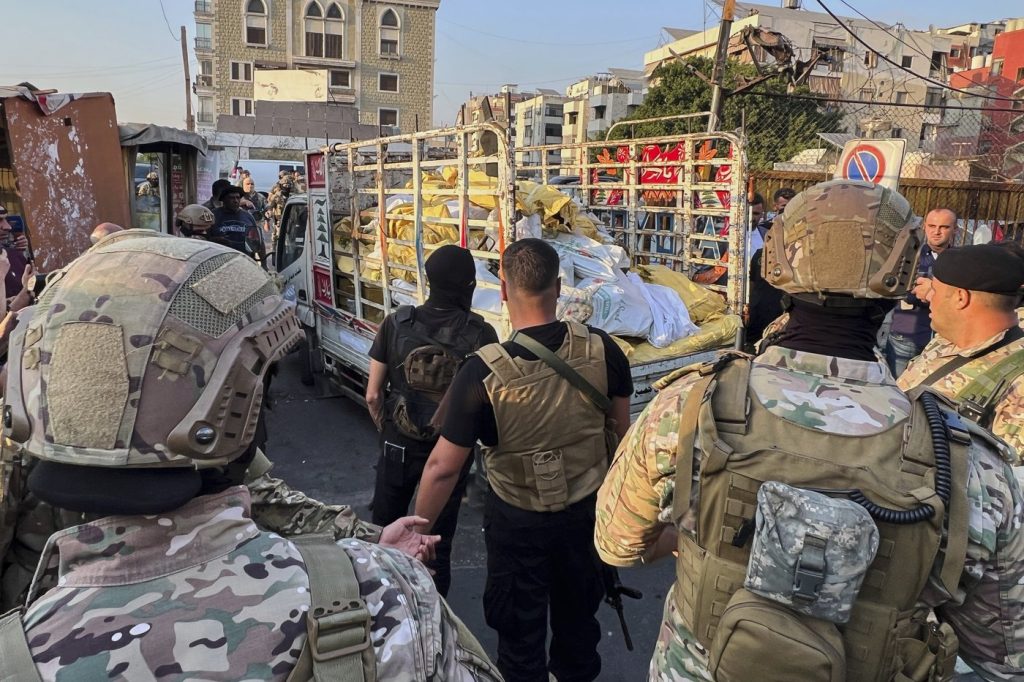
On Thursday, Palestinian factions initiated the handover of some weapons from a refugee camp on the outskirts of Beirut to the Lebanese army, marking a preliminary effort to implement a plan announced three months prior to extract arms from the camps. This initial step involved a pickup truck departing the camp, visibly loaded with light weapons concealed in bags, with the butts of machine guns protruding from these sacks.
The compliance of all factions with this decision remains uncertain, as representatives from Hamas and its allied group, Palestinian Islamic Jihad, did not provide comments when approached. A spokesperson for Hamas released a statement on behalf of the "Palestinian Factions in Lebanon," asserting that the handover of weapons was solely an "internal organizational matter within the Fatah movement." The statement emphasized that their weapons are intrinsically tied to the right of return and the Palestinian cause, asserting that they would persist as long as Israeli occupation remains on Palestinian soil.
The announcement to remove weapons from the camps was made in May during a visit by Palestinian President Mahmoud Abbas to Lebanon, alongside Lebanese President Joseph Aoun. They confirmed that the arms would be consolidated under the authority of the Lebanese government. This step is considered a precursor to the more challenging task of disarming Hezbollah, the Lebanese militant group, which faced pressure domestically and internationally after its significant conflict with Israel last year, culminating in a ceasefire in November. To date, Hezbollah has resisted relinquishing its remaining arsenal.
The implementation of the Palestinian camps' disarmament plan had been postponed due to disputes among various Palestinian factions present in Lebanon, including Abbas's Fatah movement, Hamas, and a multitude of other Islamist and leftist groups, regarding the logistics of weapon handover. Ramez Dimashkieh, head of the Lebanese-Palestinian Dialogue Committee, indicated in a statement that Thursday's handover at the Burj al-Barajneh camp, located south of Beirut, is merely the initial step, with additional batches set to be delivered in the upcoming weeks from Burj al-Barajneh and other camps.
Nabil Abu Rdeneh, a spokesperson for Abbas, confirmed that weapons were also surrendered at the al-Bass camp in southern Lebanon, consistent with the agreement forged between Abbas and the Lebanese government, and these disarmament efforts will continue in other camps. U.S. envoy Tom Barrack praised the Lebanese government and Fatah for their joint commitment to voluntary disarmament in Beirut’s camps, deeming it a "historic step toward unity and stability, demonstrating true commitment to peace and cooperation."
Nevertheless, the extent of actual implementation of this decision remains ambiguous. Some Palestinian faction officials stated that only "illegal" weapons would be handed over, explicitly excluding those belonging to organized groups and personal light weapons. Badih al-Habet, a Fatah spokesperson in Beirut, mentioned that Aoun acknowledged the existence of personal weapons as a part of Arab and national culture.








