

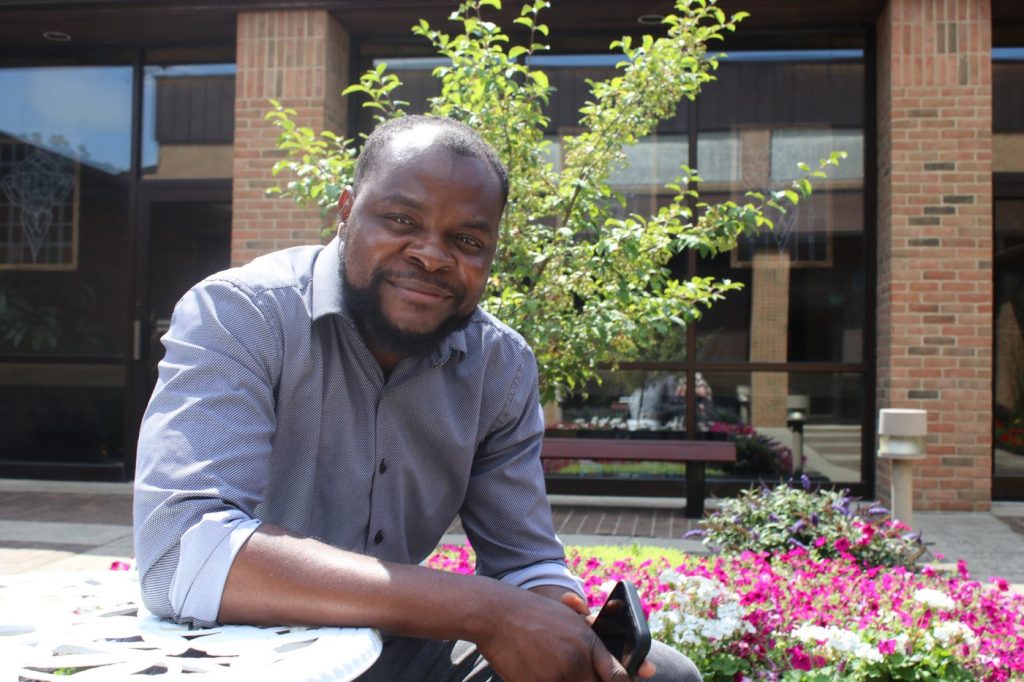
SPRINGFIELD – Viles Dorsainvil, a 39-year-old Haitian immigrant, reflects on his uncertain future amidst the distress experienced by many Haitians in Springfield, Ohio. Their situation has worsened following a decision by the Trump administration to revoke Temporary Protected Status (TPS) for approximately 500,000 Haitians, which allowed them to legally stay and work in the United States due to unsafe conditions in their home country. The U.S. Department of Homeland Security announced the termination of TPS, claiming that conditions in Haiti had improved, despite ongoing violence and instability in the nation.
As Dorsainvil explains, the dark turn in his life began with a warning from his mother about the rising threat of kidnappings in Haiti. He immigrated to the United States in late 2020, initially to visit relatives, without contemplating a permanent stay. However, following the assassination of Haiti's president, Jovenel Moïse, he applied for TPS to secure legal employment. Dorsainvil quickly adapted to life in Springfield and became involved with his community, eventually becoming the executive director of the Haitian Support Center.
The arrival of Haitians, estimated at around 10,000 in Springfield, has been seen positively by local leaders. Central Christian Church Pastor Carl Ruby noted that the influx has been one of the best developments for the city in a long time. Once facing population decline due to changes in the manufacturing sector, Springfield has seen growth attributed to its new Haitian residents, boosting the local economy and filling job shortages.
Despite these positive contributions, the end of TPS poses serious challenges for the Haitian community in Springfield. Ohio Governor Mike DeWine expressed concerns that losing TPS could lead to significant unemployment among Haitians, which could exacerbate existing labor shortages in the region. With many Haitians having already lost their jobs due to employment uncertainties linked to their visa status, some are contemplating moving to Canada, where there is a considerable Haitian diaspora. However, legal pathways for relocation are complicated, and some may resort to dangerous methods to cross the border.
In a tragic instance highlighting the risks, 44 individuals, primarily Haitians, were discovered in a truck in Quebec after having crossed the U.S.-Canada border on foot. Advocacy groups emphasize that these perilous journeys stem from a desperate need to escape dangerous conditions in the U.S. and in Haiti, where violence and instability persist. Ottawa and humanitarian advocates argue that Haiti remains too unsafe for deportations and are urging Canada to reconsider its Safe Third Country Agreement with the U.S. due to the dire circumstances for refugees.
The faith community in Springfield is mobilizing to support Haitian residents, with churches exploring options for providing sanctuary if needed amid growing uncertainties. Pastor Ruby asserts that the situation has reinforced his commitment to supporting immigrants, reflecting a broader sentiment within the community aimed at fostering compassion and aid for those in need.
As tensions mount and the deadline for TPS revocation approaches, the future remains precarious not only for Dorsainvil but for many others who have sought refuge in the United States from the turmoil in Haiti. In Springfield, the combined hopes and fears of the Haitian community mirror their fight for stability in a complex and challenging landscape.








