

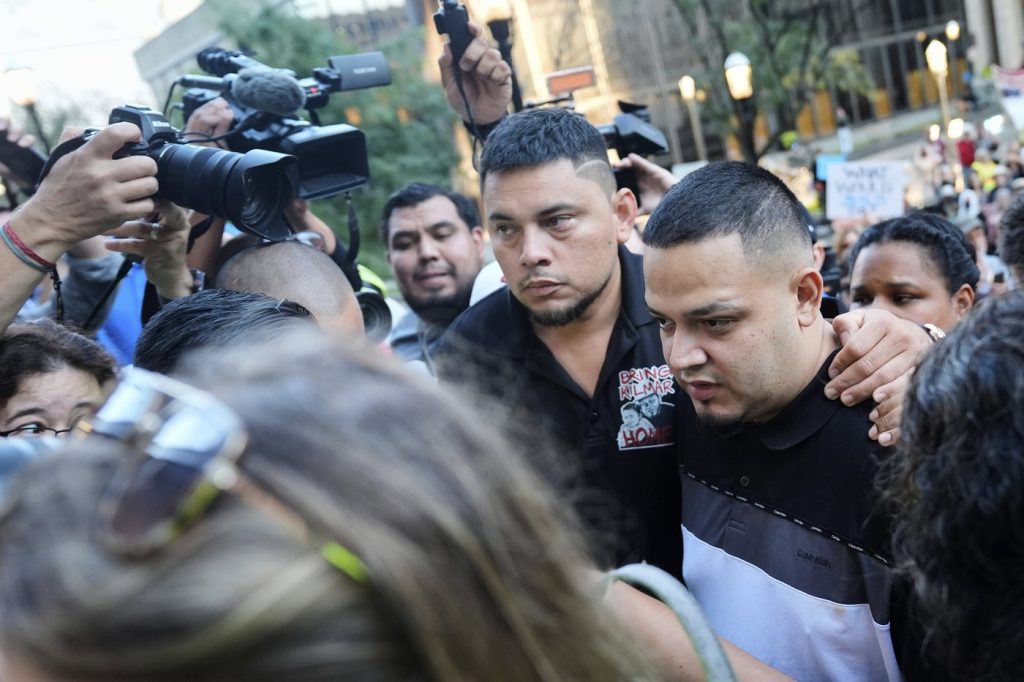
BALTIMORE (AP) — Kilmar Abrego Garcia surrendered to the U.S. Immigration and Customs Enforcement (ICE) field office in Baltimore on Monday, August 25, 2025. He was accompanied by his wife, Jennifer Vasquez Sura, his brother Cesar Abrego Garcia, and a group of supporters who gathered to protest against the Trump administration's initiative to deport him to Uganda. This act of turning himself in highlights the ongoing tensions between immigrant communities and U.S. immigration policies.
Abrego Garcia's situation is complex. He had previously faced wrongful deportation to a prison in his home country of El Salvador. After returning to the United States, he encountered new legal troubles, particularly human smuggling charges that his legal team has characterized as both absurd and retaliatory. Last Friday, he was released from a Tennessee jail after being detained, and ICE instructed him to report for deportation proceedings on the very day he arrived at the Baltimore office.
The protest at the ICE office drew considerable public attention, with many supporters rallying to oppose his impending deportation. Demonstrators voiced their objections to both his treatment and the wider implications of deportation actions under the current administration. The gatherings reflected a community's commitment to advocate for individuals caught in the crossfire of immigration enforcement and policy changes. Various images captured during the events depict emotional moments, including hugs shared between Abrego Garcia and his family members, emphasizing the personal toll of these immigration battles.
Photo galleries from the day include several poignant moments. One image captures Kilmar Abrego Garcia embracing his wife at the ICE office, a testament to their solidarity in the face of adversity. Another image shows the collective presence of community members and supporters at the protest, standing in unity for a cause that resonates deeply within immigrant populations. Supporters chanted slogans advocating for justice, reflecting the heightened activism surrounding immigration issues.
Abrego Garcia’s case is emblematic of broader national conversations about immigrant rights and the complex realities faced by individuals entangled in the U.S. immigration system. As he navigates the implications of his current legal predicament, the ongoing support from his community offers a glimmer of hope amid uncertainty. This scenario underscores not only the personal struggles of those facing deportation but also highlights the growing movement concerned with immigration policy reform and the fate of immigrants in the United States.








